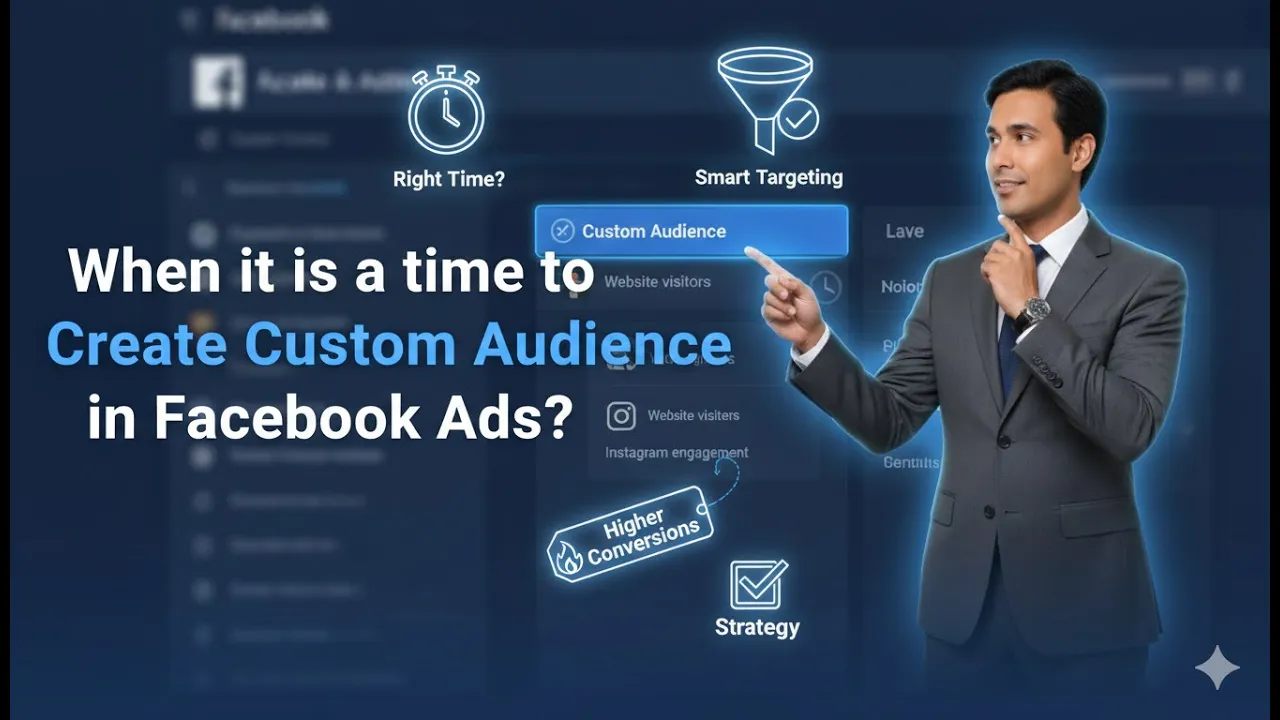
One of the most common questions asked by students and advertisers is about the correct timing to create a custom audience in Facebook Ads Manager. Many people understand how to create a custom audience, but they are often confused about when it should be created.
Creating a custom audience at the wrong time can lead to poor ad delivery, wasted budget, high ad frequency, and reduced return on ad spend. This article explains clearly when you should create a custom audience in Facebook Ads Manager and why timing plays a critical role in ad performance.
Understanding What a Custom Audience Is
Before discussing the right time to create a custom audience, it is important to understand what a custom audience represents.
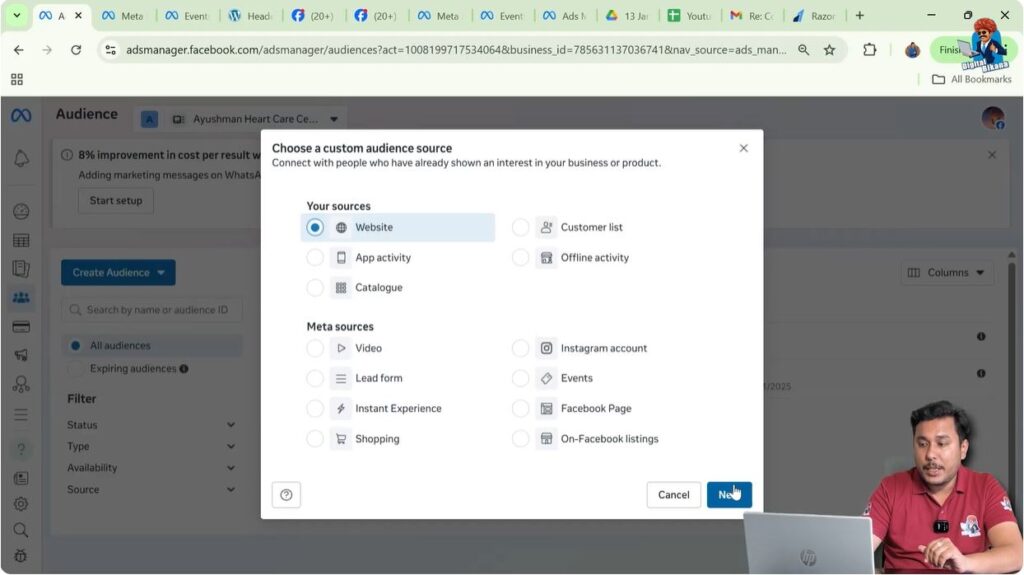
A custom audience is created from existing data. This data can come from various sources such as website visitors, people who interacted with ads, users who clicked on call-to-action buttons like messages, or people who performed actions during previous campaigns.
Because a custom audience is based on past data, its effectiveness depends heavily on the size and quality of that data.
Why Timing Matters in Custom Audience Creation
Creating a custom audience too early is one of the most common mistakes advertisers make. Many advertisers create custom audiences without having sufficient data, expecting immediate results.
However, a custom audience should only be created when enough user data is available. Without enough data, Facebook struggles to deliver ads efficiently, which affects campaign performance.
Minimum Audience Size Required for Custom Audiences
Importance of Having Sufficient Audience Size
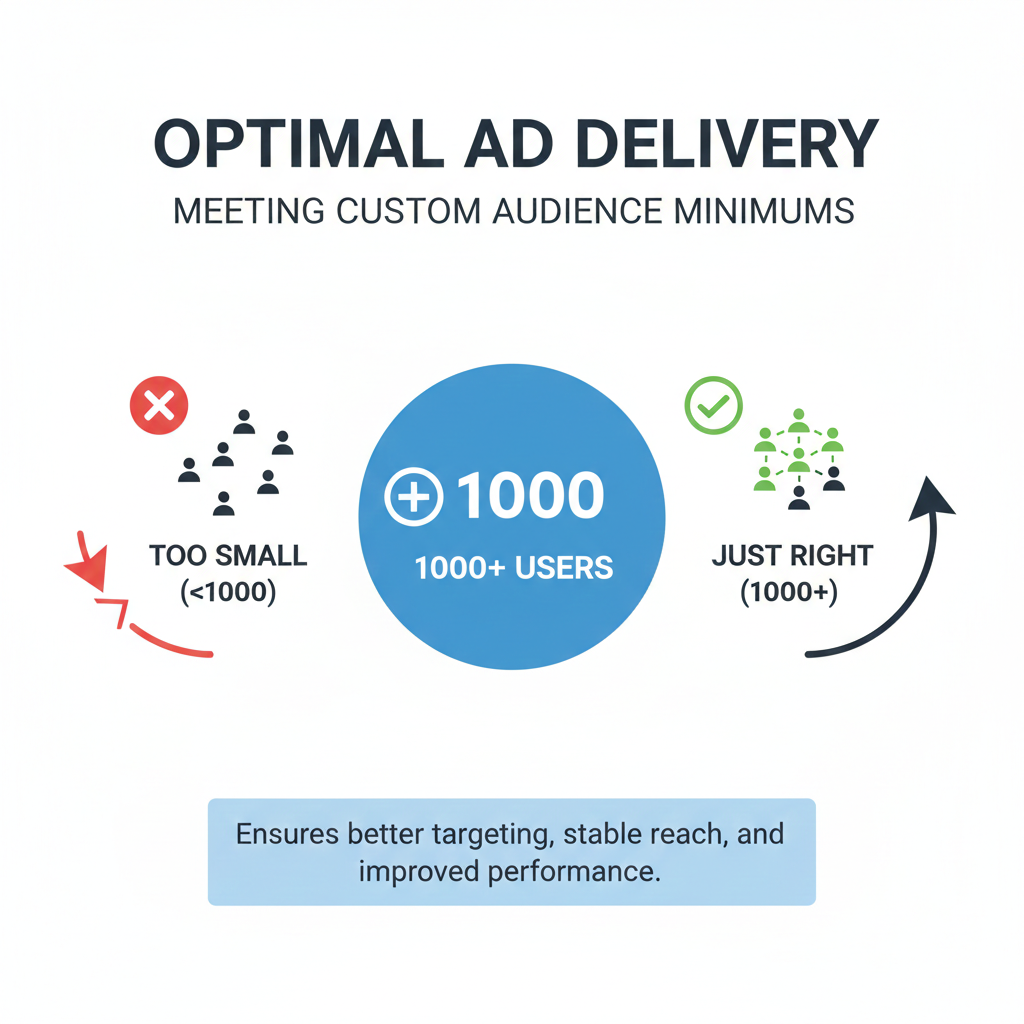
The most important rule for creating a custom audience is audience size. A custom audience should only be created when the expected audience size is more than one thousand users.
If the audience size is below this threshold, Facebook does not get enough room to optimize ad delivery. This results in repeated ad exposure to the same users.
Step 1: Estimate Your Expected Audience Size
Check If Your Data Can Reach 1,000 Users
Before creating a custom audience, ask yourself whether the data source you are using can provide at least one thousand users. This estimation is crucial.
If you are already running ad campaigns on saved audiences and generating enough engagement, then creating a custom audience becomes meaningful.

Types of Campaigns Where Custom Audience Can Be Used
Custom audiences can be used across different campaign objectives, but the condition of sufficient data remains the same.
Website Traffic Campaigns
If you are running website traffic campaign, you should wait until your website receives enough visitors. Only after accumulating sufficient traffic data should you create a custom audience.
Message Ad Campaign
If your campaign objective is messages, you should ensure that a significant number of users have interacted with your ads through messaging.
Only when the interaction volume is high enough should you consider creating a custom audience.
Sales Campaigns
For sales campaigns, custom audiences can be created from users who viewed products, added items to cart, or interacted with sales ads.
However, the audience size must still reach the minimum threshold for effective delivery.

Step 2: Understand What “Enough Data” Means
Minimum Benchmark for Custom Audience Creation
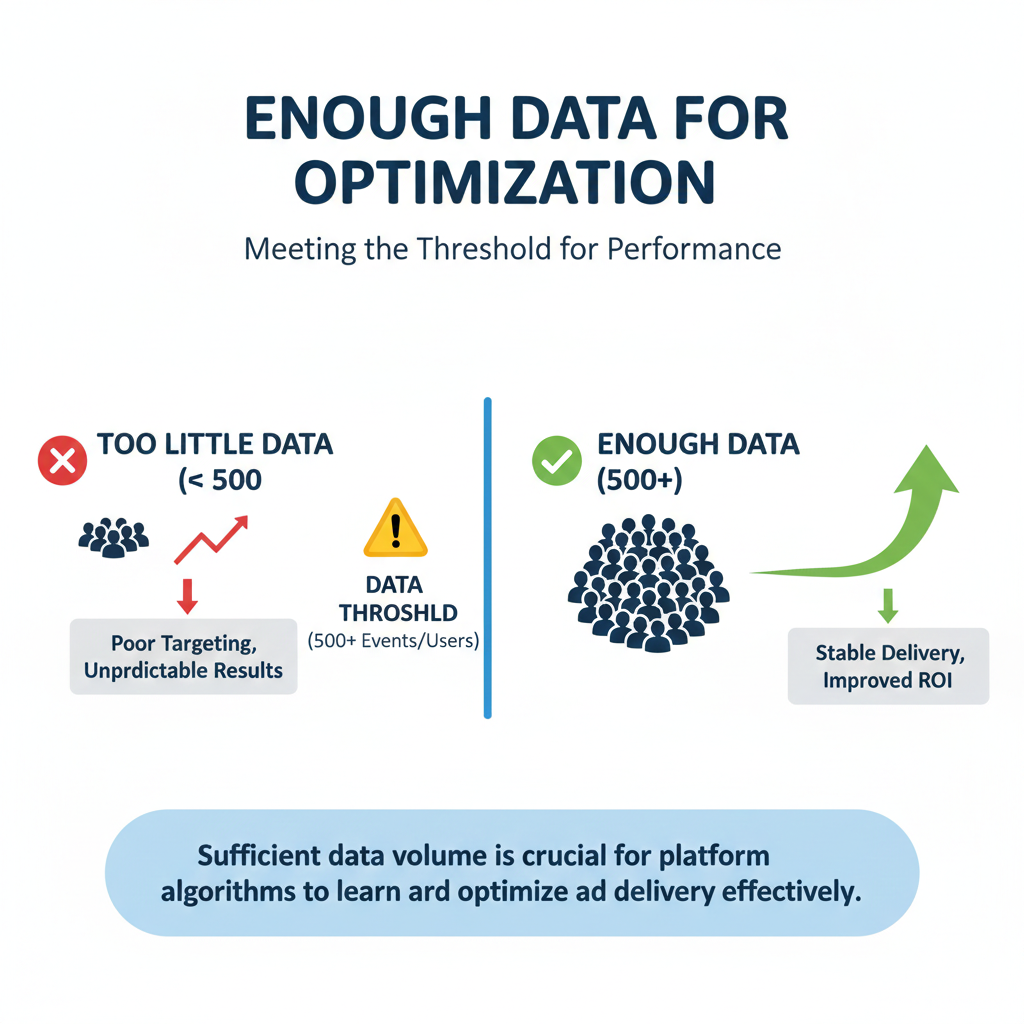
Enough data means having at least one thousand users in the custom audience.
This number ensures that:
- Facebook can distribute ads properly
- Ad frequency remains under control
- Campaign optimization works efficiently
Creating a custom audience with fewer users often leads to poor results.
The Role of Daily Ad Budget in Custom Audience Campaigns
Why Budget Matters
Every ad campaign requires a minimum daily budget to function properly. This budget varies based on currency, country, and account history.
Since the minimum daily budget differs from one advertiser to another, there is no fixed amount that applies universally.

Step 3: Match Audience Size With Daily Budget
Avoid Small Audience With High Budget
If you run an ad campaign with a minimum daily budget on a very small custom audience, Facebook will quickly exhaust that audience.
As a result, the same users will see your ads repeatedly, leading to increased frequency.

What Happens When Custom Audience Is Too Small
Increase in Ad Frequency
When a custom audience is small, Facebook has limited users to show ads to. This causes the ad frequency to increase rapidly.
Users begin seeing the same ad multiple times in a short period.
Budget Waste and Poor Performance
High frequency leads to:
- Ad fatigue
- Reduced engagement
- Wasted ad spend
Instead of reaching new users, your budget is spent repeatedly on the same people.
Impact on ROAS
Return on ad spend (ROAS) decreases when ads are shown too frequently to the same audience.
As performance drops, advertisers often feel that Facebook ads are not working, whereas the real issue is incorrect audience size.
Step 4: Avoid Creating Custom Audience Too Early
Wait Until Data Is Mature
Creating a custom audience without sufficient data is not recommended.
Instead of rushing into custom audience creation, advertisers should:
- Run initial campaigns on saved audiences
- Collect enough interaction or traffic data
- Monitor audience growth
Only after data maturity should a custom audience be created.

Why Saved Audiences Should Be Used Initially
Saved audiences allow advertisers to test targeting options and collect data.
They help in:
- Understanding audience behavior
- Generating initial engagement
- Feeding data into future custom audiences
Saved audiences play a critical role before moving to custom audience targeting.
Step 5: Decide the Right Moment to Create Custom Audience
Create Only When Threshold Is Met
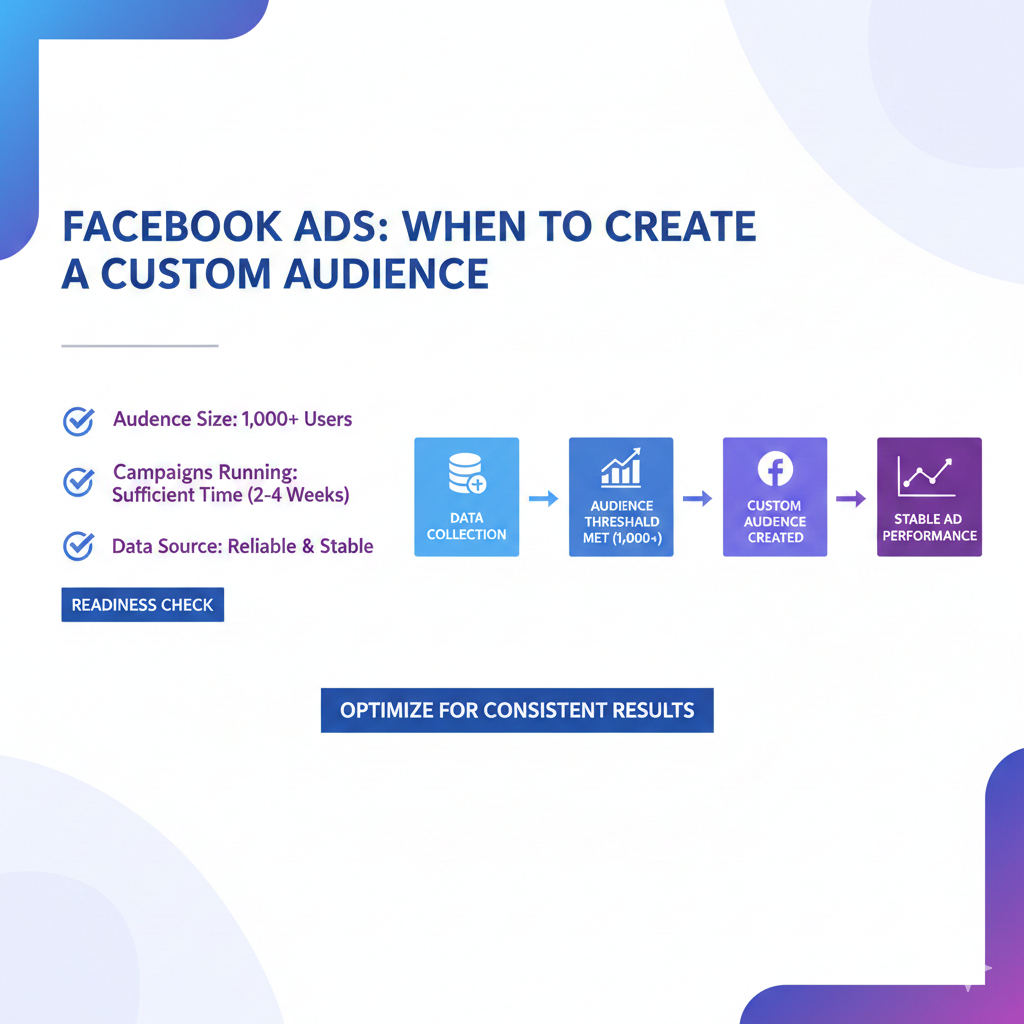
The right time to create a custom audience is when:
- You expect at least one thousand users
- You have run campaigns long enough
- Your data source is reliable
At this stage, custom audiences perform better and deliver consistent results.
Common Mistake: Running Ads on Very Small Custom Audiences
Many advertisers believe that targeting smaller audiences leads to better precision. However, extremely small custom audiences often cause more harm than benefit.
Small audiences lead to:
- Increased frequency
- Higher costs
- Lower efficiency
This is why creating custom audiences prematurely should be avoided.
Final Recommendation on Custom Audience Creation
Custom audiences are powerful, but only when used correctly.
They should not be treated as a shortcut. Instead, they should be used as an advanced targeting option after enough data has been collected.
Final Conclusion
The right time to create a custom audience in Facebook Ads Manager is when you have sufficient data to support it. A minimum audience size of one thousand users is a practical benchmark to follow.
Running ads on small custom audiences leads to increased ad frequency, wasted budget, and reduced ROAS. To avoid these issues, advertisers should first run campaigns on saved audiences, collect data, and then move to custom audiences when the data is mature.
Patience, proper timing, and data-driven decisions are the key factors for successful custom audience campaigns in Facebook Ads Manager.

Related Posts