In today’s digital world, having an online presence is no longer optional. Whether you are a business owner, a content creator, or a digital marketer, your visibility on search engines plays a major role in your success. One of the most essential components of digital marketing is SEO.
SEO stands for Search Engine Optimization. It is the foundation of organic growth and long-term online visibility. Understanding SEO can completely transform your online presence and help you attract quality traffic without relying solely on paid advertisements.
In this article, we will decode SEO in a simple and structured manner, covering its meaning, importance, types, process, tools, timeline, and best practices.
What Is SEO?
SEO stands for Search Engine Optimization.
It is the process of improving a website’s visibility on search engines such as Google. When someone searches for something online, SEO ensures that your website appears among the top results.

The primary goal of SEO is to increase organic traffic by improving search engine rankings.
Why SEO Is Important
Over 90% of users click .on results displayed on the first page of Google. Very few users go to the second page.
If your website does not appear on the first page:
SEO helps you:
- Improve search rankings.
- Increase visibility.
- Build trust.
- Establish long-term credibility.
Unlike paid ads, SEO provides sustainable growth over time.
How Search Engines Work
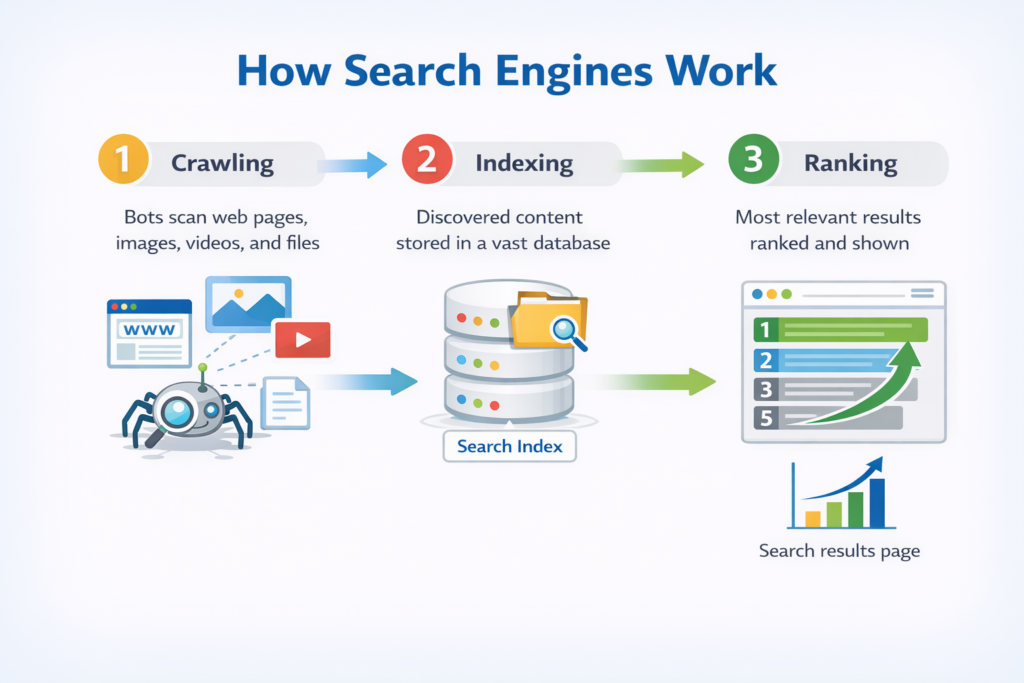
Search engines like Google operate in three main steps:
1. Crawling
Search engines use bots to discover new and updated content across the internet.
These bots scan:
- Web pages
- Images
- Videos
- Files
This process is known as crawling.
2. Indexing
After crawling, the discovered content is stored in a massive database called an index.
If your content is properly optimized, it gets indexed.
If it is not optimized or blocked, it may not appear in search results.
3. Ranking
Once content is indexed, search engines rank it based on relevance and quality.
When someone searches for a query, the search engine shows results in ranked order.
SEO helps improve this ranking position.
Types of SEO
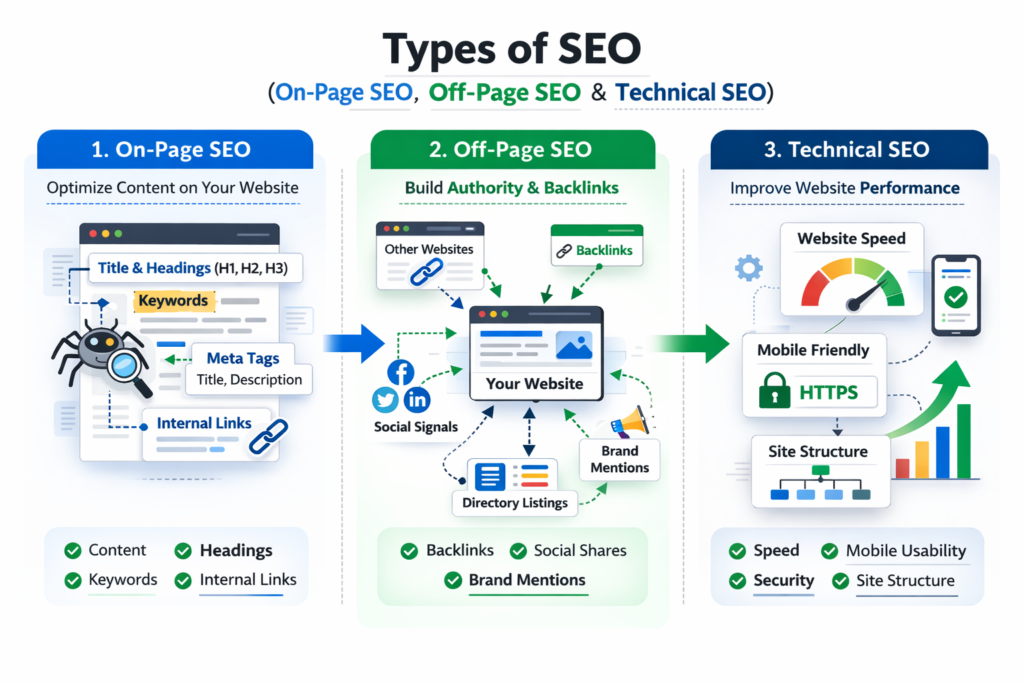
SEO is not just one activity. It consists of three main types:
1. On-Page SEO
On-page SEO focuses on optimizing elements within your website.
It includes:
- Content optimization
- Keyword placement
- Meta tags
- Headings
- Internal linking
On-page SEO ensures that search engines clearly understand your content.
2. Off-Page SEO
Off-page SEO focuses on activities outside your website.
It includes:
- Link building
- Backlinks
- Brand mentions
- Social sharing
Off-page SEO builds authority and trust for your website.
3. Technical SEO
Technical SEO ensures that your website functions properly from a technical perspective.
It includes:
- Website speed
- Mobile responsiveness
- Secure connection
- Proper site structure
Technical SEO improves user experience and helps search engines crawl efficiently.
How SEO Is Done
SEO follows a structured process. It is not random work. Let us understand the steps involved.
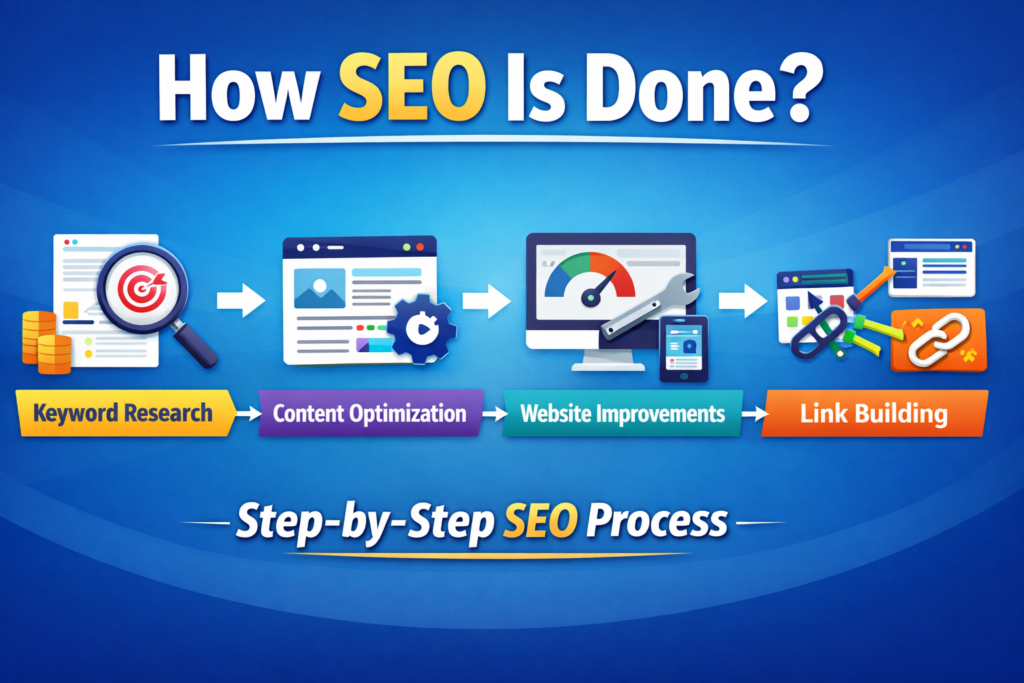
Step 1: Keyword Research
Understanding User Intent
The first step in SEO is identifying what users are searching for.
Keyword research involves:
- Finding relevant search terms.
- Analyzing search volume.
- Understanding competition level.
Choosing the right keywords ensures that your content matches user intent.
Step 2: Content Optimization
Creating High-Quality Content
Once keywords are identified, the next step is optimizing content.
This includes:
- Adding keywords naturally.
- Writing valuable information.
- Structuring content properly.
- Using headings correctly.
Search engines prioritize helpful and relevant content.
Step 3: Website Improvements
Enhancing User Experience
SEO also requires improving website structure.
Improvements may include:
- Faster loading speed.
- Easy navigation.
- Mobile-friendly design.
- Clear page hierarchy.
A well-structured website improves ranking potential.
Step 4: Link Building
Building Authority
Link building involves acquiring links from other websites.
Backlinks signal to search engines that:
- Your content is valuable.
- Your website is trustworthy.
- Your site has authority.
The more quality backlinks you earn, the stronger your ranking potential becomes.
SEO Tools
Several tools help in analyzing and improving SEO performance.
These tools assist in:
- Finding keywords.
- Monitoring traffic.
- Checking website health.
- Tracking rankings.
SEO tools simplify the optimization process and provide valuable insights.
Is SEO Instant?
Unlike paid advertisements, SEO is not an overnight success strategy.
SEO requires:
- Time
- Consistency
- Patience
It may take weeks or even months to see visible improvements.
However, once rankings improve, the results are sustainable and cost-effective.
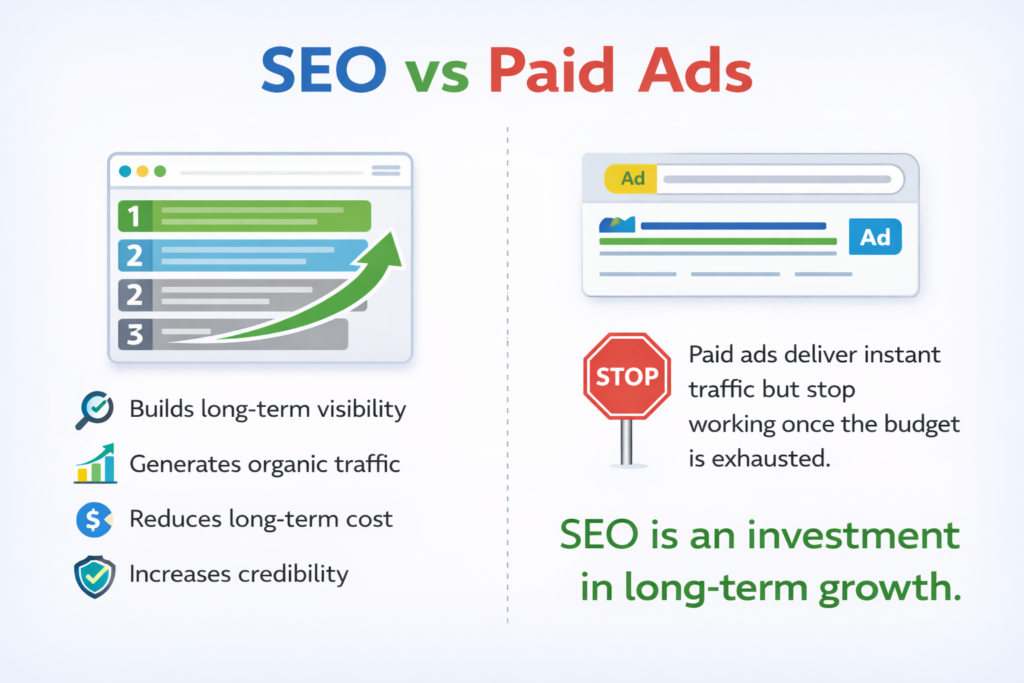
SEO vs Paid Ads
Paid ads deliver instant traffic but stop working once the budget is exhausted.
SEO:
- Builds long-term visibility.
- Generates organic traffic.
- Reduces long-term cost.
- Increases credibility.
SEO is an investment in long-term growth.
Ethical SEO Practices
Avoid shortcuts in SEO.
Black-hat techniques may include:
- Keyword stuffing.
- Buying low-quality backlinks.
- Hidden text.
These techniques can harm your website.
Instead, focus on:
- Clean optimization.
- Ethical practices.
- Quality content.
Sustainable growth requires ethical SEO.
Benefits of SEO
SEO offers multiple benefits:
- Higher visibility
- Increased traffic
- Better credibility
- Long-term growth
- Improved user experience
It strengthens your digital presence.
SEO as a Digital Backbone
SEO is often referred to as the backbone of digital marketing.
Without SEO:
- Your website remains invisible.
- Your traffic remains limited.
- Your growth becomes dependent on paid ads.
With SEO:
- You build authority.
- You attract targeted visitors.
- You grow steadily.
Long-Term Growth Through SEO
SEO fuels long-term growth because:
- Rankings improve gradually.
- Traffic becomes consistent.
- Brand authority increases.
Consistency is key in SEO.
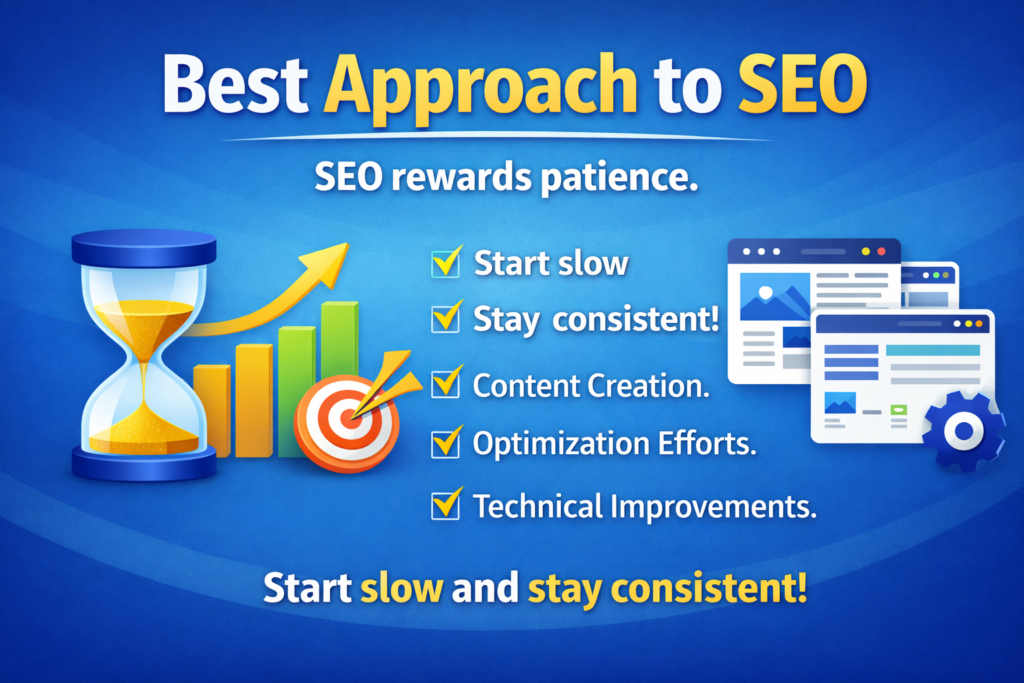
Best Approach to SEO
Start slow.
Do not expect instant results.
Stay consistent with:
- Content creation.
- Optimization efforts.
- Technical improvements.
Trust the process.
SEO rewards patience.
Summary
Let us summarize the key points:
- SEO stands for Search Engine Optimization.
- It improves website visibility on search engines.
- Most users click on first-page results.
- Search engines work through crawling, indexing, and ranking.
- SEO includes on-page, off-page, and technical SEO.
- SEO process involves keyword research, optimization, improvements, and link building.
- SEO tools assist in monitoring and improvement.
- SEO takes time but delivers sustainable results.
- Avoid black-hat techniques.
- Focus on ethical and clean practices.
Conclusion
SEO is a powerful and essential part of digital marketing. It builds your online visibility, attracts quality traffic, and supports long-term growth. Unlike paid advertising, SEO requires patience and consistency but delivers sustainable results over time.
By understanding how search engines work and focusing on structured optimization through keyword research, content creation, technical improvements, and link building, you can strengthen your online presence.
Start gradually, stay consistent, and focus on ethical practices. SEO is not just a marketing strategy; it is your digital backbone that fuels long-term success.

Related Posts