Welcome to this article. In today’s lesson, we are going to explain one of the most important concepts in SEO: backlinks.
If you want your website to rank higher on Google, understanding backlinks is a must. Backlinks play a major role in determining how search engines evaluate the authority, trustworthiness, and relevance of your website.
Let us explore what backlinks are, why they matter, the different types, and how you can earn them effectively.
What Is a Backlink?
A backlink is simply a link from one website that points to another website.
When another site links to your content, that is a backlink for you.
It works like a recommendation. Just like people trust recommendations from credible sources, search engines trust websites that receive links from reputable domains.
Backlinks act as signals of trust and authority.
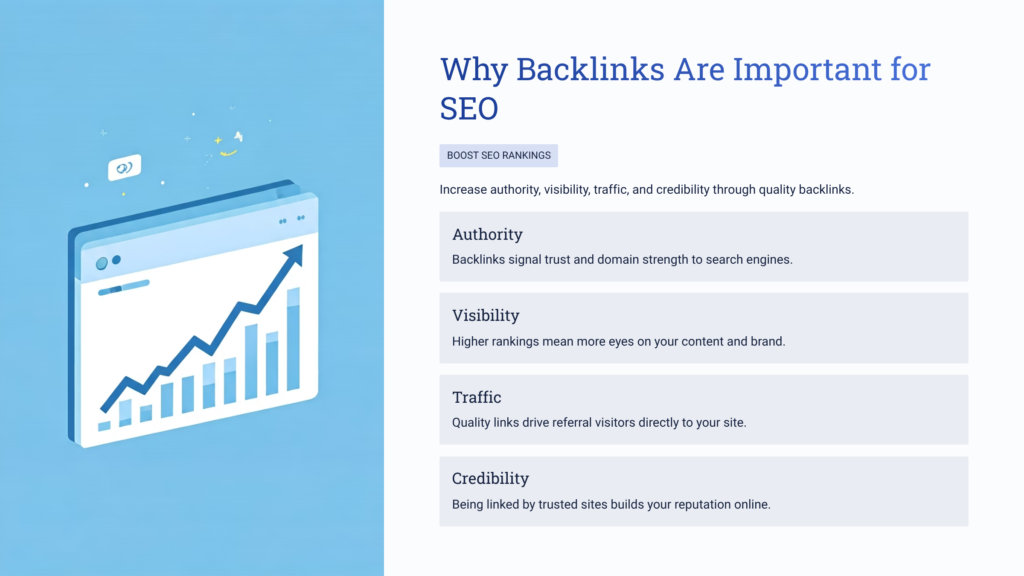
Why Backlinks Are Important for SEO
Backlinks are one of Google’s top ranking factors.
The more relevant and trustworthy websites that link to yours, the more authority you gain in search engine rankings.
Search engines interpret backlinks as votes of confidence.
If many reputable websites link to your page, Google assumes your content is valuable and worthy of higher ranking.
Backlinks help:
- Increase domain authority
- Improve search visibility
- Boost referral traffic
- Strengthen credibility
Without backlinks, it is difficult to compete in competitive niches.
How Backlinks Build Authority
Backlinks tell Google that other websites trust your content.
When high-authority sites link to you, they pass some of their credibility and ranking power to your page.
This increases your site’s perceived authority.
The stronger your backlink profile, the higher your chances of ranking well in search results.
Authority builds gradually through consistent quality links.
Not All Backlinks Are Equal
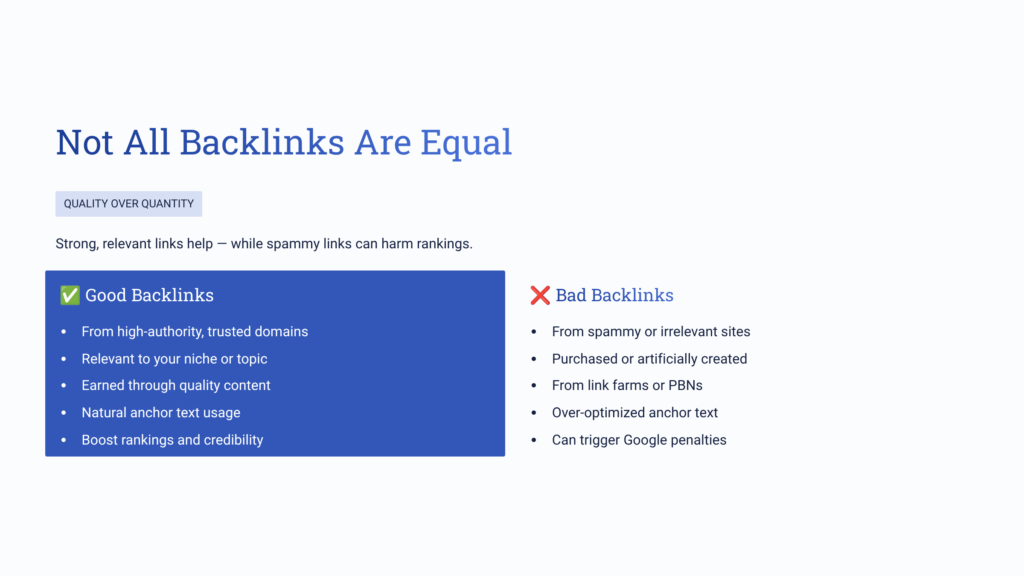
Not all backlinks provide the same value.
Some backlinks are highly beneficial, while others can harm your website.
Links from reputable, high-authority websites are valuable.
Links from spammy or low-quality websites can negatively impact your rankings.
Quality matters more than quantity.
A few strong backlinks are better than hundreds of weak ones.
Types of Backlinks
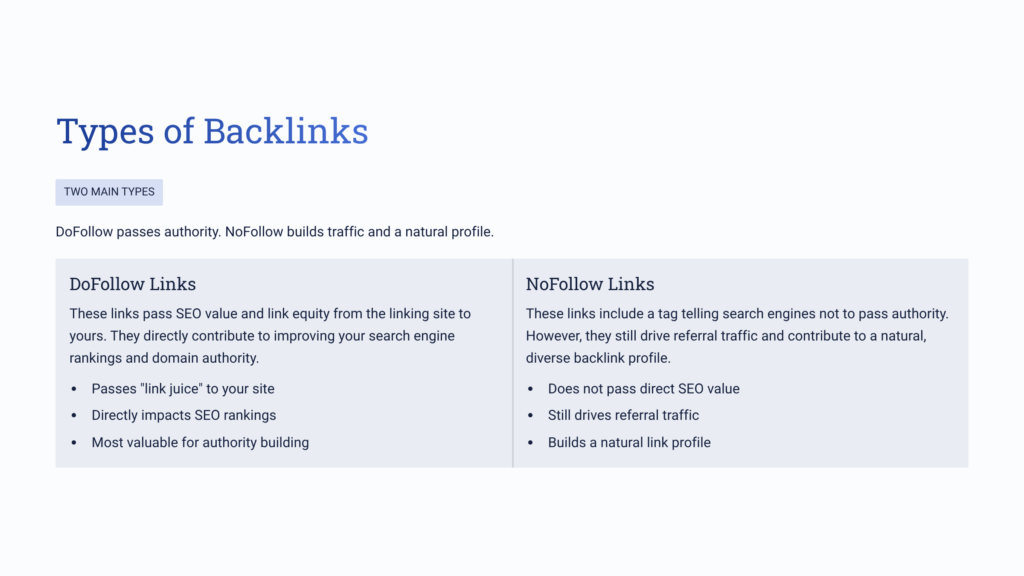
There are two main types of backlinks:
- DoFollow
- NoFollow
Understanding the difference helps you evaluate your link profile properly.
DoFollow Backlinks
DoFollow backlinks pass authority from one site to another.
These links directly impact search rankings by transferring link equity.
They are the most valuable type of backlink for SEO.
NoFollow Backlinks
NoFollow backlinks include an attribute that tells search engines not to pass ranking authority.
Although they do not directly pass link equity, they still:
- Drive traffic
- Increase brand visibility
- Contribute to a natural link profile
Both types play a role in a healthy SEO strategy.
How Bad Backlinks Can Harm SEO
Backlinks from spammy, irrelevant, or low-quality websites can damage your rankings.
Search engines may interpret these links as manipulative.
Poor backlink practices can lead to:
- Ranking drops
- Manual penalties
- Decreased credibility
That is why avoiding harmful link-building tactics is essential.
How to Earn Backlinks Naturally
The key to earning backlinks is to create valuable content and share it through the right channels.
High-quality content attracts links naturally.
Examples of content that earns backlinks:
- Detailed blog posts
- Research articles
- Case studies
- Infographics
- Guides
When your content solves real problems, other websites are more likely to reference it.
Step 1: Create Valuable Content
Focus on Quality
Publish detailed, useful, and original content.
Step 2: Promote Your Content
Share Strategically
Distribute your content through social media and outreach.
Step 3: Build Relationships
Connect with Bloggers
Engage with other content creators in your industry.
Example of a Backlink in Action
Imagine you publish a detailed blog post.
Another blogger finds it helpful and links to it from their article.
That backlink boosts your authority in Google’s system.
As more relevant websites link to your content, your rankings improve.
This is how organic backlink growth works.
How to Monitor Your Backlinks
You should regularly monitor your backlink profile.
Tools you can use include:
- Ahrefs
- SEMrush
- Google Search Console
These tools help you:
- See who is linking to your site
- Analyze link quality
- Identify toxic backlinks
- Track new and lost links
Monitoring ensures your backlink profile remains healthy.
Common Backlink Mistakes to Avoid
Avoid these harmful practices:
- Buying links
- Participating in link farms
- Excessive link exchanges
- Spammy directory submissions
- Automated link-building schemes
These practices can result in penalties.
Focus on earning natural, relevant, high-quality links.

Backlinks and Ranking Power
The more high-quality links you have, the more likely Google is to rank your page higher in search results.
However, ranking is influenced by multiple factors.
Backlinks work alongside:
- Content quality
- Page speed
- Mobile optimization
- On-page SEO
A balanced strategy ensures sustainable growth.
Step-by-Step Backlink Strategy
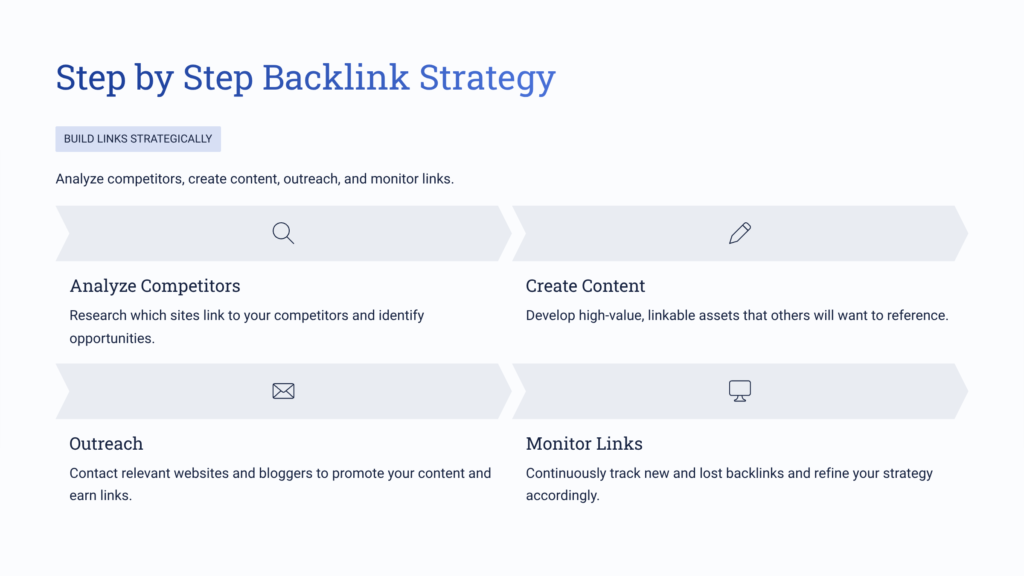
Step 1: Analyze Competitors
Identify Their Backlinks
Study where competitors are getting links.
Step 2: Create Link-Worthy Content
Offer Unique Value
Develop in-depth and helpful resources.
Step 3: Conduct Outreach
Connect with Relevant Sites
Share your content with industry bloggers and publishers.
Step 4: Monitor Your Profile
Use SEO Tools
Track backlink growth and remove harmful links.
Long-Term Backlink Success
Building backlinks takes time.
It requires:
- Consistency
- Quality content
- Ethical practices
- Strong relationships
Quick shortcuts often lead to penalties.
Long-term success comes from value-driven strategies.
Final Summary: Backlinks as the Foundation of Authority
To sum up, backlinks are essential for SEO success.
They are links from other websites that act as recommendations.
The more relevant and high-quality backlinks you earn, the more authority your website gains.
Remember:
- Quality matters more than quantity
- Avoid spammy practices
- Create valuable content
- Monitor your link profile
Backlinks remain one of the strongest ranking factors in SEO.
Focus on earning natural, relevant, and high-quality links.
When other trusted websites recommend your content, search engines reward you with better rankings.
That is the power of backlinks in SEO.

Related Posts