Welcome to this article. If you have ever searched online about how to rank your website on Google, you have probably heard the term SEO. But did you know there are actually different types of SEO?
In this detailed guide, we will explore the main types of SEO, what they mean, and how they work together to improve your website’s visibility.
Before we break it down, let us quickly recap what SEO is.
What is SEO?
SEO stands for Search Engine Optimization. It is the process of improving your website’s visibility in search engine results so you can get more organic traffic.
Organic traffic refers to visitors who find your website naturally through search engines without paid advertisements.
SEO helps search engines understand:
- What your content is about
- Why it is valuable
- How relevant it is to user queries
By optimizing your website properly, you increase your chances of ranking higher in search results.
The Four Major Types of SEO
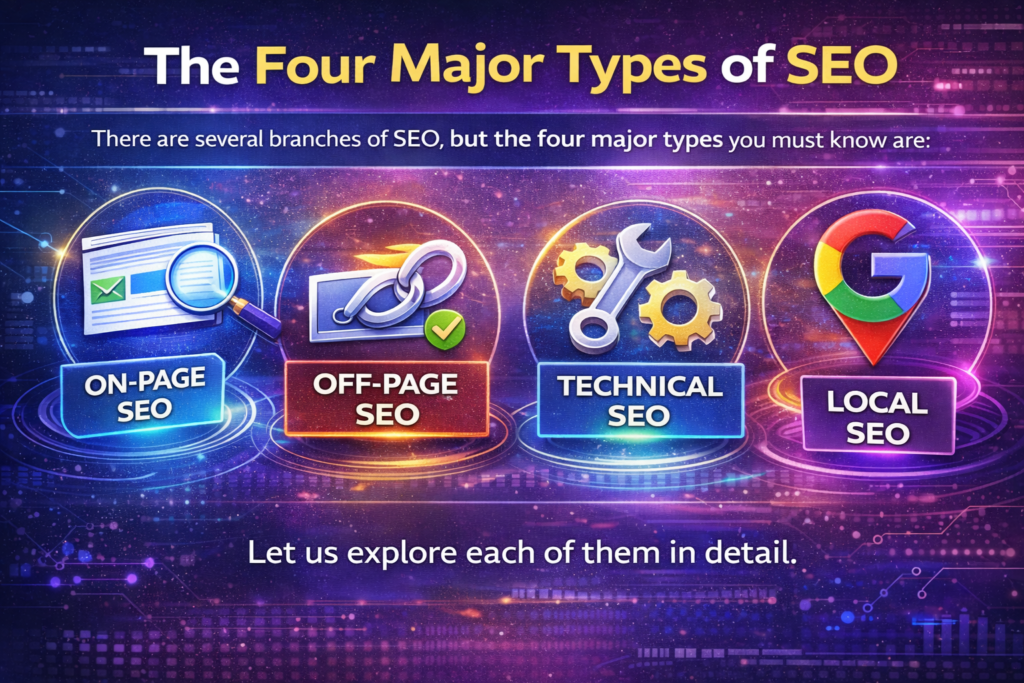
There are several types of SEO, but the four major types you must know are:
- On-Page SEO
- Off-Page SEO
- Technical SEO
- Local SEO
Let us explore each of them in detail.
On-Page SEO
On-page SEO refers to the elements you can control directly on your website.
It focuses on optimizing your content and page structure so search engines clearly understand your topic.
What Does On-Page SEO Include?
On-page SEO includes:
These elements help search engines analyze your pages and determine their relevance.
Why On-Page SEO Is Important
On-page SEO helps search engines understand what your content is about and why it is valuable.
Without proper on-page optimization:
- Your content may not rank well
- Search engines may misinterpret your topic
- Users may struggle to understand your page
Strong on-page SEO improves readability and clarity.
Step 1: Optimize Content
Use Relevant Keywords Naturally
Your content should include relevant keywords that match user search intent. Avoid keyword stuffing and focus on natural placement.
Step 2: Optimize Meta Tags
Improve Title and Meta Description
Your title tag and meta description should clearly describe your page. These elements also influence click-through rate.
Step 3: Structure URLs Properly
Keep URLs Clean and Descriptive
Short, descriptive URLs help both users and search engines understand the page topic.
Step 4: Add Internal Links
Connect Related Pages
Internal links guide users to related content and improve site navigation.
Off-Page SEO
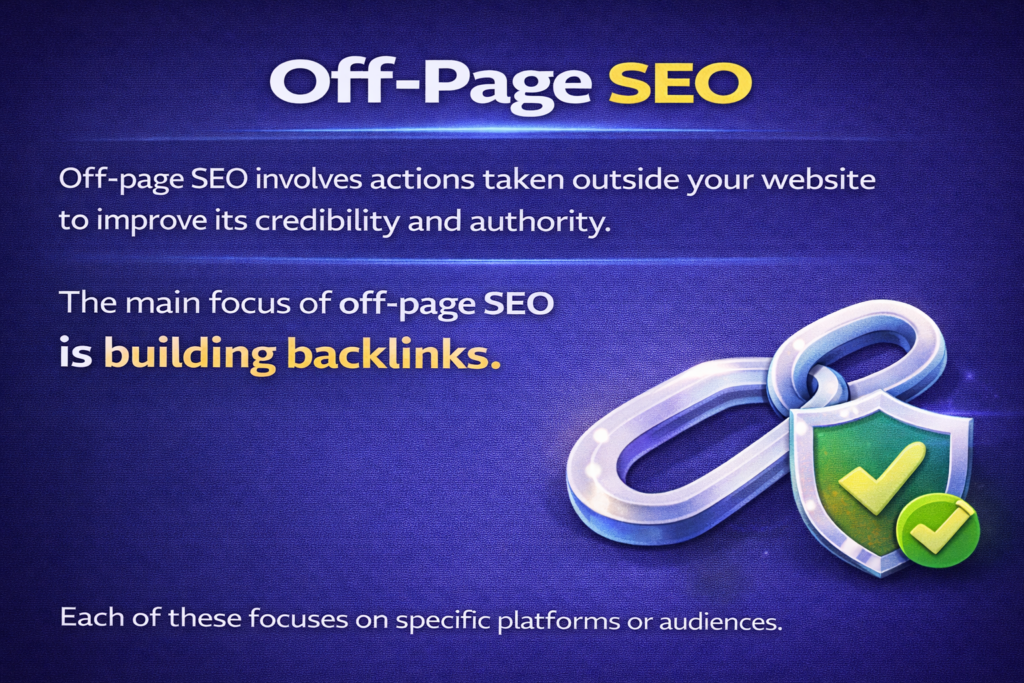
Off-page SEO involves actions taken outside your website to improve its credibility and authority.
The main focus of off-page SEO is building backlinks.
What Are Backlinks?
Backlinks are links from other websites pointing to your site.
When trustworthy websites link to your content, search engines see your website as valuable and credible.
Why Off-Page SEO Matters
The more high-quality backlinks your site has, the more authority it gains.
Off-page SEO helps:
- Build trust
- Improve domain authority
- Increase ranking potential
However, backlinks must come from reputable sources. Low-quality links can harm your site.
Step 1: Build Quality Backlinks
Focus on Trustworthy Websites
Earn links from authoritative and relevant websites.
Step 2: Increase Brand Mentions
Strengthen Online Presence
Even brand mentions without links can contribute to credibility.
Technical SEO
Technical SEO ensures that search engines can crawl and index your website efficiently.
It focuses on performance, speed, and structure rather than content itself.
Why Technical SEO Is Important
If search engines cannot crawl or index your website properly, your content will not rank, no matter how good it is.
Technical SEO improves:
- Website speed
- Mobile responsiveness
- Secure connections
- Structured data
Step 1: Improve Site Speed
Optimize Performance
Faster websites provide better user experience and improve ranking potential.
Step 2: Ensure Mobile-Friendliness
Optimize for All Devices
Your website should work smoothly on smartphones, tablets, and desktops.
Step 3: Fix Crawl Errors
Help Search Engines Access Pages
Remove broken links and ensure your site structure is clear.
Local SEO
Local SEO helps businesses show up in location-based searches like “best cafe near me.”
It is critical for physical stores, restaurants, and service providers targeting nearby customers.
Why Local SEO Is Important
Local SEO helps attract customers from specific geographic areas.
It improves visibility in:
- Google Maps
- Local search results
- “Near me” searches
Step 1: Optimize Business Listings
Keep Business Information Accurate
Ensure your business name, address, and phone number are consistent across platforms.
Step 2: Target Local Keywords
Use Location-Based Terms
Include city or region names in your content where relevant.
Specialized Types of SEO
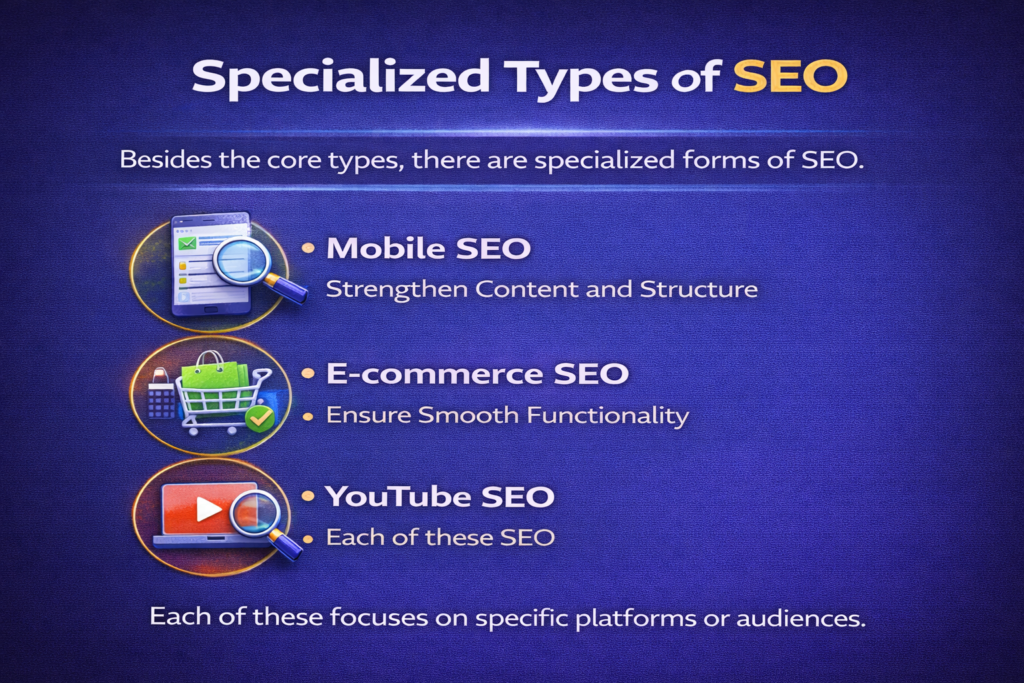
Besides the core types, there are specialized forms of SEO.
These include:
- Mobile SEO
- E-commerce SEO
- YouTube SEO
Each of these focuses on specific platforms or audiences.
Mobile SEO
Mobile SEO ensures your website performs well on mobile devices.
With increasing mobile searches, this is extremely important.
E-Commerce SEO
E-commerce SEO focuses on optimizing product pages, category pages, and online stores.
It helps improve product visibility and increase sales.
YouTube SEO
YouTube SEO optimizes videos for better visibility on YouTube search results.
It includes keyword optimization in titles, descriptions, and tags.
How All Types of SEO Work Together
Each type of SEO has a unique role, but they work best when used together.
- On-page SEO makes your content readable and optimized.
- Off-page SEO builds trust and authority.
- Technical SEO ensures smooth crawling and indexing.
- Local SEO attracts nearby customers.
A complete SEO strategy includes all of them.
Ignoring one area can limit overall performance.
Building a Complete SEO Strategy
To build an effective SEO strategy:
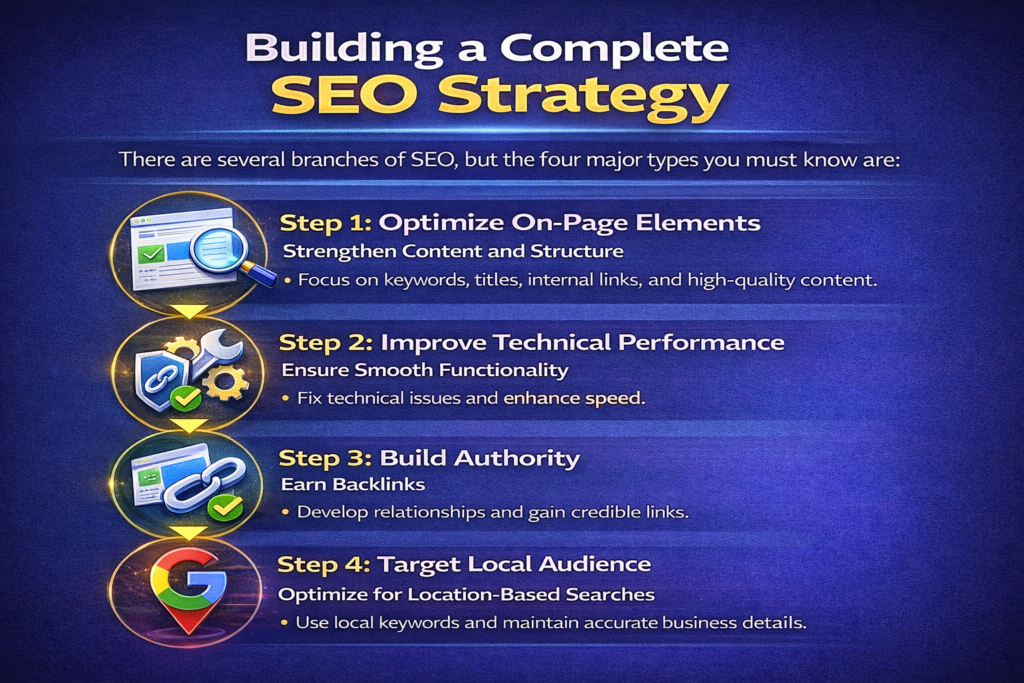
Step 1: Optimize On-Page Elements
Strengthen Content and Structure
Focus on keywords, titles, internal links, and high-quality content.
Step 2: Improve Technical Performance
Ensure Smooth Functionality
Fix technical issues and enhance speed.
Step 3: Build Authority
Earn Backlinks
Develop relationships and gain credible links.
Step 4: Target Local Audience
Optimize for Location-Based Searches
Use local keywords and maintain accurate business details.
Final Summary: Mastering the Types of SEO
To recap, SEO is not just one thing. It is a combination of strategies working in synchronization.
The four main types of SEO are:
- On-page SEO
- Off-page SEO
- Technical SEO
- Local SEO
Mastering these four gives your website the best chance to rank and succeed online.
Each type plays a vital role in improving visibility, authority, performance, and reach.
When all types of SEO work together, they create a powerful strategy that helps your website compete effectively in search engine results.

Related Posts