Welcome to this article. In today’s session, we will understand what a meta description is and why it plays a crucial role in SEO. Whether you are writing blog posts or product pages, mastering meta descriptions can improve your visibility and clicks.
Meta descriptions may seem small, but they have a powerful impact on how users interact with your search result. Let us get started.
What Is a Meta Description?
A meta description is a short snippet of text that appears below the title tag in search engine results.
It provides a brief summary of your web page content. Although it does not appear directly on your web page, it is visible in search engine results pages (SERPs).
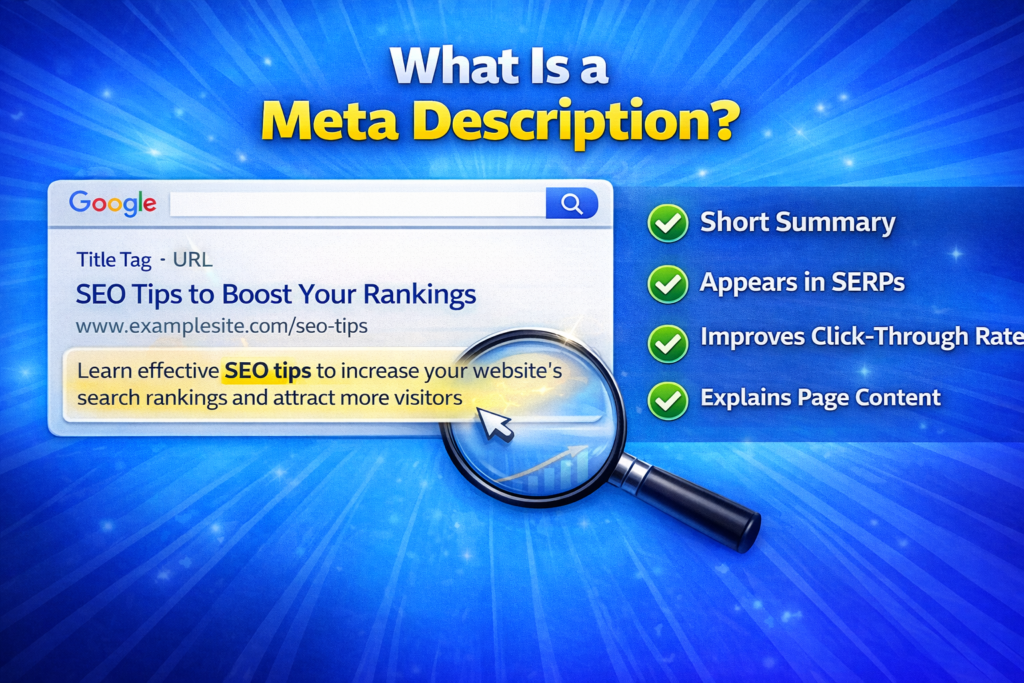
The purpose of a meta description is to inform users about what they can expect if they click on your link.
Where Does the Meta Description Appear?
Meta descriptions appear:
- Below the title tag in search results
- As a summary preview of your page
- On both desktop and mobile search results
It acts as a preview of your content and helps users decide whether your page is relevant to their query.
Why Meta Descriptions Are Important for SEO
Meta descriptions are not a direct ranking factor.
However, they strongly influence whether users click on your result or not.
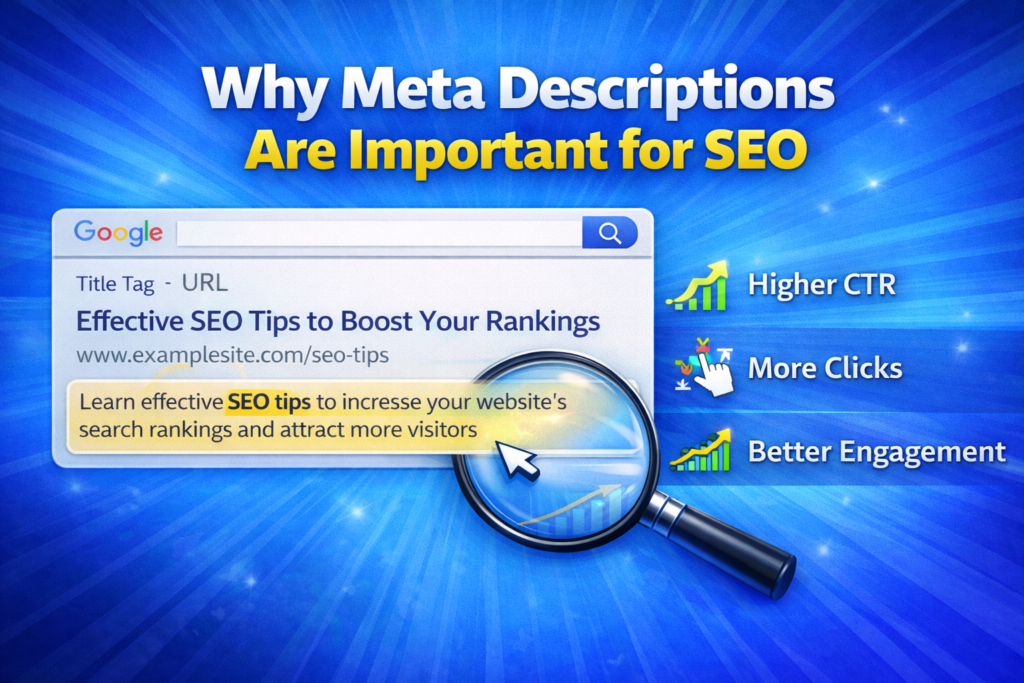
A well-written meta description improves your click-through rate (CTR), which indirectly impacts your SEO performance.
Higher CTR signals that users find your listing relevant and appealing. Over time, improved engagement can support better overall performance.
Ideal Length of a Meta Description
Keep your meta description between 150 to 160 characters.
This ensures your message is fully visible on both desktop and mobile devices.
If your description is too long:
- It may get cut off
- Important information may be hidden
- It may appear incomplete
Clear and concise messaging works best.
Including Focused Keywords in Meta Description
Including your focused keyword naturally in the meta description helps users immediately understand that your content is relevant.
Google often bolds matching keywords in search results, which can catch attention.
However, avoid keyword stuffing. The keyword should fit naturally into the sentence.
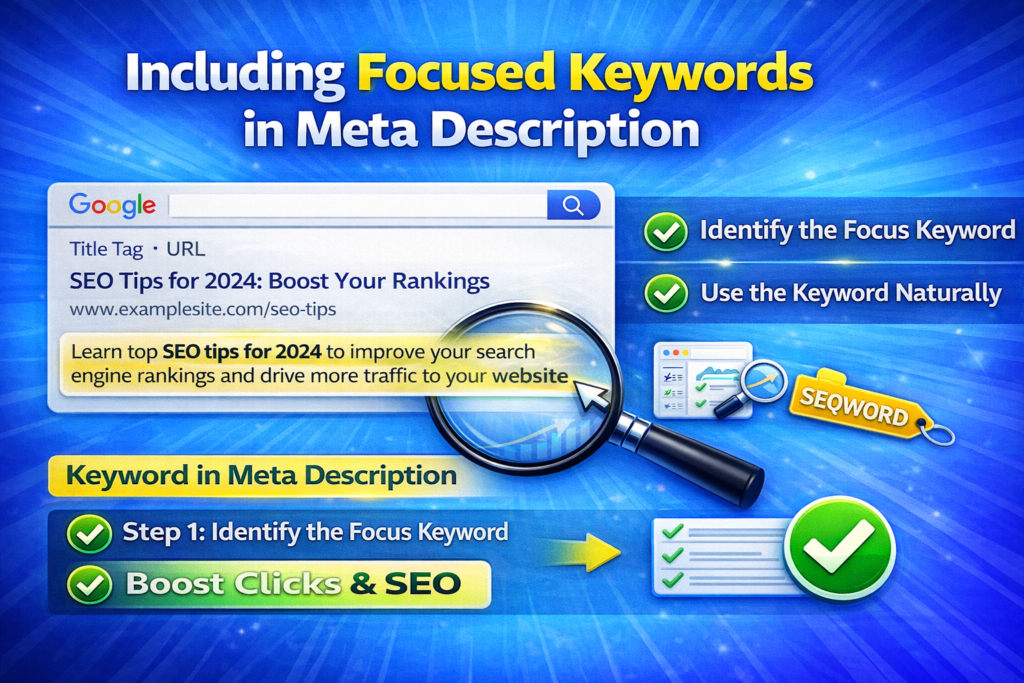
Step 1: Identify the Focus Keyword
Choose a Relevant Search Term
Select the main keyword that represents your page topic.
Step 2: Use the Keyword Naturally
Maintain Readability
Place the keyword in a way that sounds natural and informative.
Writing Meta Descriptions Like a Mini Advertisement
Think of your meta description as a mini advertisement.
You are competing with other results for user attention. Your description should:
- Highlight value
- Offer a clear benefit
- Encourage action
Add a call to action or emphasize what users will gain by clicking.
For example:
- Learn step-by-step strategies
- Discover expert tips
- Find the best solutions
Tell the user what benefit they will get.
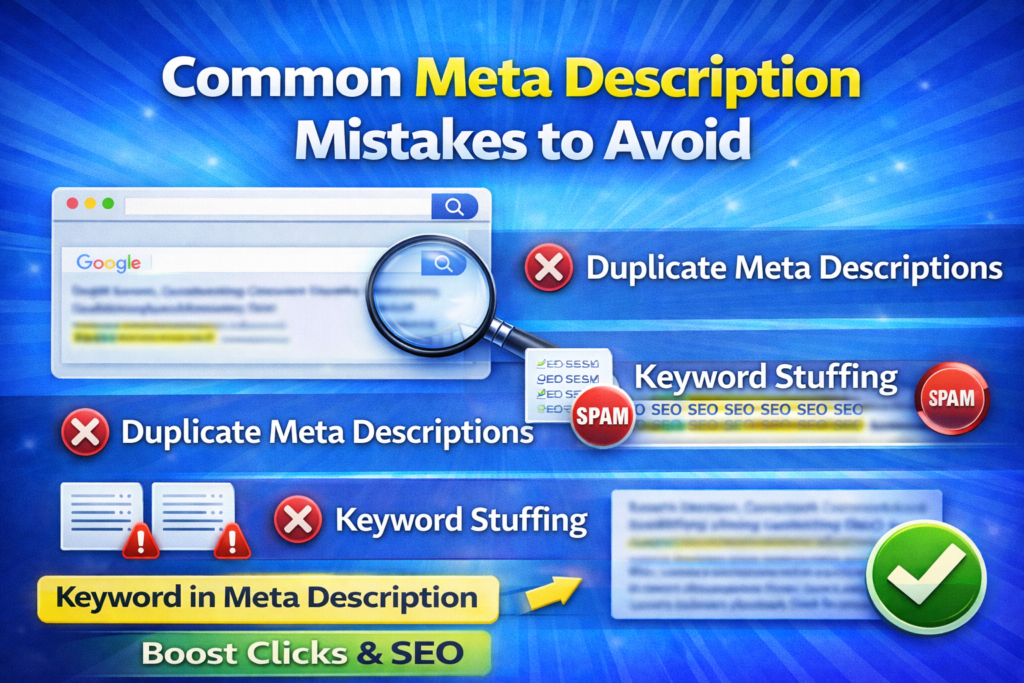
Common Meta Description Mistakes to Avoid
There are several mistakes that can reduce the effectiveness of your meta descriptions.
Duplicate Meta Descriptions
Each page should have a unique meta description.
Duplicate descriptions can confuse search engines and reduce clarity.
Overusing Keywords
Keyword stuffing makes your snippet look spammy and unprofessional.
Keep it natural and user-focused.
Writing Vague Summaries
Avoid generic phrases like:
- “This page is about…”
- “Welcome to our website…”
Be specific and value-driven.
Comparing Bad and Good Meta Descriptions
Let us compare a poorly written description with an optimized one.
Poor example:
“This page talks about SEO and marketing.”
Optimized example:
“Learn practical SEO strategies to improve rankings, boost traffic, and grow your online presence today.”
The optimized version:
- Includes a keyword
- Provides clear value
- Offers a reason to click
- Sounds engaging
This difference can significantly impact your CTR.
Using Tools to Optimize Meta Descriptions
Writing optimized descriptions is easier with the right tools.
SEO tools help you:
- Preview how your snippet will look in Google
- Check character length
- Analyze keyword usage
- Suggest improvements
Using these tools ensures your description is properly formatted and effective.
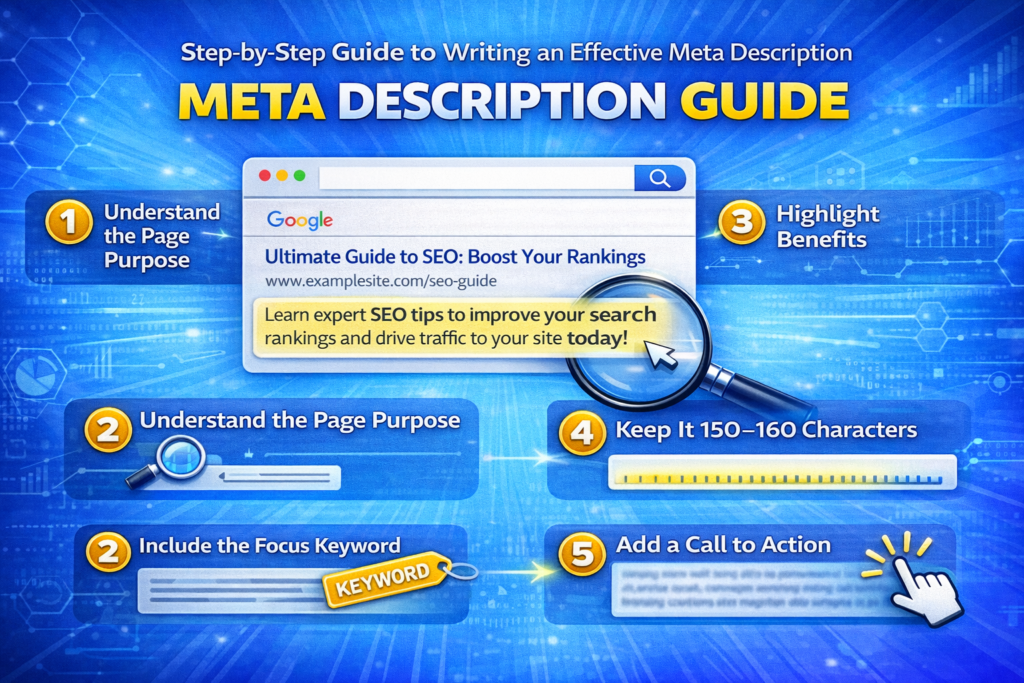
Step-by-Step Guide to Writing an Effective Meta Description
Step 1: Understand the Page Purpose
Clarify the Main Goal
Determine what the page offers and who it is for.
Step 2: Include the Focus Keyword
Align With Search Intent
Make sure the description matches what users are searching for.
Step 3: Highlight Benefits
Show Value Clearly
Explain what the user will gain by clicking.
Step 4: Keep It Within 150–160 Characters
Ensure Full Visibility
Avoid exceeding the recommended length.
Step 5: Add a Call to Action
Encourage Engagement
Use action-oriented language to motivate users.
Meta Description and Click-Through Rate
Even though meta descriptions do not directly impact rankings, they significantly influence CTR.
If your page ranks on the first page but receives few clicks, the issue may be your description.
Improving your meta description can:
- Increase engagement
- Improve traffic
- Strengthen user trust
A compelling snippet attracts more visitors.
Meta Descriptions and User Engagement
Meta descriptions act as your digital elevator pitch.
They introduce your content in just a few words. When users see a clear and compelling summary, they are more likely to click.
Better engagement means:
- Higher traffic
- Increased interaction
- Improved user experience
Final Summary: Make Every Word Count
To summarize, meta descriptions may not directly affect your ranking, but they can significantly improve your click-through rate and user engagement.
They:
- Appear below the title tag in search results
- Provide a summary of your page
- Influence user decisions
- Improve visibility and clicks
Keep your description between 150 to 160 characters. Include your focused keyword naturally. Write it like a mini advertisement. Avoid common mistakes such as duplication and keyword stuffing.
Meta descriptions are your digital elevator pitch.
Make every word count.

Related Posts