
Welcome to this article. In today’s session, we are going to learn about a key element of on-page SEO: the focus keyword. If you have ever used tools like Yoast SEO on WordPress or worked on keyword optimization, you have probably seen this term.
In this detailed guide, we will understand what a focus keyword means, how to choose one, and where to use it effectively on your web page.
What Is a Focus Keyword?
A focus keyphrase, also called a focus keyword, is the main keyword or phrase that you want a specific page or blog post to rank for in search engines.
It tells Google and your SEO tools what your content is all about. Every page should have one clear keyword goal that defines its primary topic.
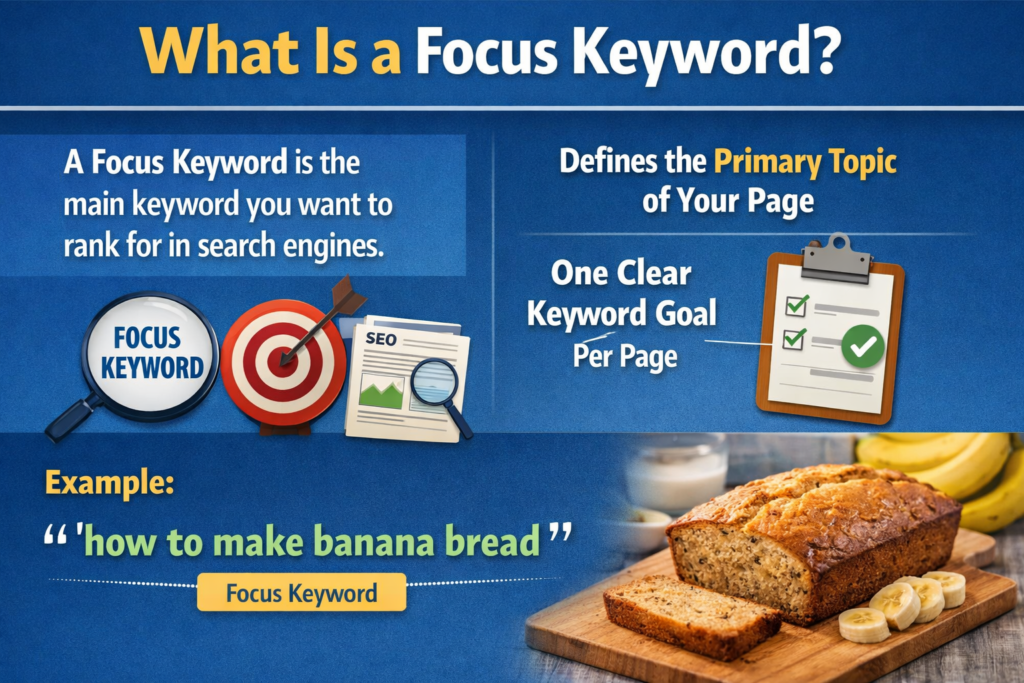
For example, if your blog post is about making banana bread, your focus keyword could be “how to make banana bread.” This phrase represents the central theme of the content.
Why is a Focus Keyword Important?
Focus keywords help align your content with user search intent. When someone types a query into a search engine, they are looking for specific information. Your focus keyword helps search engines match your page to that query.
When used properly, a focus keyword:
- Improves your chances of ranking for a specific search term
- Attracts the right audience
- Clarifies your content topic
- Helps SEO tools evaluate optimization
Without a defined focus keyword, your content may lack direction and clarity, making it harder to rank effectively.
How Focus Keywords Help Search Engines
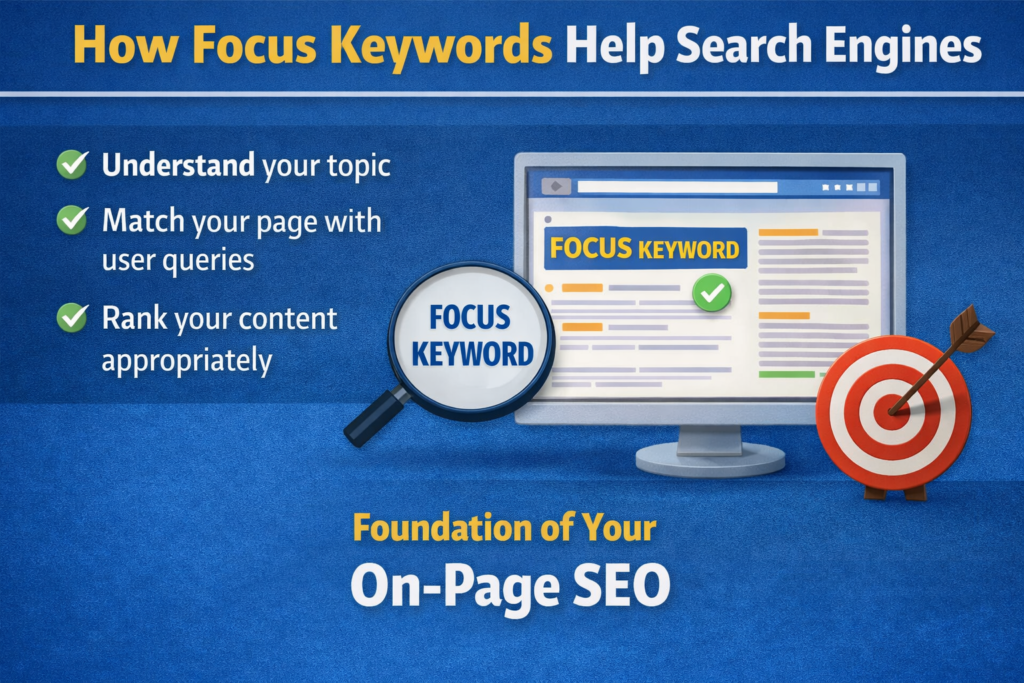
Search engines analyze web pages to determine what they are about. A clearly defined focus keyword signals the main topic.
When your keyword appears in strategic locations such as the title, headings, and meta description, it reinforces the page’s relevance.
This makes it easier for search engines to:
- Understand your topic
- Match your page with user queries
- Rank your content appropriately
The focus keyword acts as the foundation of your on-page SEO strategy.
Difference Between Focus Keyword and Other Keywords
A common confusion is between focus keywords and other related keywords.
Think of your focus keyword as the main theme of the page. It defines the core subject.
Related keywords, on the other hand, support and add depth to your content. They help explain the topic further and improve semantic relevance.
For example:
- Focus keyword: How to make banana bread
- Related keywords: Banana bread recipe, easy banana bread, homemade banana bread
The focus keyword drives the page’s direction, while related keywords enhance it.
How to Choose the Right Focus Keyword
Choosing the right focus keyword requires research. You cannot select a keyword randomly. It should meet specific criteria.
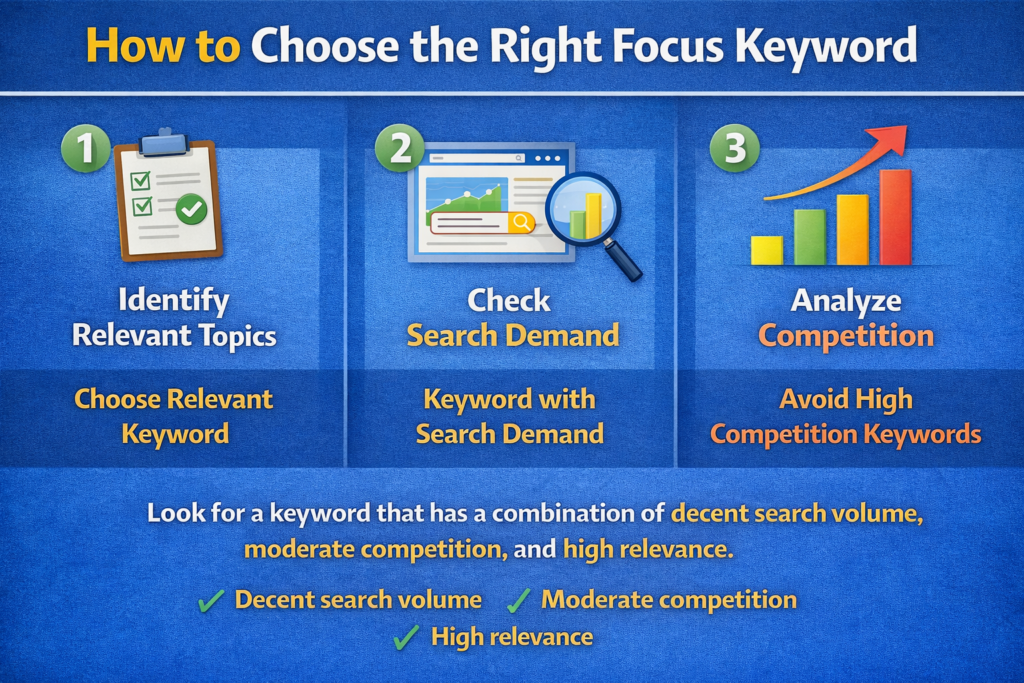
Step 1: Identify Relevant Topics
Choose a Keyword Relevant to Your Content
Your focus keyword must directly match the main topic of your page. It should accurately describe what your content delivers.
If your content does not match the keyword, users will leave quickly, and rankings may drop.
Step 2: Check Search Demand
Select a Keyword People Are Actively Searching For
Use keyword research tools to identify whether users are searching for the term.
A good focus keyword should have search demand. Otherwise, even if you rank, it will not bring traffic.
Step 3: Analyze Competition
Avoid Extremely Competitive Keywords
If a keyword is too competitive, ranking may be difficult, especially for new websites.
Look for a keyword that has a balanced combination of:
- Decent search volume
- Moderate competition
- High relevance
This improves your chances of ranking successfully.
Where to Use Your Focus Keyword
For your SEO to be effective, your focus keyword should appear in strategic locations across your web page. However, it must be used naturally.
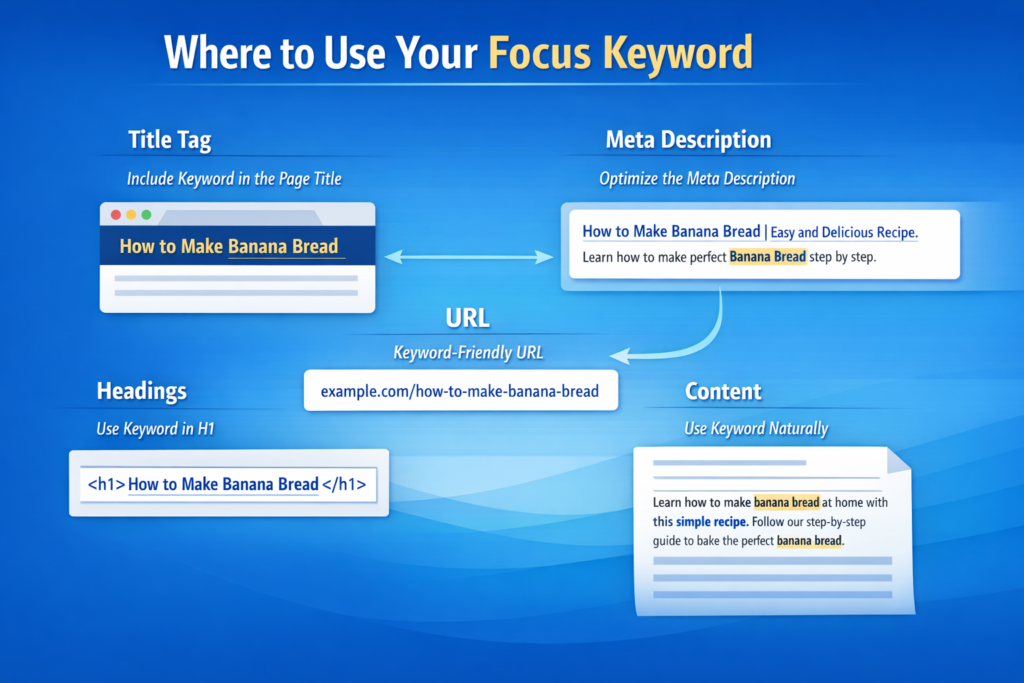
Step 1: Use It in the Title
Include the Keyword in the Page Title
Your page title is one of the most important ranking elements. Including your focus keyword here signals strong relevance.
Step 2: Add It in the Meta Description
Optimize the Meta Description
While meta descriptions do not directly impact rankings, they influence click-through rates. Including the focus keyword here improves clarity and visibility.
Step 3: Include It in the URL
Create a Clean, Keyword-Friendly URL
Your URL should reflect your focus keyword in a simple and readable format.
For example:
- example.com/how-to-make-banana-bread
Step 4: Use It in Headings
Add the Keyword in H1 or Main Heading
Your main heading should clearly contain the focus keyword. This reinforces the topic for both users and search engines.
Step 5: Use It Naturally in the Content
Maintain Natural Placement
Your focus keyword should appear naturally throughout the content. Avoid forced repetition.
Search engines are intelligent and can detect unnatural keyword usage.
Avoid Common SEO Mistakes
While using a focus keyword, avoid common SEO mistakes that can negatively impact rankings.
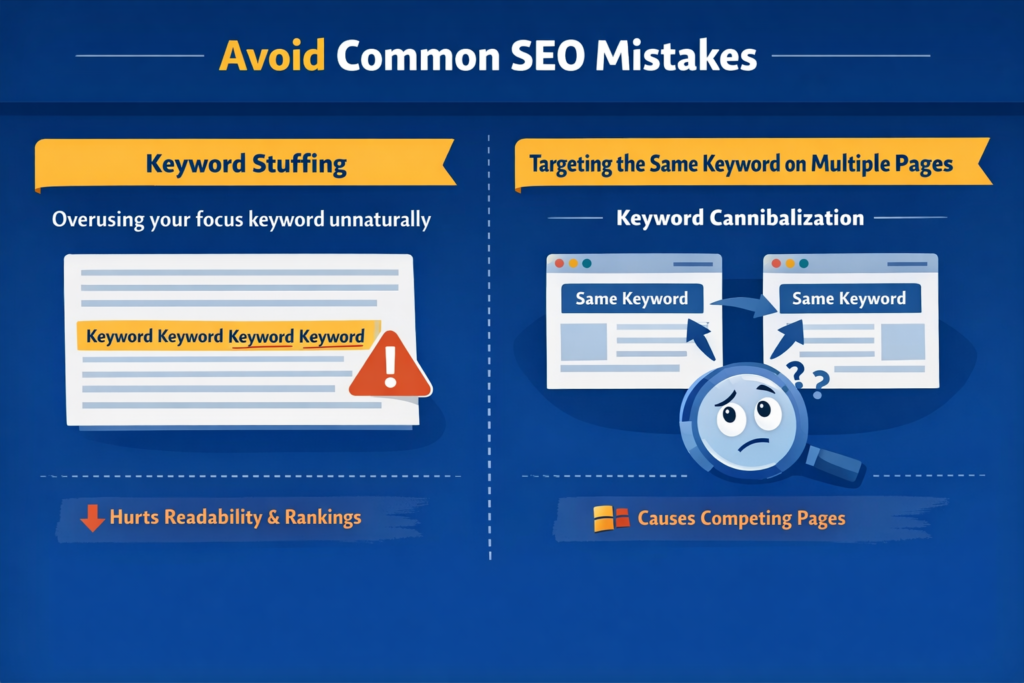
Keyword Stuffing
Keyword stuffing means overusing your focus keyword excessively in an unnatural way.
For example, repeating the same phrase too many times in one paragraph can harm readability and rankings.
Always prioritize natural writing.
Targeting the Same Keyword on Multiple Pages
If multiple pages on your website target the same focus keyword, it can confuse search engines.
This issue is known as keyword cannibalization. It may cause your pages to compete against each other instead of ranking effectively.
Each page should have a unique focus keyword.
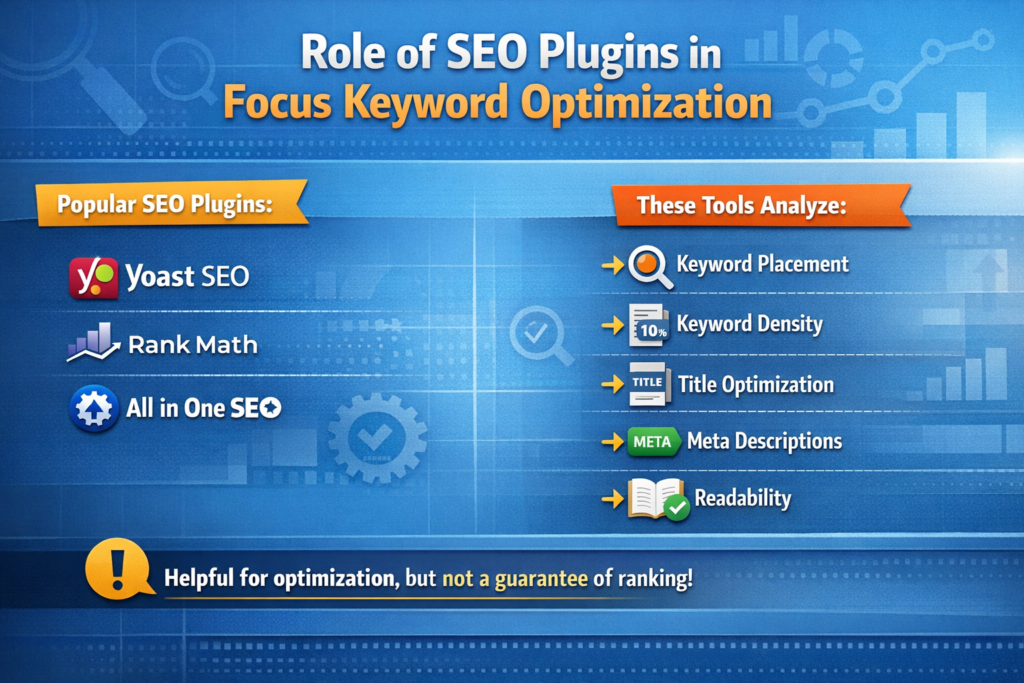
Role of SEO Plugins in Focus Keyword Optimization
SEO plugins like:
- Yoast SEO
- Rank Math
- All-in-One SEO
help you track how well your focus keyword is optimized on a page.
These tools analyze:
- Keyword placement
- Keyword density
- Title optimization
- Meta description usage
- Readability
They provide suggestions to improve optimization but remember that they are guides, not guarantees of ranking.
Practical Example of Focus Keyword Usage
Let us look at a quick example.
If you are writing a blog on “how to make banana bread,” your focus keyword would be “how to make banana bread.”
This phrase should appear in:
- The title
- The meta description
- The URL
- The main heading
- Naturally throughout the post
By doing this, you clearly signal to search engines that your content is about that specific topic.
Aligning Focus Keyword with User Intent
User intent plays a major role in keyword effectiveness.
When choosing a focus keyword, ask yourself:
- What is the user trying to find?
- Is the user looking for information, a product, or a service?
- Does my content satisfy that intent?
If your content matches user intent closely, your chances of ranking improve significantly.
Maintaining Natural Keyword Usage
Using your focus keyword naturally is essential.
Over-optimization can:
- Reduce readability
- Decrease user engagement
- Trigger search engine penalties
The goal is to write for users first and optimize for search engines second.
A well-written article with natural keyword integration performs better than one filled with forced repetition.
Final Summary: The Role of Focus Keyword in SEO
To wrap up, a focus keyword is your page’s main keyword goal. It defines the core topic of your content and guides your optimization strategy.
It helps search engines understand your topic and boosts your chances of ranking for that specific search term.
Remember:
- Choose your focus keyword wisely.
- Ensure it matches search intent.
- Use it in strategic locations.
- Avoid keyword stuffing.
- Do not target the same keyword on multiple pages.
When selected carefully and used naturally, a focus keyword becomes a powerful tool in your on-page SEO strategy.

Related Posts