Many advertisers use Facebook Ads Manager daily but are not fully aware of what certain technical terms mean. One such term is Ad Set ID. While creating or managing Facebook ad campaigns, you may notice different IDs associated with campaigns, ad sets, and ads. These IDs often look similar, which creates confusion.
In this article, we will clearly explain what an Ad Set ID is, how it is different from Campaign ID and Ad Creative ID, and why it is important in Facebook advertising.
Understanding the Structure of a Facebook Ad Campaign
Before understanding Ad Set ID, it is important to understand how a Facebook ad campaign is structured.
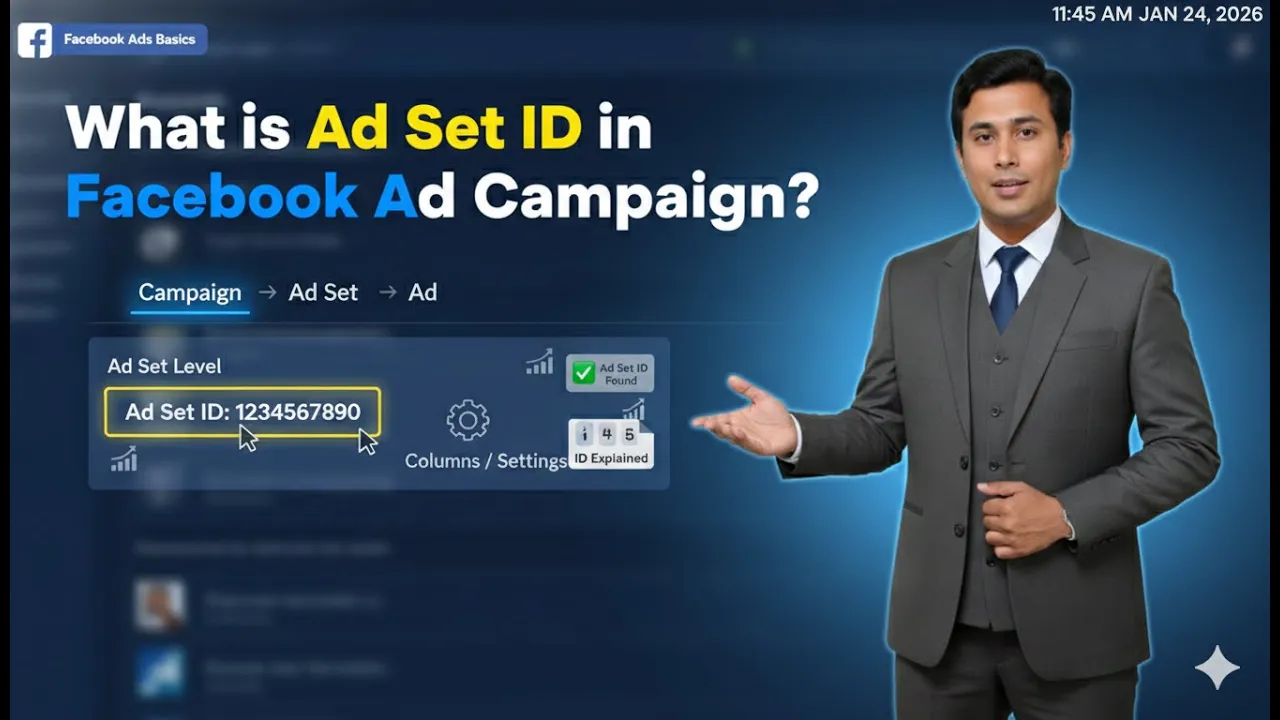
A Facebook ad campaign consists of three main levels:
Each level has its own identity number, which helps Facebook differentiate between different components of the campaign.
Campaign ID
When you create a new ad campaign in Facebook Ads Manager and click on the three dots (⋯) at the campaign level, you will see a number labeled as the Campaign ID.
This Campaign ID:
- Is unique to that specific campaign
- Helps identify the campaign internally
- Is different from other campaigns
Even though Campaign ID and Ad Set ID look similar in format, they represent different levels of the ad structure.
Step 1: Locate the Campaign ID
Click on the Three Dots at Campaign Level
To find the Campaign ID:
- Go to Facebook Ads Manager.
- Create or open an existing campaign.
- Click on the three dots (⋯) at the campaign level.
- You will see the Campaign ID displayed.
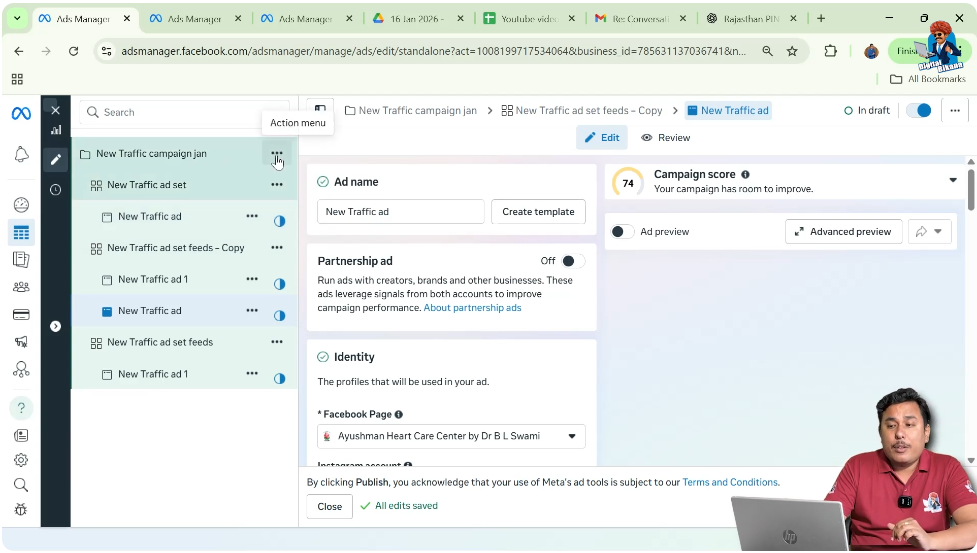
This ID is specific to that campaign only.
What is Ad Set ID?
Ad Set ID is the unique identification number assigned to each ad set inside a campaign.
Just like Campaign ID identifies the campaign, Ad Set ID identifies a specific ad set.
If a campaign contains multiple ad sets, each ad set will have its own separate Ad Set ID.
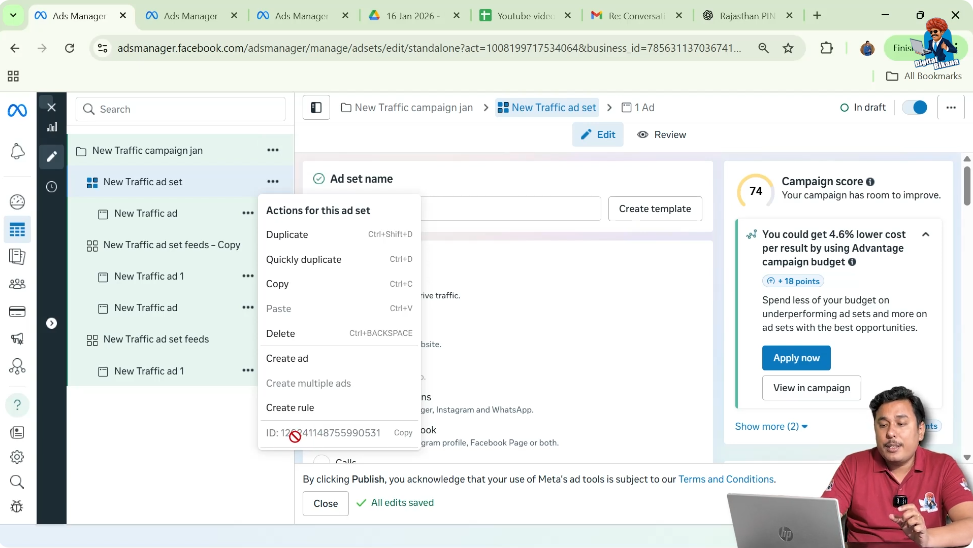
Step 2: Locate the Ad Set ID
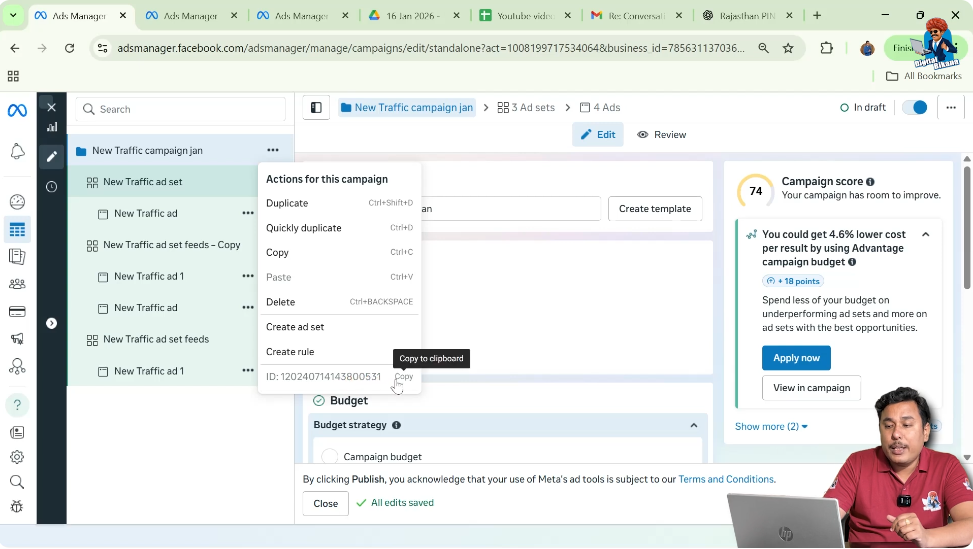
Click on the Three Dots at Ad Set Level
To find the Ad Set ID:
- Go to the Ad Set level inside your campaign.
- Click on the three dots (⋯) next to the ad set.
- You will see the Ad Set ID displayed.
Although it may look similar to the Campaign ID, it is completely different.
Multiple Ad Sets in One Campaign
A single Facebook ad campaign can contain multiple ad sets.
For example:
- A campaign may have three ad sets.
- Each ad set will have its own unique Ad Set ID.
- Even though they belong to the same campaign, their IDs will differ.
This helps Facebook track performance and data separately for each ad set.
Ad Creative ID
Apart from Campaign ID and Ad Set ID, there is also something called Ad Creative ID.
Each ad creative or ad copy inside an ad set also has its own ID.
This means:
- Campaign → Has Campaign ID
- Ad Set → Has Ad Set ID
- Ad Creative → Has Ad Creative ID
Each level has its own unique identity.

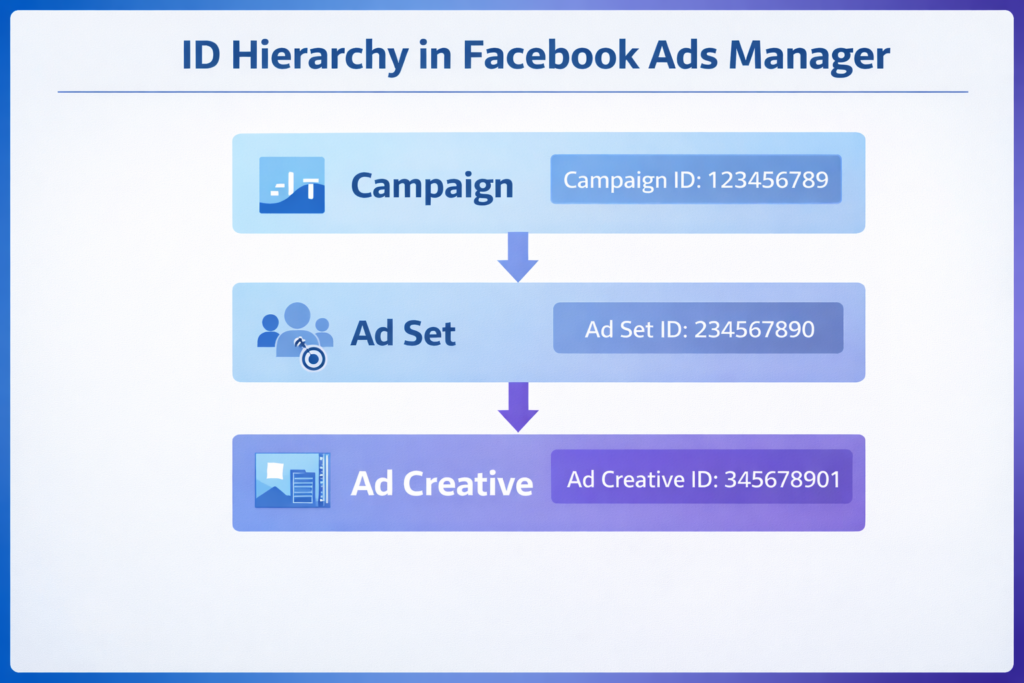
Step 3: Understand ID Hierarchy
Campaign ID vs Ad Set ID vs Ad Creative ID
To clearly understand:
- Campaign ID identifies the entire campaign.
- Ad Set ID identifies a specific ad set within that campaign.
- Ad Creative ID identifies a specific ad inside the ad set.
Even though the numbers may look similar, they serve different purposes.
Why is Ad Set ID Important?
Ad Set ID is important because it helps identify the performance and source of results within a campaign.
It plays a major role in:
- Software integrations
- Lead downloads
- Performance analysis
Let us understand these use cases one by one.
Use Case 1: Software Integration
Whenever you integrate third-party software with your Facebook ad campaign, there may be a requirement to provide the Ad Set ID.
Many automation or integration tools require:
- Campaign ID
- Ad Set ID
- Ad Creative ID
This allows the software to track data accurately.
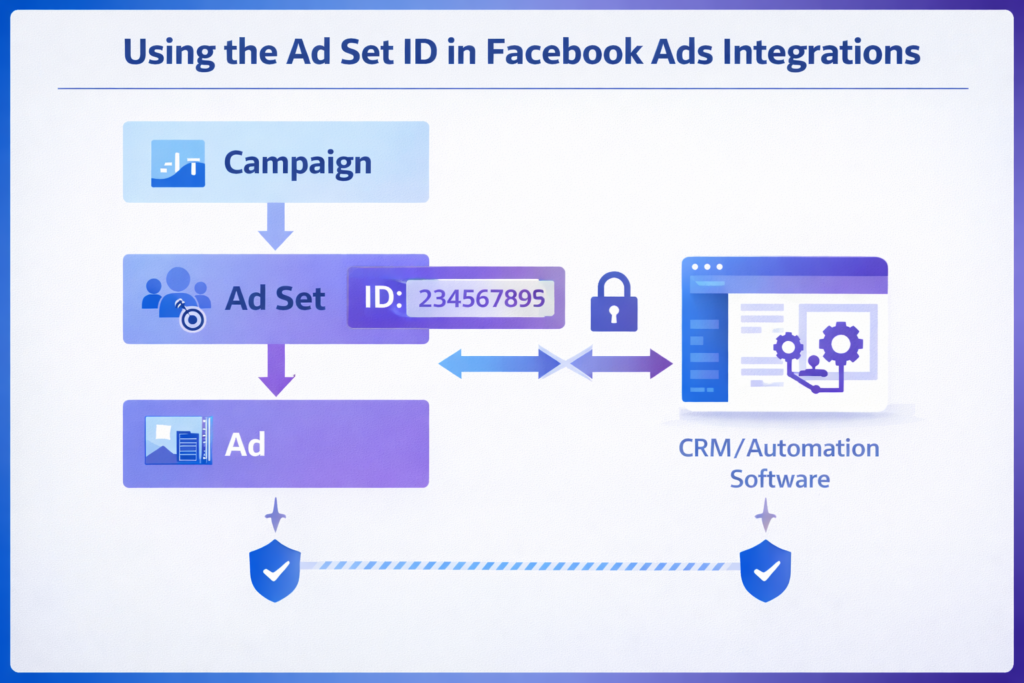
Step 4: Using Ad Set ID in Integrations
Required for External Software Connection
When connecting external software to Facebook Ads:
- The software may ask for the Ad Set ID.
- This ensures that data is linked to the correct ad set.
- Without the correct ID, tracking may not work properly.
Therefore, Ad Set ID becomes essential for integrations.
Use Case 2: Downloading Leads
If you are running a lead ad campaign, you may have downloaded leads in Excel format.
In that Excel sheet, you will notice that:
- Campaign ID
- Ad Set ID
- Ad Creative ID
are mentioned alongside each lead.
This helps identify where the lead came from.
Step 5: Identify Lead Source Using Ad Set ID
Track Which Ad Set Generated the Lead
When analyzing leads:
- Check the Ad Set ID in the Excel sheet.
- Match it with the Ad Set ID inside Ads Manager.
- Identify which ad set generated that specific lead.
This helps in better performance analysis.
Use Case 3: Performance Analysis
When analyzing the performance of a campaign, advertisers often compare different ad sets.
Since each ad set has a unique Ad Set ID, it becomes easy to:
- Identify high-performing ad sets
- Identify low-performing ad sets
- Optimize accordingly
Step 6: Analyze Performance by Ad Set ID
Compare Ad Sets Within Same Campaign
During performance analysis:
- Look at different ad sets.
- Compare their results.
- Use Ad Set ID to differentiate clearly.
This allows advertisers to understand which ad set performed better.
How Ad Set ID Helps in Data Organization
Ad Set ID acts as a technical identity marker. It ensures:
- Accurate reporting
- Organized campaign data
- Clear tracking structure
Without IDs, it would be difficult to manage large advertising accounts.
Why IDs Look Similar
Many advertisers get confused because Campaign ID, Ad Set ID, and Ad Creative ID look similar.
They:
- Are long numeric codes
- Follow similar formatting
- Appear almost identical
However, each one belongs to a different level of the campaign structure.
Ad Set ID as Identity of Ad Set
In simple terms, Ad Set ID is the identity of the ad set.
Just like:
- A person has an ID card
- A product has a serial number
An ad set has an Ad Set ID.
This ID uniquely identifies that ad set within Facebook’s system.
Practical Example Scenario
Suppose you have:
- One campaign
- Three ad sets
- Each ad set has two ads
In this case:
- The campaign will have one Campaign ID.
- Each of the three ad sets will have separate Ad Set IDs.
- Each ad inside the ad sets will have its own Ad Creative ID.
This hierarchical structure keeps everything organized.
When Should You Use Ad Set ID?
You may need the Ad Set ID when:
- Integrating external tools
- Downloading and analyzing leads
- Conducting detailed performance reviews
- Managing large-scale ad accounts
It is mostly required for technical or analytical purposes.
Final Explanation in Simple Words
Ad Set ID is simply a unique number assigned to an ad set inside a Facebook ad campaign.
It helps:
- Identify the ad set
- Track performance
- Connect integrations
- Analyze lead sources
It is not something you use daily manually, but it is extremely important for backend tracking and analysis.
Conclusion
Ad Set ID in Facebook ad campaigns is a unique identification number assigned to each ad set within a campaign. Although it may look similar to Campaign ID or Ad Creative ID, each serves a different purpose.
Ad Set ID is especially useful when integrating third-party software, downloading leads, and analyzing performance. It helps advertisers understand which specific ad set generated results and how each ad set performs individually.
In simple terms, Ad Set ID is the identity of an ad set inside a Facebook ad campaign. Understanding this structure helps advertisers manage and analyze their campaigns more effectively.

Related Posts