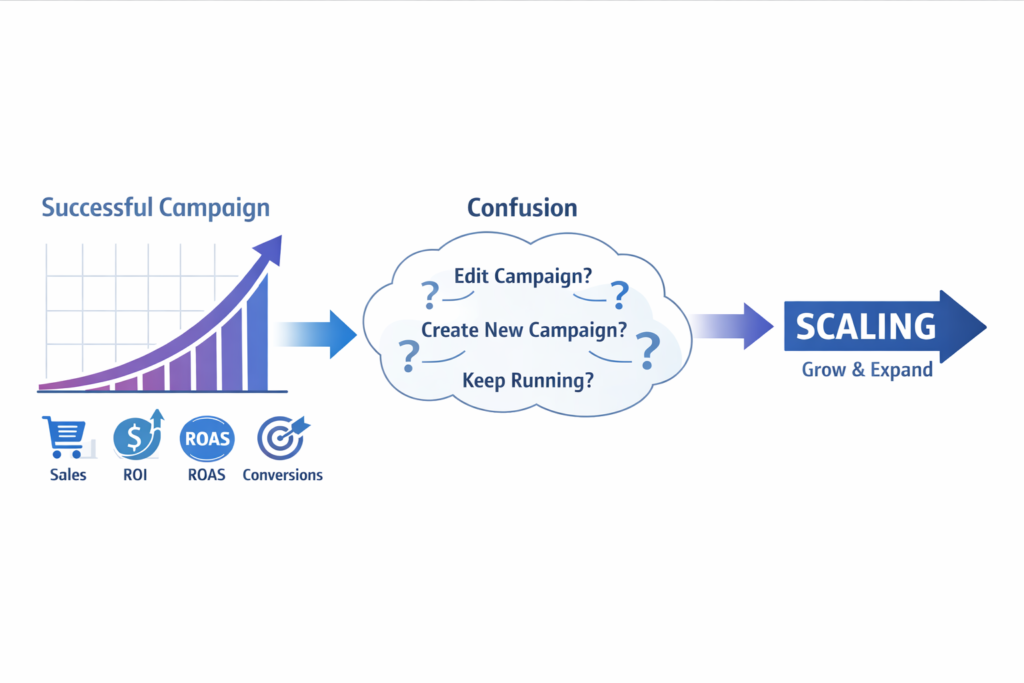
When running Facebook ads, one of the most important milestones for any advertiser is identifying a successful ad campaign. A campaign is considered successful when it delivers good results consistently. These results may include strong sales, positive responses, good return on investment (ROI), and a healthy return on ad spend (ROAS).
Once an ad campaign reaches this stage, advertisers often face confusion. They start wondering whether they should edit the existing campaign, create a new one, or leave it untouched. Many advertisers also fear that making changes might disturb the current performance and lead to a loss of results.
This situation is where the concept of scaling in Facebook ads comes into play.
Understanding the Need for Scaling
What Happens After a Campaign Becomes Successful?
When an ad campaign performs well, it usually means:
- The targeting is correct
- The audience is responding positively
- The ads are generating good sales
- The ROI and ROAS are satisfactory
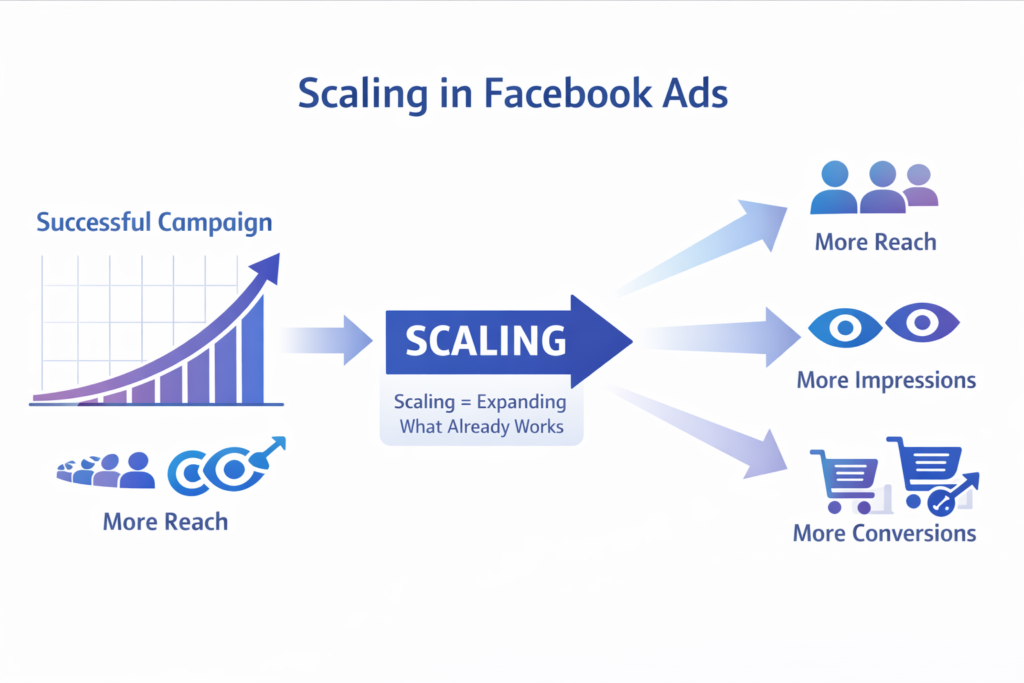
At this stage, advertisers are happy with the campaign’s performance but also want to increase results further. The goal becomes getting more reach, more impressions, and more conversions without losing the performance that already exists.
This is exactly what scaling is meant to achieve.
Why Advertisers Feel Confused About Scaling
Once a campaign is successful, advertisers often face questions like:
- Should I increase the budget or not?
- Should I create a new campaign?
- Should I edit the current campaign?
- Will changing anything reduce my results?
This fear is natural because a working campaign feels fragile. However, instead of randomly editing or duplicating campaigns, advertisers should understand proper scaling methods.
What Does Scaling Mean in Facebook Ads?
Scaling in Facebook ads means increasing the performance and results of a successful ad campaign in a structured way.
The main objective of scaling is:
- To reach more people
- To generate more impressions
- To increase conversions and sales
- To maintain or improve ROI and ROAS
Scaling is not about changing what is already working; it is about expanding it smartly.
Types of Scaling in Facebook Ads
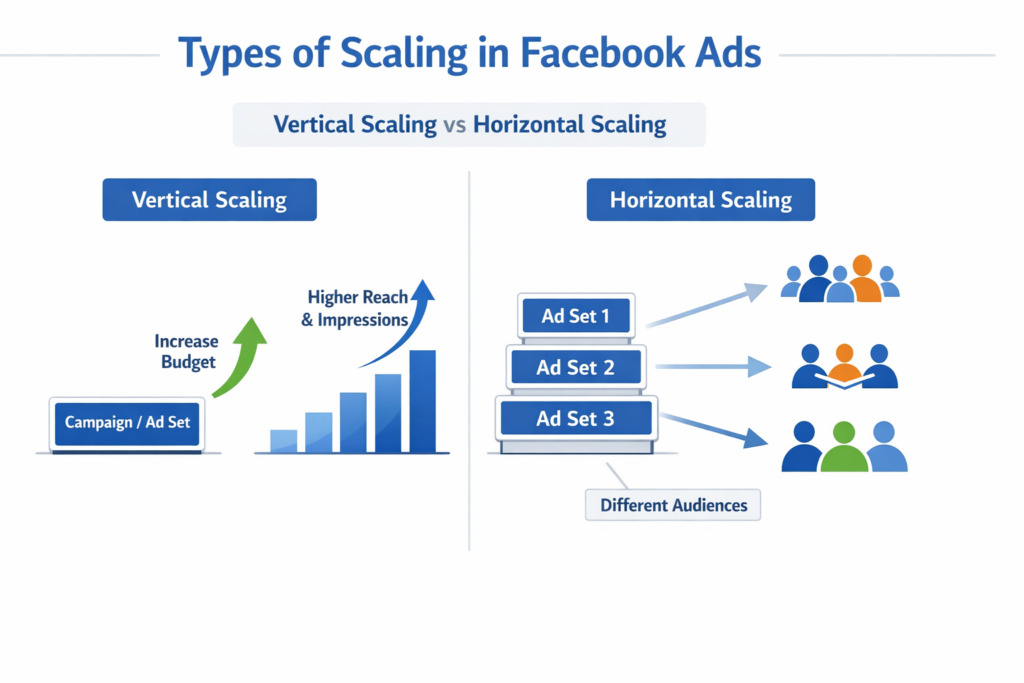
There are two main methods of scaling Facebook ad campaigns:
- Vertical Scaling
- Horizontal Scaling
Both methods aim to increase results, but they work in different ways.
What Is Vertical Scaling in Facebook Ads?
Definition of Vertical Scaling
Vertical scaling means increasing the budget of an existing ad campaign or ad set so that the ad reaches more people.
This method focuses on:
- Increasing reach
- Increasing impressions
- Getting more results from the same setup
Vertical scaling works on the principle that if an ad is already performing well, increasing its budget can help generate more conversions.
How Vertical Scaling Works
When you increase the budget:
- Meta serves your ads to more users
- Your ads get more impressions
- The campaign has more opportunities to perform
As a result, you may see:
- Higher reach
- More leads or sales
- Increased overall results
This is called vertical scaling because you are scaling upward by increasing spend.
Where Can You Increase the Budget?
Vertical scaling can be done at different levels, depending on how the campaign was designed:
Ad Set Level
- Increase budget at the ad set level
- Useful when specific ad sets are performing better
Campaign Level
- Increase budget at the campaign level
- Useful when campaign budget optimization is enabled
Both approaches aim to expand reach and impressions.
Purpose of Vertical Scaling
The main purpose of vertical scaling is:
- To maximize results from a proven setup
- To allow Meta to show ads more frequently
- To increase performance without changing targeting or creatives
Vertical scaling is often the simplest and fastest way to scale a campaign.
What Is Horizontal Scaling in Facebook Ads?
Definition of Horizontal Scaling
Horizontal scaling means creating additional ad sets within the same campaign, each targeting different audiences.
Instead of increasing the budget of existing ad sets, you:
- Add more ad sets
- Target new audience segments
- Expand reach horizontally across different groups
This method helps avoid over-reliance on a single audience.
How Horizontal Scaling Works
Suppose you have:
- One successful campaign
- Four ad sets inside that campaign
If the campaign is performing well, you can:
- Create 10 additional ad sets
- Target different audiences in each ad set
After doing this:
- Total ad sets become 14
- Each ad set targets a unique audience
- The campaign now reaches a wider user base
This is known as horizontal scaling.
Why Horizontal Scaling Is Useful
Horizontal scaling allows you to:
- Explore new audiences
- Reduce dependency on one audience group
- Maintain performance while expanding reach
Instead of pushing more budget into the same audience, you expand into new segments.
Difference Between Vertical and Horizontal Scaling
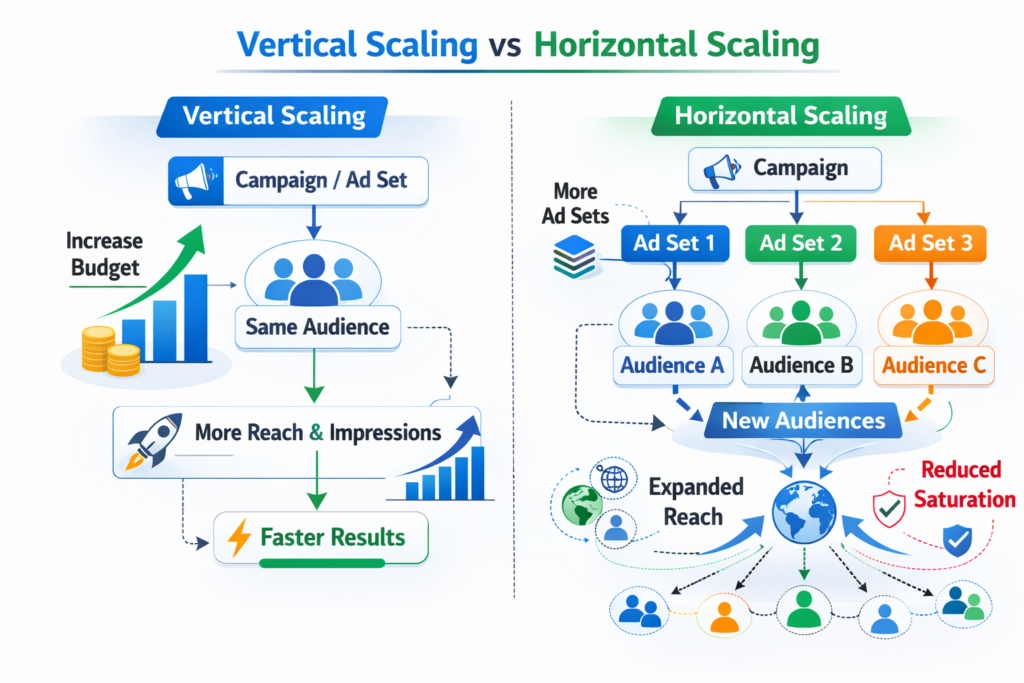
Vertical Scaling Characteristics
- Increases budget
- Focuses on the same audience
- Increases impressions and reach
- Simpler to implement
- Faster results
Horizontal Scaling Characteristics
- Adds new ad sets
- Targets new audiences
- Expands reach across segments
- Requires more setup
- Reduces audience saturation
Both methods have their place and can be used independently or together.
Choosing the Right Scaling Method
When to Use Vertical Scaling
Vertical scaling is suitable when:
- The campaign is delivering consistent results
- The audience size is large enough
- You want quick growth
It works best when the existing audience still has room for expansion.
When to Use Horizontal Scaling
Horizontal scaling is suitable when:
- You want to test new audiences
- You want to avoid exhausting one audience
- You already have a proven campaign structure
This method helps diversify traffic sources.
Can You Use Both Scaling Methods Together?
Yes, both methods can be used together.
An advertiser can:
- Increase the budget (vertical scaling)
- Add more ad sets (horizontal scaling)
Using both approaches allows:
- Wider reach
- More impressions
- Balanced audience exposure
However, scaling should always be done carefully to maintain performance.
Common Fear While Scaling Facebook Ads
Fear of Losing Results
One of the biggest fears advertisers have is:
- Losing existing performance
- Disturbing a winning campaign
This fear often prevents advertisers from scaling at all.
Why This Fear Exists
The fear exists because:
- The campaign is already giving good results
- Advertisers worry about algorithm changes
- Any edit feels risky
Understanding proper scaling methods reduces this fear significantly.
Scaling Without Changing What Works
The key idea behind scaling is:
- Do not change what is already working
- Expand on it instead
Vertical scaling keeps the structure intact while increasing reach.
Horizontal scaling keeps the campaign intact while adding new audiences.
Both methods respect the original success of the campaign.
Benefits of Scaling Facebook Ad Campaigns
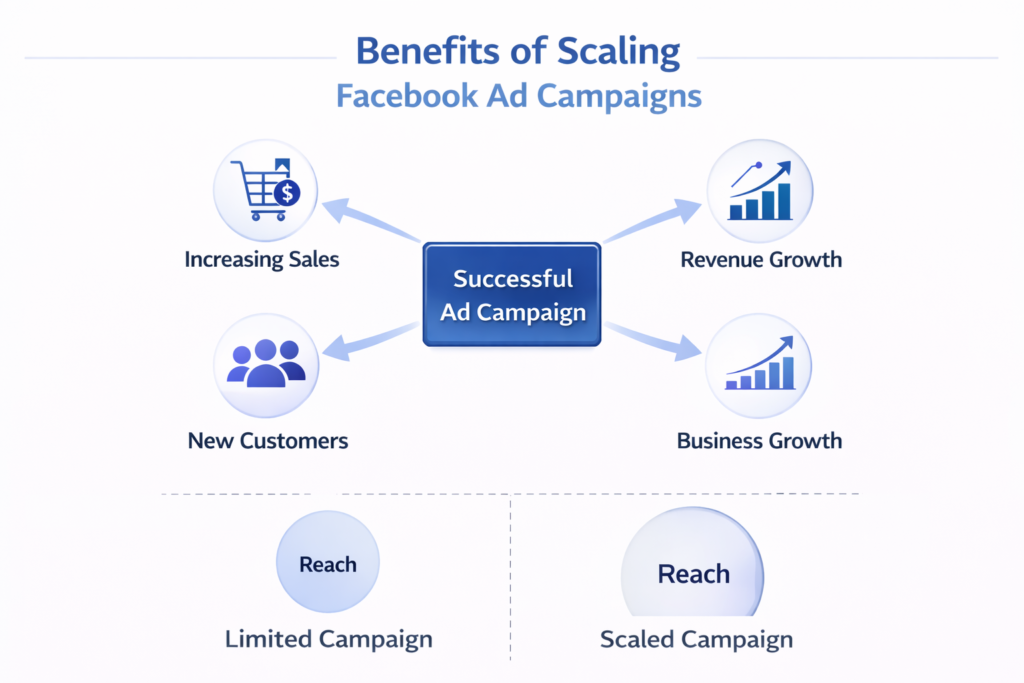
Scaling helps advertisers:
- Increase sales volume
- Improve revenue
- Reach new customers
- Grow business faster
Without scaling, a campaign remains limited to its current performance level.
Key Takeaways About Scaling in Facebook Ads
Let’s summarize the most important points:
- Scaling means increasing results from a successful campaign
- Scaling is done only after identifying good performance
- There are two scaling methods:
- Vertical scaling (increasing budget)
- Horizontal scaling (adding ad sets)
- Vertical scaling increases reach and impressions
- Horizontal scaling targets new audiences
- Both methods help grow results safely
Final Thoughts
Scaling is a crucial step in Facebook advertising once a campaign starts delivering strong results. Instead of creating confusion or fear, scaling should be seen as a structured way to grow what already works.
By understanding vertical and horizontal scaling clearly, advertisers can confidently expand their campaigns, reach more users, and generate more conversions without risking existing performance.
Scaling is not about guessing—it is about strategic growth.

Related Posts