When running advertisements on Facebook or Meta platforms, understanding performance metrics is extremely important. These metrics help advertisers evaluate how well their campaigns are performing and where their budget is being spent. One such commonly used and important metric is CPC.
CPC stands for Cost Per Click. As the name suggests, it refers to the amount of money an advertiser pays for each click received on their ad. In Facebook Ads Manager, CPC appears while analyzing campaign results and helps advertisers understand the cost efficiency of their ads.
In this article, we will explain what CPC means in a Facebook ad campaign, how it is calculated, and how to properly understand this metric using a real campaign example.
Understanding CPC (Cost Per Click)
What Is CPC?
CPC means Cost Per Click. It shows how much money is spent every time a user clicks on the call-to-action (CTA) button of an advertisement.
Whenever an ad is shown to users on Meta platforms like Facebook or Instagram, some users may click on the ad. CPC tells us the cost incurred for each such click.
Where CPC Appears in Meta Ads Manager
CPC can be seen inside Meta Ads Manager when analyzing campaign performance. After running an ad campaign, Ads Manager displays various metrics such as impressions, reach, clicks, leads, and CPC.
CPC specifically focuses on the click behavior of users, not on conversions or form submissions.
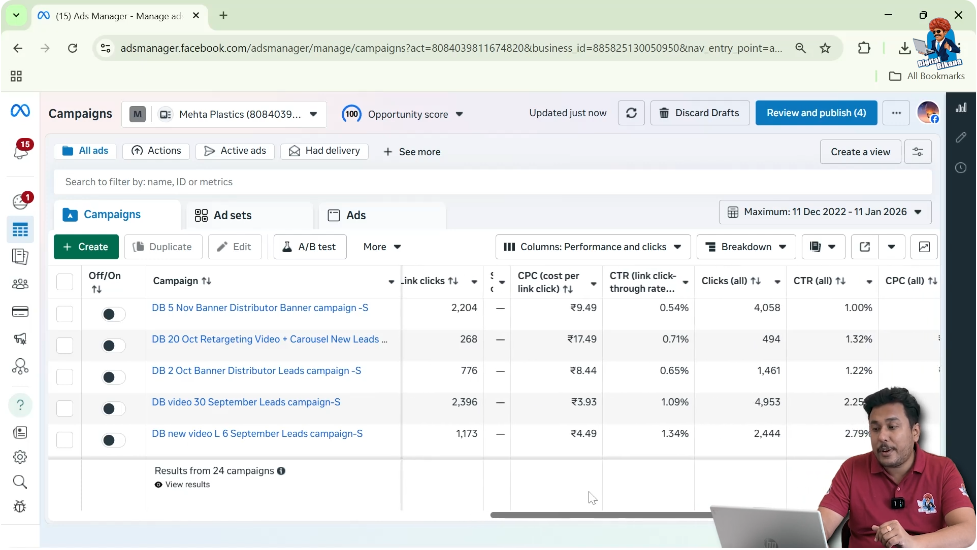
Overview of the Ad Campaign Example
To understand CPC clearly, let us analyze a real campaign example used in the Ads Manager.
Total Amount Spent
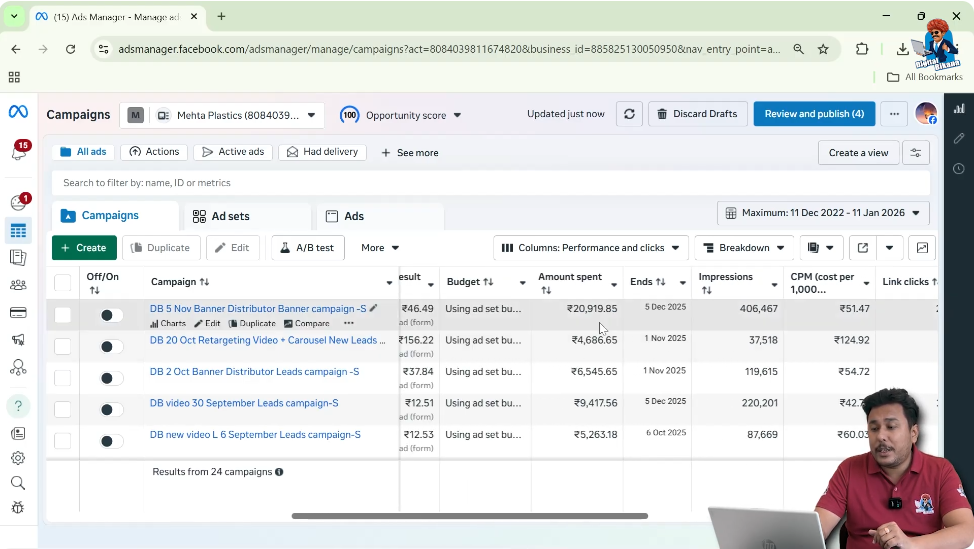
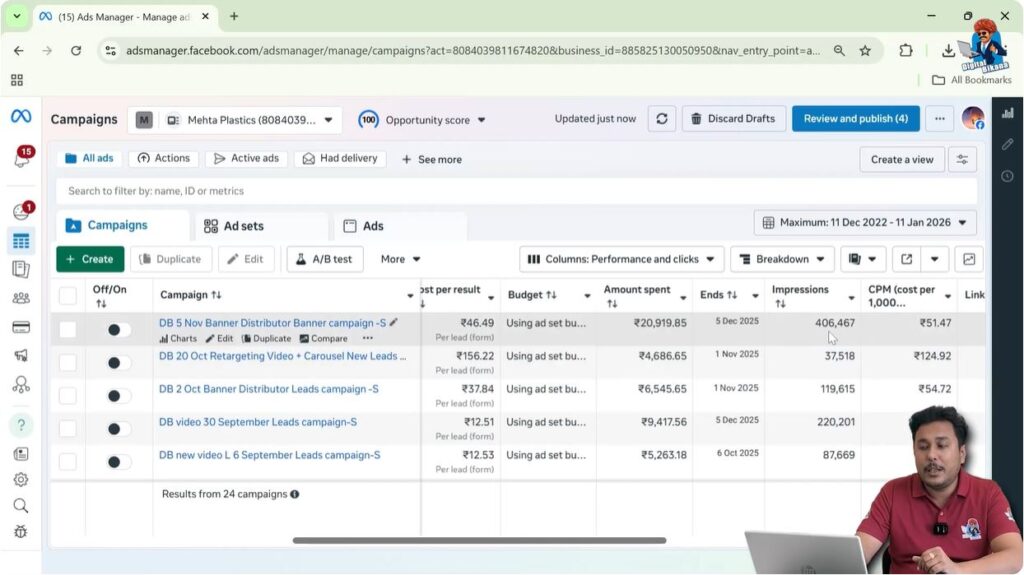
In this ad campaign, approximately ₹20,000 was spent. This amount represents the total advertising budget used during the campaign period.
Reach of the Ad Campaign
The ad was shown to around 1,46,000 users. Reach indicates the number of unique users who saw the ad at least once.

Impressions of the Ad
The ad received approximately 4,06,000 impressions. Impressions mean the total number of times the ad was displayed, including repeated views by the same users.
This means that although the ad reached 1,46,000 people, it was shown multiple times to many users.
Understanding Clicks on the Ad
Total Clicks on the CTA Button
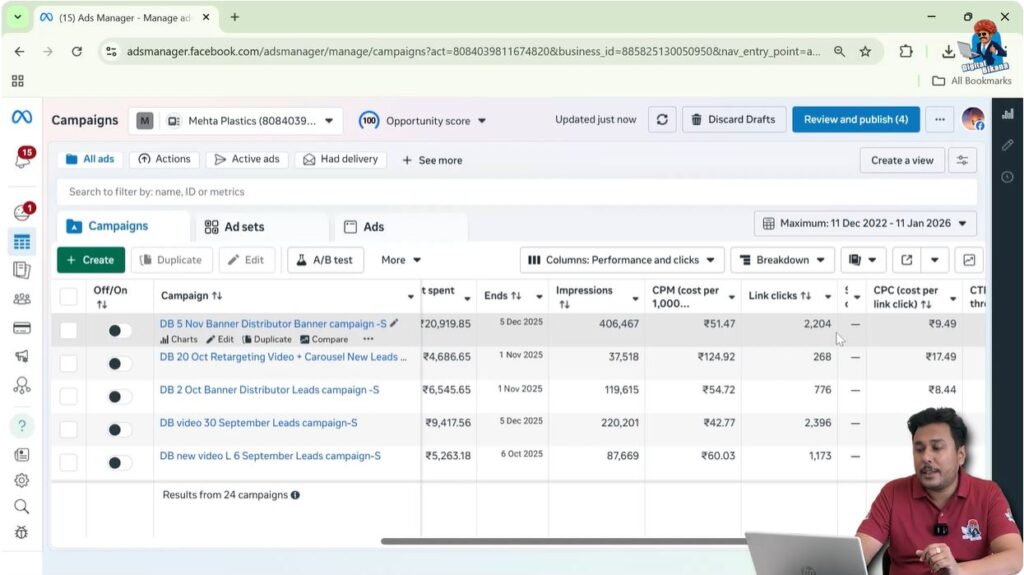
Out of all impressions and reach, 2,204 users clicked on the CTA button present on the ad.
A CTA button is the action button shown under the ad, such as “Apply Now,” “Learn More,” or “Sign Up.”
These 2,204 clicks represent the total number of users who showed interest by clicking on the ad.
Lead Form Submissions
Since this was a lead ad campaign, clicking on the CTA button opened a lead form.
Out of the 2,204 users who clicked the CTA button:
- 450 users filled the form
- The remaining users clicked but did not submit the form
This clearly shows that not every click results in a lead or conversion.

Difference Between Clicks and Leads
It is important to understand the difference between clicks and leads.
- Clicks mean users only clicked the CTA button
- Leads mean users completed the form after clicking
In this example:
- 2,204 users clicked
- 450 users converted into leads
This difference is crucial when analyzing CPC.
What CPC Actually Represents
CPC Does Not Mean Cost Per Lead
CPC only measures the cost of each click, not the cost of leads or form submissions.
Many advertisers mistakenly assume that CPC represents how much it costs to get a lead, which is incorrect.
In this campaign:
- CPC refers to the cost of getting 2,204 clicks
- Not the cost of getting 450 leads
CPC in This Campaign
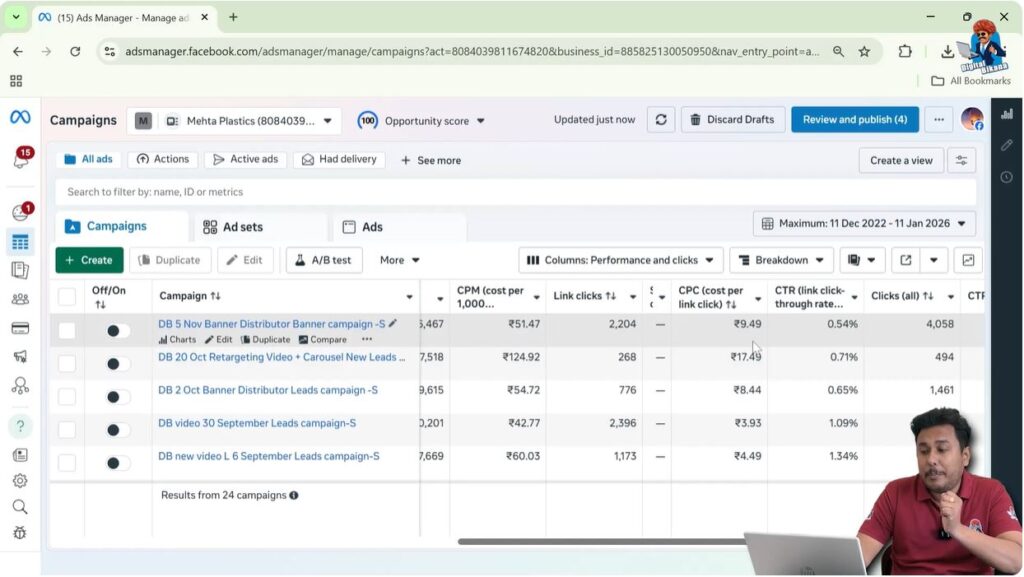
The CPC shown in Ads Manager for this campaign is ₹9.49.
This means that, on average, each click on the CTA button cost ₹9.49.
Step-by-Step: How CPC Is Calculated
Step 1: Identify Total Ad Spend
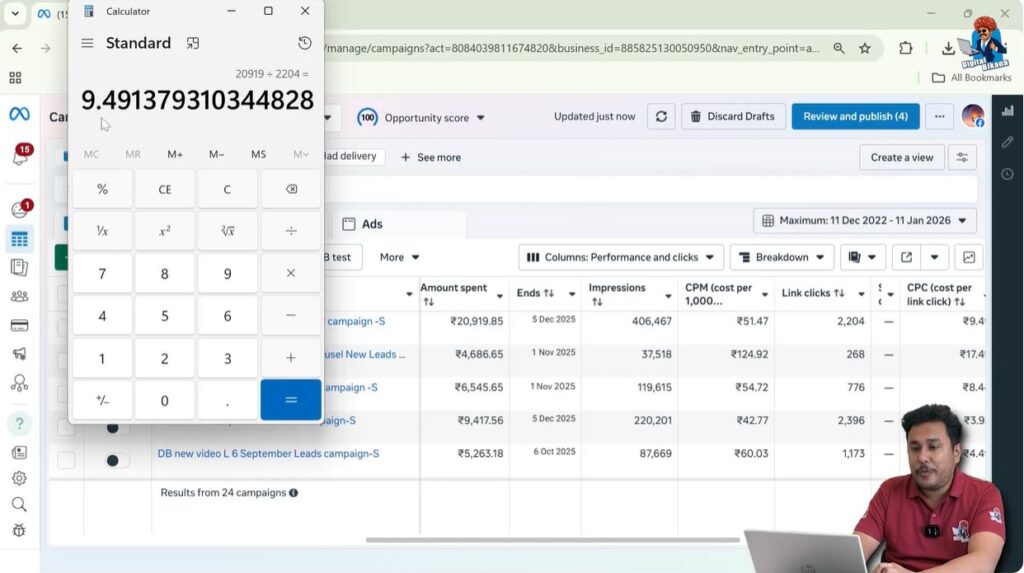
The total amount spent on the campaign was ₹20,919.
Step 2: Identify Total Link Clicks
The total number of users who clicked the CTA button was 2,204.
Step 3: Apply the CPC Formula
The CPC formula is:
CPC = Total Amount Spent ÷ Total Number of Clicks
Step 4: Calculate CPC
₹20,919 ÷ 2,204 = ₹9.49
This confirms that the CPC for this campaign is ₹9.49.
Interpreting CPC Correctly
What CPC Tells You
CPC tells you:
- How much you are paying for each click
- How cost-efficient your ad is in generating clicks
- Whether your ad creative and targeting are engaging users
What CPC Does Not Tell You
CPC does not tell you:
- How many users converted
- How many users filled the form
- Whether your leads are high quality
For those insights, other metrics like Cost Per Lead or Conversion Rate are required.
Why Many Users Click but Do Not Convert
In this campaign:
- Around 1,750–1,800 users clicked the ad
- But did not fill the form
This behavior is common in advertising and does not impact CPC negatively. CPC only counts clicks, regardless of whether users convert later or not.
Importance of CPC in Campaign Analysis
When CPC Is Useful
CPC is especially useful when:
- Running traffic campaigns
- Measuring user interest
- Testing ad creatives
- Evaluating CTA effectiveness
A lower CPC usually indicates better engagement.
CPC vs Other Metrics
CPC should never be analyzed alone. It should be reviewed alongside:
- Conversion rate
- Leads generated
- Cost per lead
- Campaign objective
This helps in making better optimization decisions.
Common Misunderstandings About CPC
Misunderstanding 1: CPC Equals Conversions
This is incorrect. CPC only measures clicks, not actions after clicks.
Misunderstanding 2: All Clicks Are Valuable
Some users click out of curiosity and do not convert. CPC still counts those clicks.
Misunderstanding 3: Low CPC Guarantees Success
A low CPC does not always mean a successful campaign if conversions are low.
Final Explanation of CPC
To summarize:
- CPC stands for Cost Per Click
- It measures the cost of each click on your ad
- It is calculated by dividing total spend by total clicks
- CPC does not measure leads or conversions
- CPC helps evaluate click efficiency, not campaign profitability
Conclusion
CPC is a fundamental metric in Facebook and Meta ad campaigns. It helps advertisers understand how much they are paying for each click and how users are interacting with their ads. By analyzing CPC correctly and not confusing it with conversions or leads, advertisers can make better decisions and optimize their campaigns more effectively. This is how Cost Per Click (CPC) works in a Facebook ad campaign.

Related Posts