
Welcome to this article. In today’s lesson, we will talk about page speed, one of the most critical technical SEO factors.
A faster website not only ranks better on search engines but also improves user experience and conversions. Speed directly influences how users interact with your website and how search engines evaluate your content.
Let us understand why page speed matters and how it impacts your website’s performance.
What Is Page Speed?
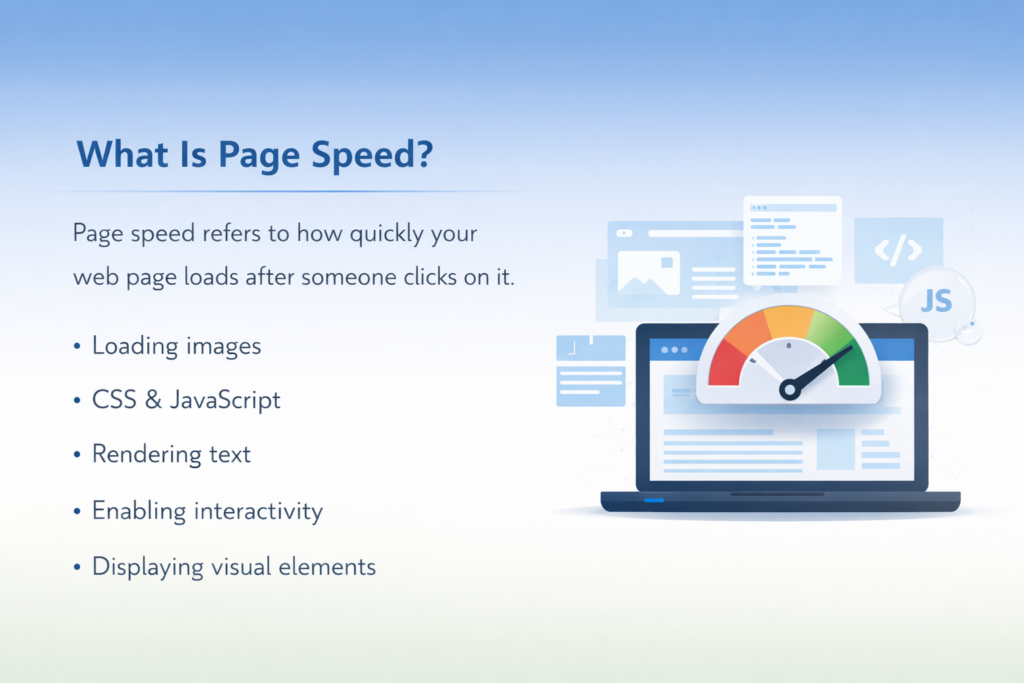
Page speed refers to how quickly your web page loads after someone clicks on it.
It includes:
- Loading images
- Loading CSS and JavaScript code
- Rendering text
- Enabling interactivity
- Displaying visual elements
Page speed is not just about how fast the page appears. It also includes how quickly users can interact with the content.
A fast-loading page creates a smooth browsing experience.
Why Page Speed Is Important for SEO
Google considers page speed a direct ranking factor.
Slow websites lead to:
- Poor user experience
- Higher bounce rates
- Lower engagement
- Reduced time on page
All of these negatively affect SEO performance.
Search engines aim to deliver the best experience to users. If your website is slow, it signals low quality and reduces your ranking potential.
Core Web Vitals and Performance Metrics
Google introduced Core Web Vitals, which are performance metrics that focus on page speed and user experience.
These include:
- Loading time
- Interactivity
- Visual stability
Core Web Vitals measure how quickly content appears, how responsive the page is, and whether elements shift unexpectedly while loading.
Optimizing these metrics improves both rankings and user satisfaction.
How Page Speed Impacts User Experience
Let us be honest. No one likes waiting.
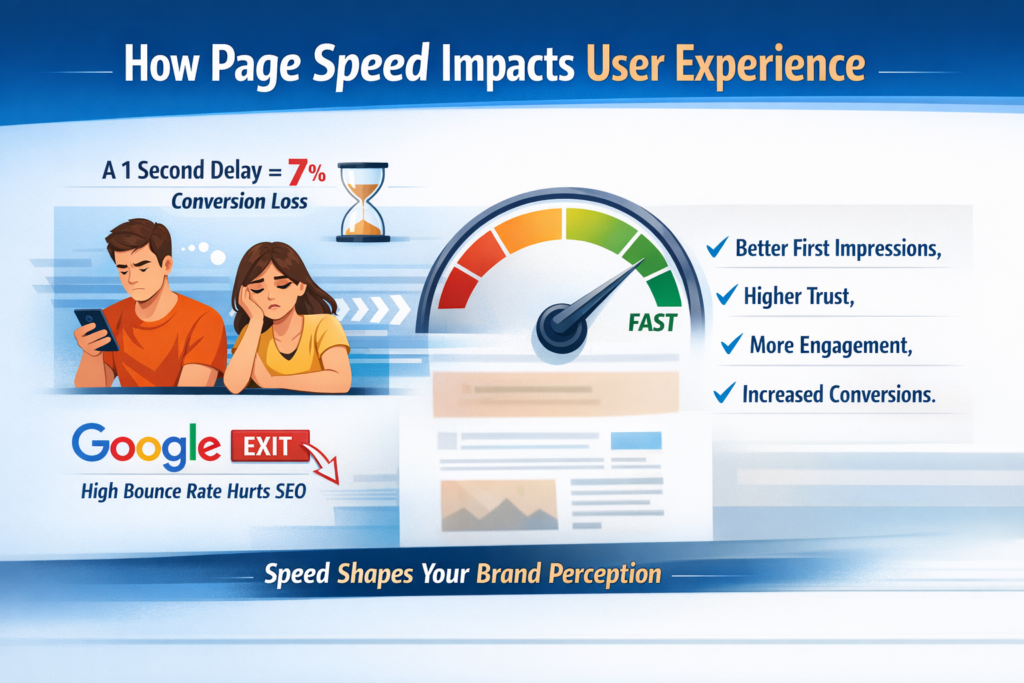
A delay of even one second can drop conversion rates by 7%.
If users bounce due to slow loading, Google sees your content as less useful.
When visitors leave quickly, it increases bounce rate and reduces engagement signals.
Faster websites create:
- Better first impressions
- Higher trust
- More engagement
- Increased conversions
Speed influences how users perceive your brand.
Page Speed and Conversions
Page speed directly impacts revenue and performance.
For example, a case study by Google showed that when Vodafone improved their mobile speed by 31%, they saw an 8% increase in sales.
Faster websites do not just rank better. They perform better.
Quick loading times improve:
- Add-to-cart actions
- Form submissions
- Sign-ups
- Purchases
Speed supports both SEO and business growth.
Mobile Page Speed Matters More
Google uses mobile-first indexing.
This means your mobile site speed is even more important than desktop speed.
If your mobile version loads slowly, your rankings can suffer across all devices.
Mobile optimization is essential because most users browse using smartphones.
Optimizing for mobile keeps your rankings safe.
Tools to Measure Page Speed
You can use free tools to analyze and improve your page speed.
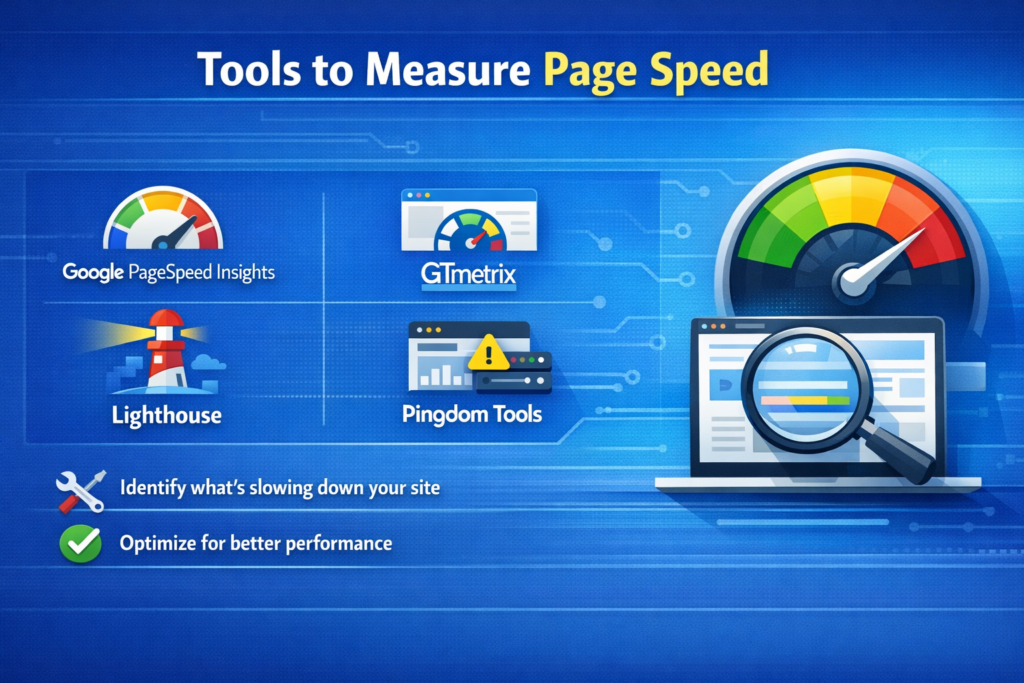
Google PageSpeed Insights
Provides detailed reports on performance and Core Web Vitals.
GTmetrix
Shows page load time, performance scores, and improvement suggestions.
Lighthouse
Analyzes performance, accessibility, and best practices.
Pingdom Tools
Measures loading speed and identifies bottlenecks.
These tools show what is slowing your site down and how to fix it.
Regular testing helps maintain optimal performance.
Common Causes of Slow Page Speed
Several factors can slow down your website:
- Large uncompressed images
- Too many plugins
- Heavy JavaScript files
- Slow server response time
- Lack of browser caching
- Poor hosting
Identifying these issues is the first step toward improvement.
How to Improve Page Speed
Improving page speed does not require magic.
Focus on the following areas:
- Compress images
- Enable browser caching
- Reduce server response time
- Use fast loading themes
- Minify CSS and JavaScript
- Use a reliable hosting provider
Small technical improvements can make a significant difference.
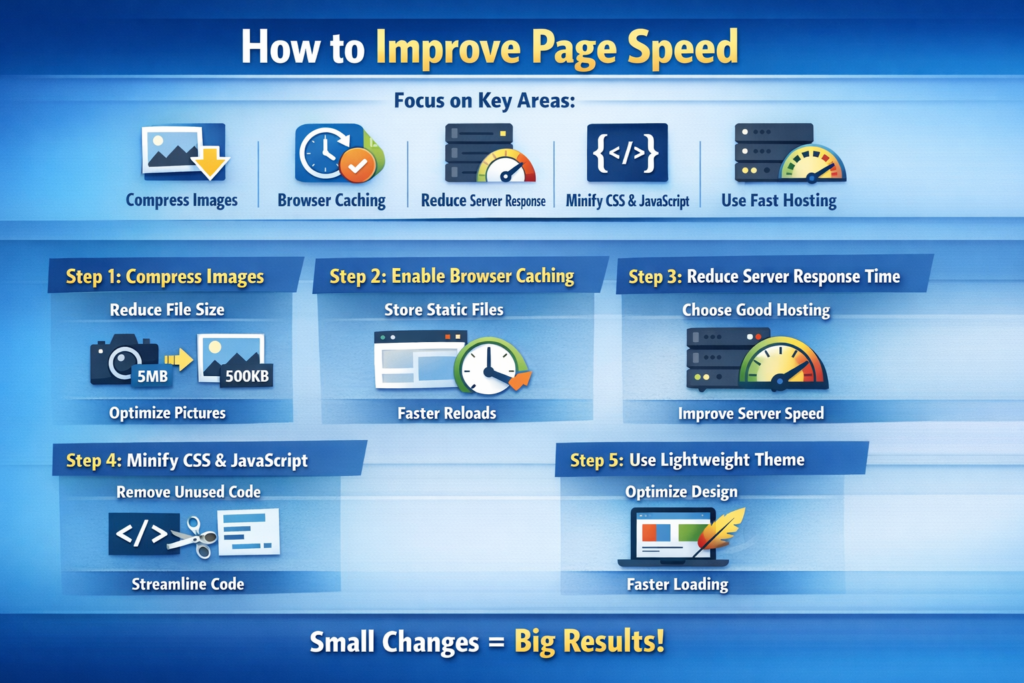
Step 1: Compress Images
Reduce File Size
Large images are one of the biggest causes of slow loading.
Compress them without losing visible quality.
Step 2: Enable Browser Caching
Store Static Files
Browser caching allows returning visitors to load pages faster.
Step 3: Reduce Server Response Time
Choose Good Hosting
Use fast and reliable hosting services.
Step 4: Minify CSS and JavaScript
Remove Unnecessary Code
Reducing code size improves loading speed.
Step 5: Use a Lightweight Theme
Optimize Website Design
Heavy themes slow down performance.
Page Speed and Bounce Rate
If your page takes too long to load, users leave.
This increases bounce rate.
High bounce rates signal poor user experience.
Google may interpret this as low relevance or low quality.
Improving speed keeps users engaged and reduces bounce rates.
Page Speed as a Competitive Advantage
In competitive industries, page speed can be the deciding factor.
If two websites offer similar content, the faster one is likely to rank higher and convert better.
Speed enhances credibility and professionalism.
It also improves customer satisfaction.
Step-by-Step Page Speed Optimization Checklist
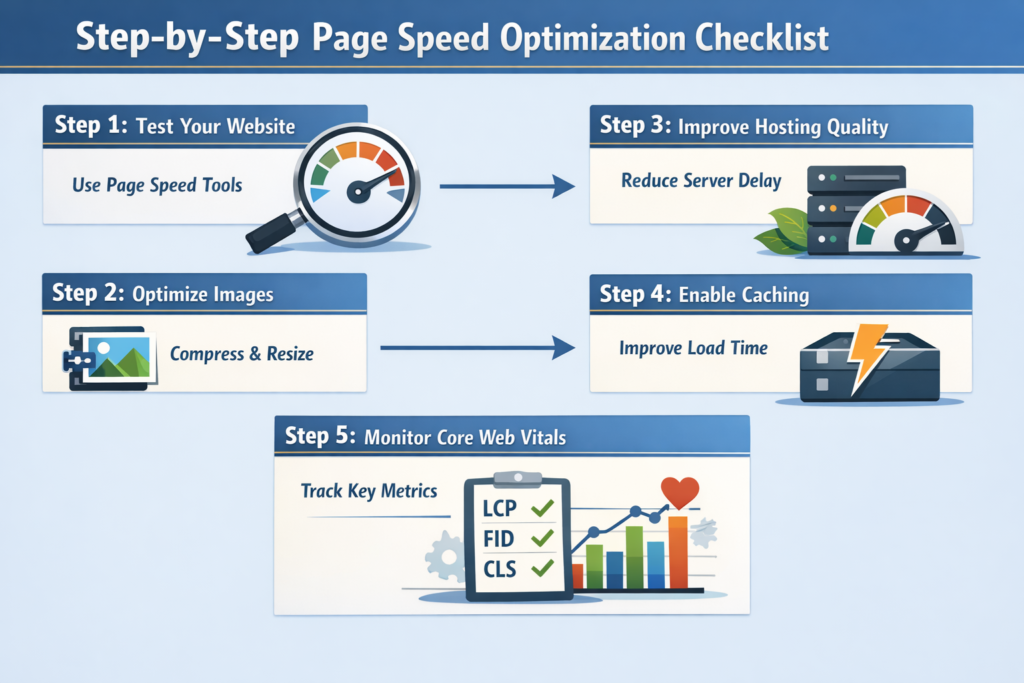
Step 1: Test Your Website
Use Page Speed Tools
Analyze your performance using trusted tools.
Step 2: Optimize Images
Compress and Resize
Ensure all images are optimized before uploading.
Step 3: Improve Hosting Quality
Reduce Server Delay
Choose hosting with strong performance.
Step 4: Enable Caching
Improve Load Time
Use caching plugins or server-level caching.
Step 5: Monitor Core Web Vitals
Track Key Metrics
Regularly check loading time, interactivity, and visual stability.
Final Summary: Speed Equals Success
To summarize, page speed impacts SEO rankings, user experience, and your website’s success.
A fast website:
- Ranks better
- Builds trust
- Reduces bounce rates
- Keeps users engaged
- Increases conversions
Google prioritizes performance and user experience through Core Web Vitals and mobile-first indexing.
Improving speed is not just a technical task. It is a strategic SEO investment.
When your website loads quickly, users stay longer, interact more, and convert better.
In modern SEO, speed is not optional. It is essential.
Optimize your page speed, and your rankings and performance will follow.

Related Posts