Welcome. In this article, we will explore one of the most essential yet misunderstood areas of search engine optimization: off-page SEO. While on-page SEO happens within your website, off-page SEO involves everything happening outside your site to boost your search engine rankings.
Off-page SEO refers to all the actions taken outside of your own website to improve its visibility, authority, and trust in the eyes of search engines. It plays a critical role in determining how well your website performs in search results. Even if a website has excellent content and perfect technical optimization, it may still struggle to rank if it lacks strong off-page SEO signals.
Search engines aim to provide users with the most reliable and useful results. Off-page SEO helps search engines evaluate whether a website is trustworthy and valuable. This evaluation is based on signals such as backlinks, brand mentions, social engagement, and online reputation.
Many website owners focus only on optimizing their website pages and forget that external signals strongly influence rankings. Off-page SEO ensures that your website gains recognition and authority across the internet.
What is Off-Page SEO?
Off-page SEO refers to all the activities performed outside your website that help improve search engine rankings. Unlike on-page SEO, which focuses on optimizing website content and structure, off-page SEO focuses on building authority and credibility.
Search engines use off-page SEO signals to understand how the rest of the internet views your website. If many trusted websites link to your content or mention your brand, search engines consider your website more reliable.
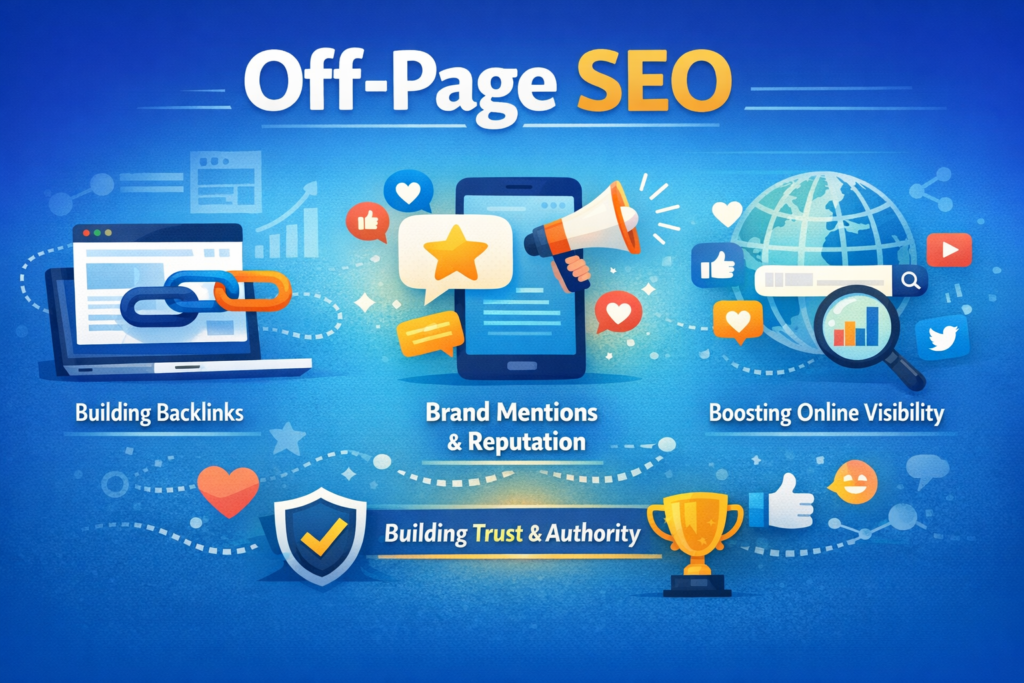
Off-page SEO mainly focuses on:
- Building backlinks
- Increasing brand mentions
- Improving reputation
- Increasing online visibility
- Building trust and authority
When done properly, off-page SEO helps search engines recognize your website as an important and reliable source of information.
Why Off-Page SEO is Important
Off-page SEO is crucial because it helps search engines determine how valuable and trustworthy your content is. Search engines do not rely only on the content present on your website. They also evaluate external signals to understand whether your website deserves to rank higher.
Search engines consider off-page signals as proof of credibility. If other websites recommend your content through backlinks or brand mentions, it shows that your content provides value.
Without off-page SEO, it becomes difficult to compete with other websites that already have strong authority.
Off-page SEO helps in:
- Improving search engine rankings
- Building domain authority
- Increasing organic traffic
- Building brand awareness
- Establishing trust
Websites with strong off-page SEO usually rank higher than websites that only focus on on-page optimization.
Google uses backlinks and brand mentions to evaluate your site’s authority and relevance. These signals help search engines understand how popular and reliable your website is in your industry.
Core Elements of Off-Page SEO
Let’s break down the core elements of off-page SEO. These are the techniques that can help your website earn visibility and authority.
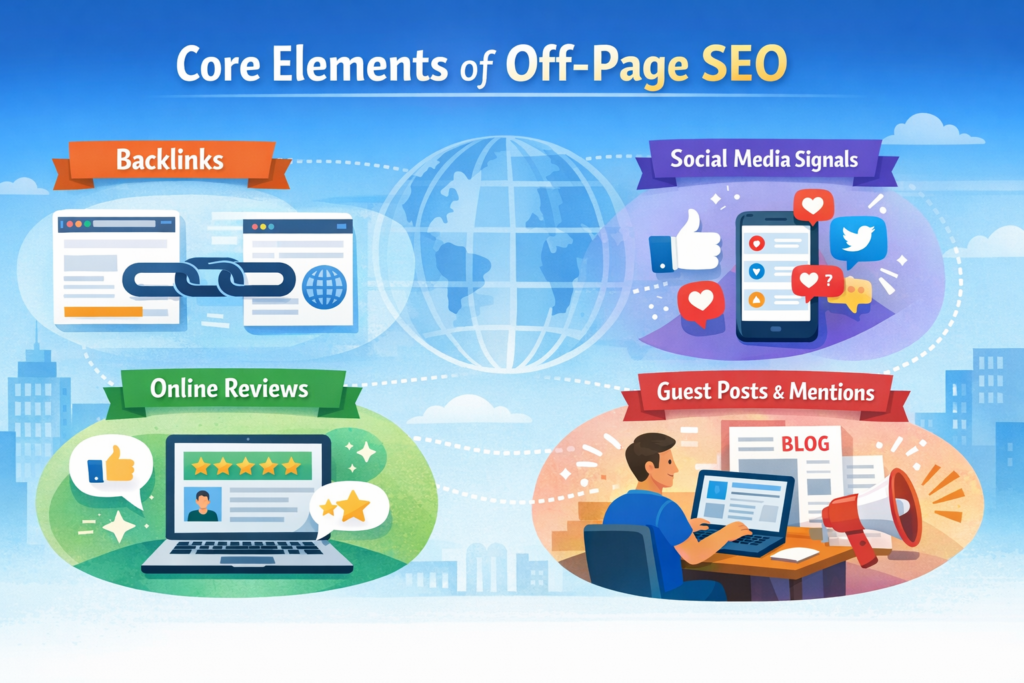
The main elements include:
- Backlinks
- Social media signals
- Online reviews
- Guest posting and mentions
Each of these elements plays an important role in improving your website’s authority and search visibility.
Backlinks
Backlinks are links from other websites pointing to yours. They are like votes of confidence in the eyes of search engines.
When another website links to your content, it signals to search engines that your website provides useful and trustworthy information. The more quality backlinks you have, the higher you can rank in search results.
However, search engines focus more on quality than quantity. A few links from trusted websites are more valuable than many links from low-quality websites.
Backlinks help search engines:
- Discover new pages
- Understand content relevance
- Evaluate website authority
- Improve ranking positions
Websites with strong backlink profiles usually perform better in search results.
How to Earn Backlinks Ethically
There are many ways to earn backlinks ethically. Ethical backlink building focuses on creating value rather than manipulating search engines.
Guest Posting
Guest posting involves writing articles for other websites in your industry. When your article is published, you usually receive a backlink to your website.
Guest posting helps in:
- Building backlinks
- Reaching new audiences
- Increasing authority
- Building relationships
Quality guest posts on relevant websites can significantly improve off-page SEO.
Creating Shareable Content
Creating shareable content is one of the most effective ways to earn backlinks naturally.
When content is useful and informative, people are more likely to share it and link to it. Examples of shareable content include:
- Guides
- Tutorials
- Infographics
- Case studies
- Research-based articles
High-quality content naturally attracts backlinks over time.
Reaching Out to Bloggers
Reaching out to bloggers is another effective strategy for earning backlinks.
You can contact bloggers in your industry and introduce your content. If your content is valuable, they may link to it in their articles.
Outreach helps in:
- Building connections
- Earning backlinks
- Increasing visibility
Successful outreach requires relevant and useful content.
Fixing Broken Links
Broken link building involves finding broken links on other websites and suggesting your content as a replacement.
Website owners often appreciate being informed about broken links. If your content fits well, they may replace the broken link with your link.
Broken link building helps in:
- Earning backlinks
- Helping website owners
- Improving user experience
It is a simple and effective off-page SEO strategy.
Social Media and Off-Page SEO
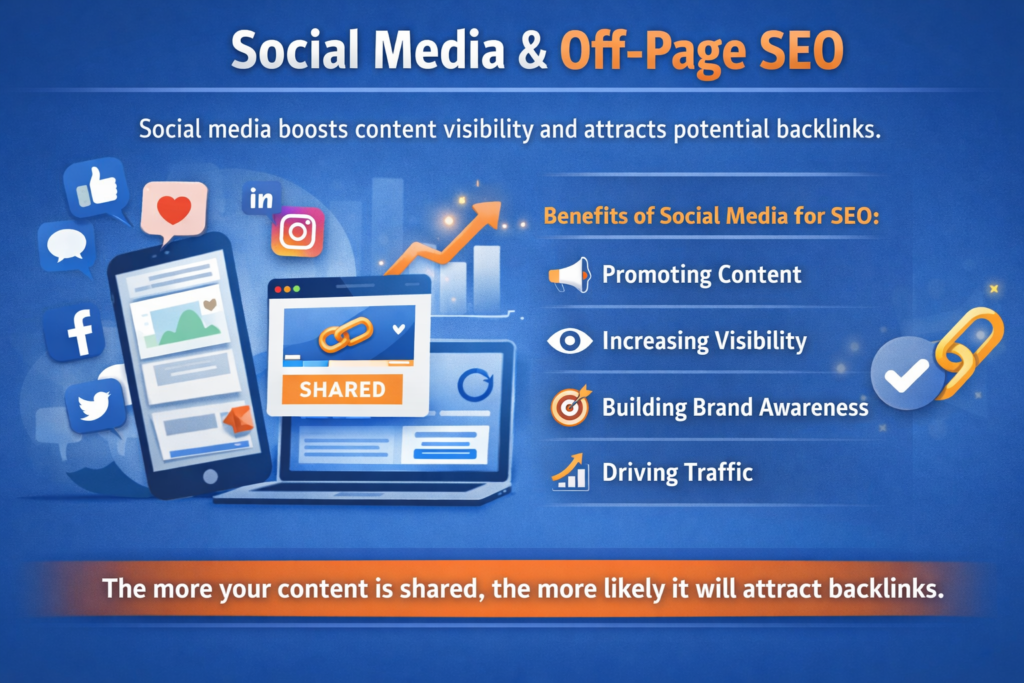
Social media does not directly impact rankings, but it plays a big role in content distribution, brand awareness, and earning links.
When content is shared on social media platforms, it reaches a wider audience. Increased visibility increases the chances of earning backlinks.
Social media helps in:
- Promoting content
- Increasing visibility
- Building brand awareness
- Driving traffic
The more your content is shared, the more likely it will attract backlinks.
Although social media signals are not direct ranking factors, they indirectly support off-page SEO by increasing exposure.
Online Reviews and Ratings
Online reviews and ratings on platforms like Google, Yelp, and Trustpilot help search engines understand your business reputation.
Search engines use reviews as trust signals. Businesses with positive reviews are considered more reliable.
This is especially important for local SEO. Local businesses benefit significantly from strong review profiles.
Reviews help search engines understand:
- Customer satisfaction
- Business credibility
- Service quality
- Brand trust
Encouraging customers to leave reviews helps improve online reputation and search visibility.
Positive reviews increase trust among potential customers and improve search performance.
Guest Posting and Online Mentions
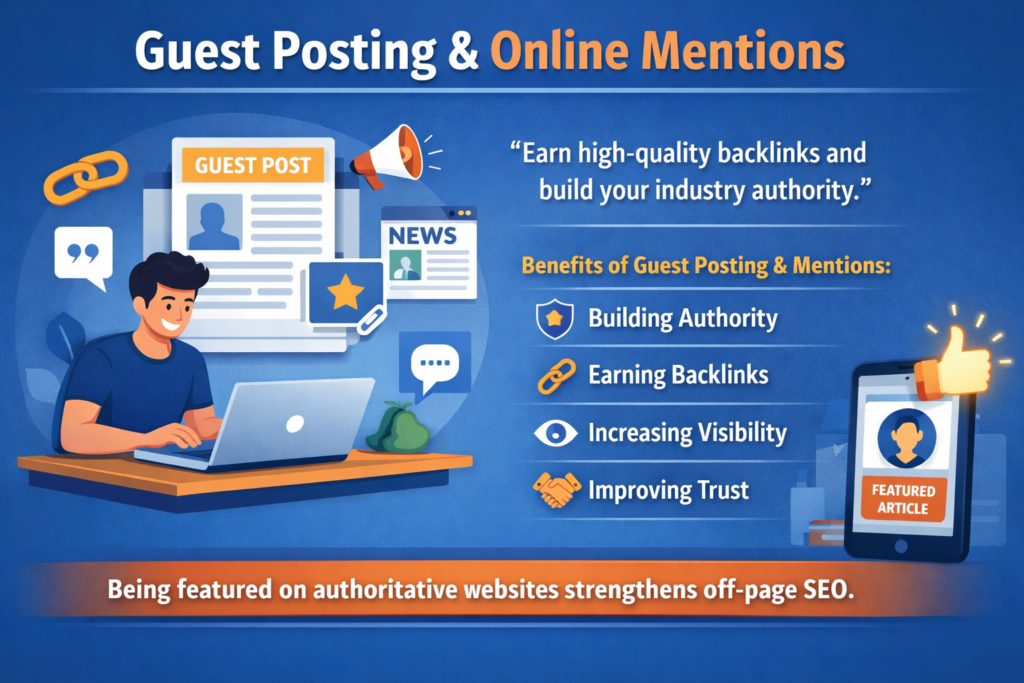
Writing articles for other websites or getting mentioned in online publications can earn high-quality backlinks and position you as an industry authority.
When reputable websites mention your brand or content, it increases credibility. These mentions signal to search engines that your website is recognized in your field.
Guest posting and mentions help in:
- Building authority
- Earning backlinks
- Increasing visibility
- Improving trust
Being featured on authoritative websites strengthens off-page SEO.
Off-Page SEO vs On-Page SEO
Let’s quickly compare off-page SEO and on-page SEO. Both are important, but they focus on different areas.
On-page SEO focuses on optimizing elements within your website. This includes content optimization, keyword usage, meta tags, headings, and internal linking.
Off-page SEO focuses on activities outside your website. This includes backlinks, brand mentions, social signals, and reviews.
Both types of SEO work together to improve search rankings.
On-page SEO helps search engines understand your content, while off-page SEO helps search engines trust your content.
A balanced SEO strategy includes both on-page and off-page optimization.
Tools to Track Off-Page SEO
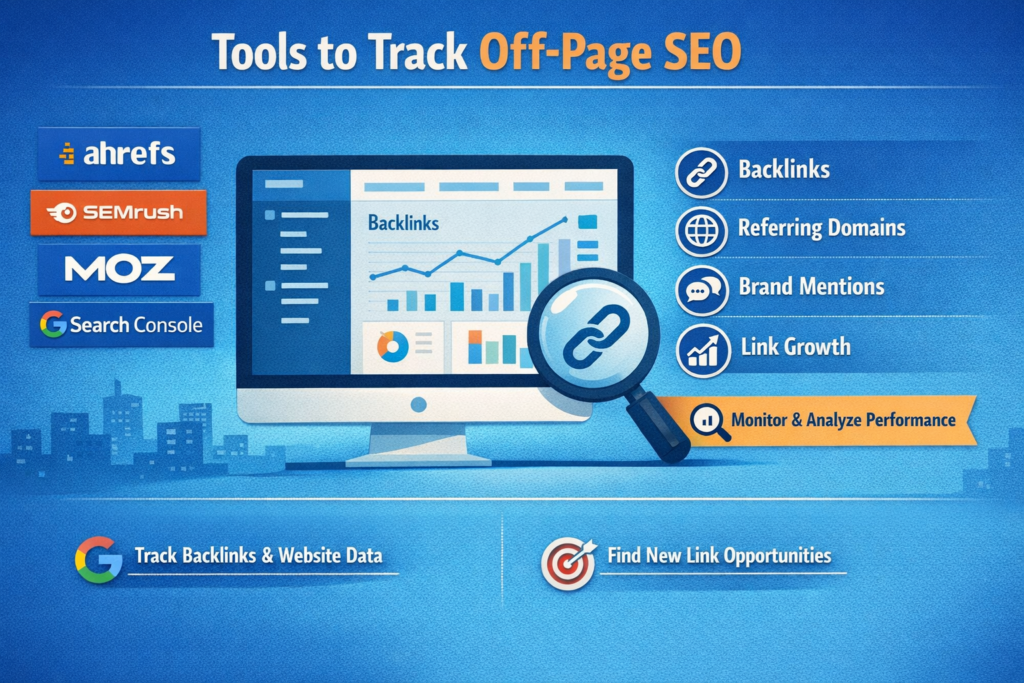
Track your off-page SEO efforts using tools like Ahrefs, SEMrush, Moz, and Google Search Console.
These tools help you monitor your website’s performance and backlink profile.
They provide information such as:
- Backlinks
- Referring domains
- Brand mentions
- Link growth
Using these tools helps you understand whether your off-page SEO strategy is working.
Regular monitoring allows you to identify new backlink opportunities and track improvements.
Google Search Console helps you track backlinks and website performance directly from Google data.
SEO tools make it easier to measure off-page SEO progress.
Conclusion
To wrap up, off-page SEO is about building trust, authority, and visibility outside of your own website. It is essential if you want to compete and rank well on Google.
Off-page SEO helps search engines understand the value and credibility of your website. Without strong off-page SEO signals, it becomes difficult to achieve high rankings.
Backlinks, social media activity, reviews, and mentions all contribute to off-page SEO success.
A well-planned off-page SEO strategy helps improve search visibility and long-term growth.
By focusing on ethical backlink building, strong online reputation, and consistent promotion, websites can build lasting authority and improve search rankings.

Related Posts