Welcome to today’s session. In this article, we are diving into a powerful question: Why is SEO important for websites? Whether you are a blogger, business owner, or developer, this topic is vital for anyone with an online presence.
Before understanding the importance of SEO, it is essential to recap what SEO actually means and how it works in the digital world.
What Is SEO?
SEO, or Search Engine Optimization, is the process of improving your website’s visibility in search engines like Google, Yahoo, or Ask. It involves optimizing various elements of your website so that search engines can understand your content and rank it higher in search results.
When users type a query into a search engine, they are presented with a list of results. These results are not random. They are ranked based on relevance, authority, quality, and many other factors. SEO helps your website meet those criteria so it appears in front of users who are actively searching for related information.
The Power of Search Engines
90% of Online Experiences Start with a Search Engine
Here is an important fact: 90% of all online experiences start with a search engine. This means that most users begin their online journey by searching for something—whether it is information, a product, or a service.
If your website is not optimized for search engines, you are missing out on a massive audience. No matter how good your product or content is, it will not generate results if people cannot find it. SEO ensures that your website is discoverable at the exact moment when users are looking for what you offer.
How SEO Brings High-Quality Traffic
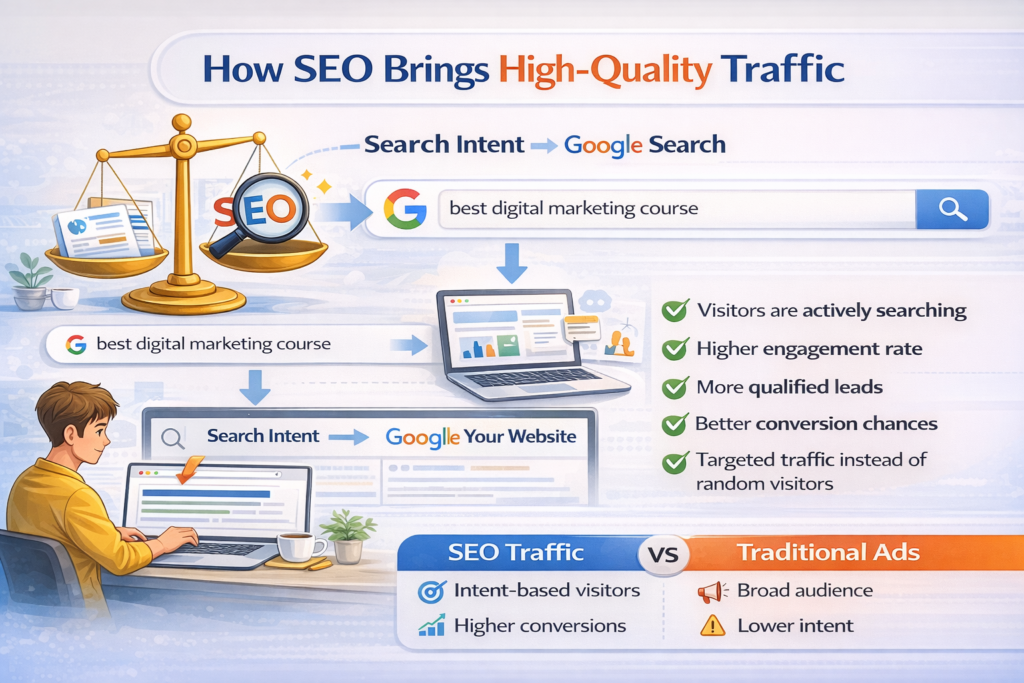
SEO brings high-quality traffic to your website. These are not random visitors. These are people actively searching for products, services, or answers.
When someone searches for a specific keyword related to your business and finds your website in the results, it means they already have an interest in that topic. This increases the likelihood of engagement, inquiries, and conversions.
Unlike traditional advertising, where you push your message to a broad audience, SEO allows you to connect with users who are already interested. That is why SEO traffic is often considered more valuable and conversion-friendly.
Better Chances of Conversion
When visitors arrive on your website through search engines, they usually have a clear intent. They may want to buy a product, learn something, compare options, or contact a service provider.
Because these users are actively searching, they are more likely to take action. This could include:
- Making a purchase
- Filling out a contact form
- Subscribing to a newsletter
- Calling your business
SEO aligns your website with user intent. When your content matches what users are searching for, it naturally leads to better conversion opportunities.
Building Trust and Credibility
When your site ranks high on Google, users automatically trust your brand more. Most people believe that websites appearing on the first page of search results are more credible and authoritative.
Why Higher Rankings Build Trust
Search engines are seen as reliable sources of information. When your website appears at the top, users assume that it meets certain quality standards.
High rankings signal:
- Authority in your niche
- Relevant and useful content
- A well-structured website
- Reliable information
SEO helps establish online credibility and authority. Over time, consistent visibility in search results strengthens your brand image and builds long-term trust with your audience.
SEO Is Not Just for Search Engines
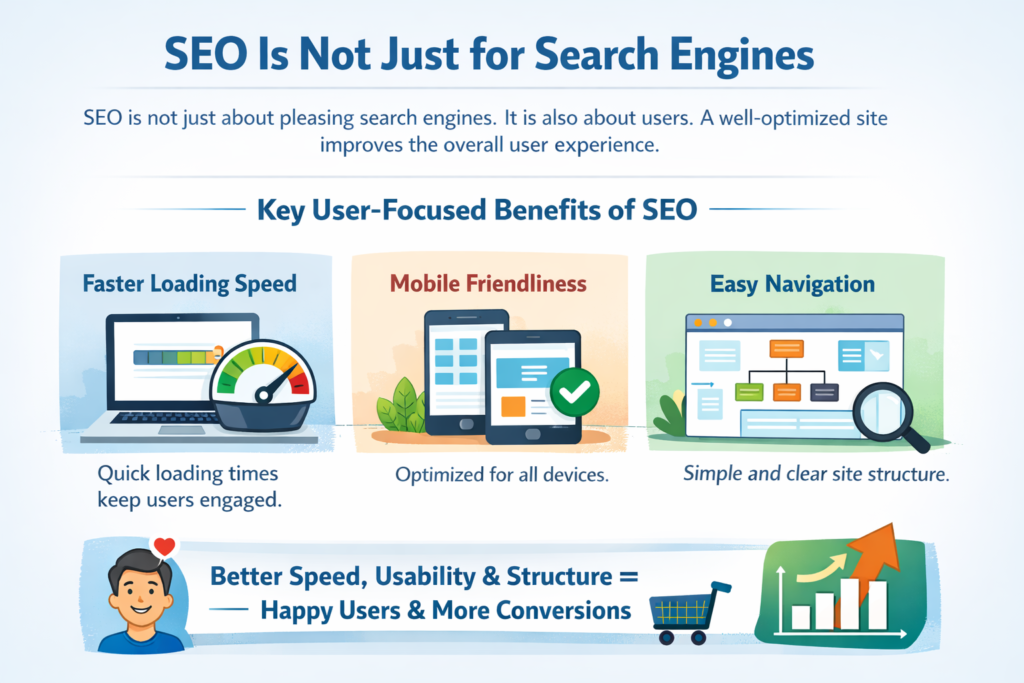
SEO is not just about pleasing search engines. It is also about users. A well-optimized site improves the overall user experience.
Key User-Focused Benefits of SEO
Faster Loading Speed
A properly optimized website loads faster. Speed is an important ranking factor and also a critical user experience factor. Users tend to leave websites that take too long to load.
Mobile Friendliness
With the increasing use of smartphones, mobile optimization is essential. SEO ensures that your website works smoothly on mobile devices. A mobile-friendly website improves engagement and reduces bounce rates.
Easy Navigation
SEO encourages better website structure. Clear menus, organized categories, and internal linking make it easier for users to find what they are looking for.
By improving speed, usability, and structure, SEO enhances user satisfaction. A positive user experience leads to longer visits and higher chances of conversion.
SEO vs Paid Advertising
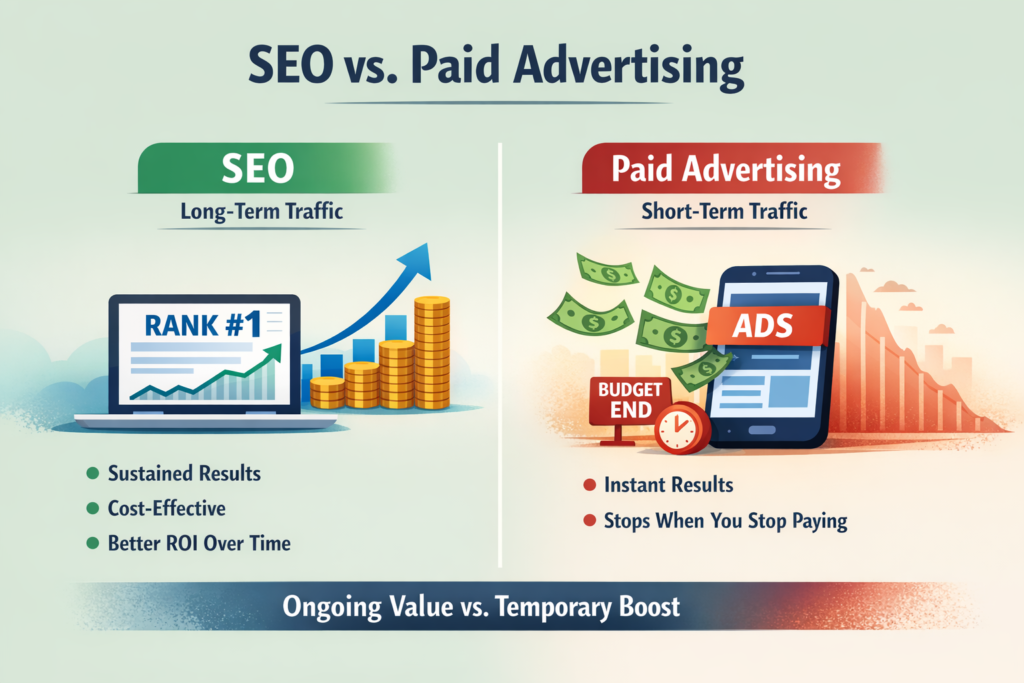
Unlike paid ads that stop when your budget ends, SEO brings long-term traffic. This is one of the biggest advantages of search engine optimization.
Short-Term vs Long-Term Strategy
Paid advertising delivers quick results. However, once you stop paying, your visibility disappears. SEO, on the other hand, continues to generate traffic even after the initial work is done.
Although SEO takes time to show results, its benefits compound over time. A well-optimized article can rank for months or even years, bringing consistent traffic without additional cost per click.
Cost-Effective and Better Return Over Time
SEO is cost-effective compared to paid advertising. Instead of paying for every click, you invest in optimizing your website and content.
Over time, this investment delivers better returns. As your rankings improve, organic traffic increases, reducing your dependency on paid campaigns.
Staying Ahead of Competitors
If you are not doing SEO, your competitors likely are. In the digital marketplace, competition is constant. Businesses are always trying to improve their online visibility.
A well-optimized site can outrank competitors, even bigger brands. SEO gives smaller businesses the opportunity to compete with established companies by targeting specific keywords and niches.
When your website is optimized:
- You gain more visibility
- You attract more relevant traffic
- You increase brand awareness
- You capture market share
Ignoring SEO means giving your competitors a clear advantage.
SEO and Content Go Hand in Hand
SEO and content work together. When you publish optimized and relevant content, it supports both your SEO and branding efforts.
Content helps search engines understand what your website is about. At the same time, it provides value to users.
Why Content Is Important for SEO
- It targets specific keywords
- It answers user queries
- It builds authority in your niche
- It encourages backlinks and shares
When your content is relevant and optimized, it increases your chances of ranking higher in search results. At the same time, it strengthens your brand identity and voice.
Importance of Local SEO for Businesses
If you are running a local business, SEO helps you appear in local searches such as “near me” queries. This is especially important for businesses with physical locations.
Benefits of Local Search Visibility
- Increased store visits
- More phone calls
- Higher local brand recognition
- Better customer engagement
When your website is optimized for local search, it becomes easier for nearby customers to find you. This directly impacts foot traffic and real-world sales.
SEO as a Long-Term Digital Marketing Strategy
SEO is a long-term digital marketing strategy. It takes time, but it compounds, delivering lasting benefits for months and even years.
Unlike short-term campaigns, SEO builds a strong foundation for sustainable growth. Each optimized page, blog post, or update adds to your overall visibility.
Why SEO Requires Patience
Search engines need time to crawl, index, and evaluate your website. Rankings do not improve overnight. However, consistent optimization efforts gradually improve performance.
As your authority increases, new content tends to rank faster and more effectively. This creates a compounding effect that strengthens your digital presence over time.
Steps to Implement an Effective SEO Strategy
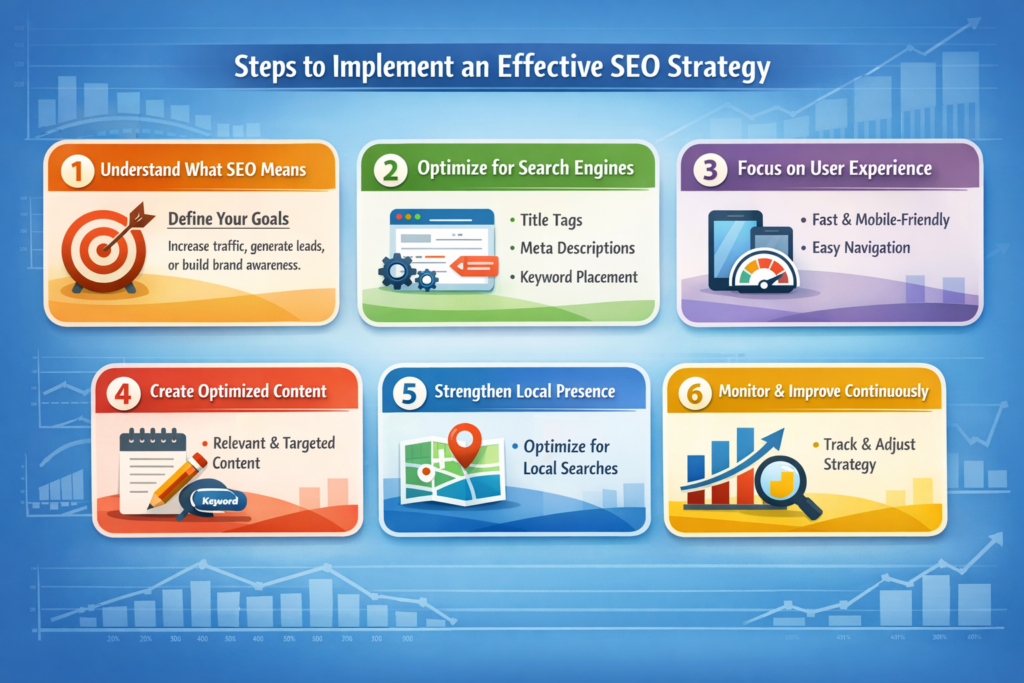
Step 1: Understand What SEO Means
Define Your Goals
Start by understanding what SEO aims to achieve. Your goal may be to increase traffic, generate leads, improve sales, or build brand awareness.
Clear objectives guide your optimization efforts.
Step 2: Optimize for Search Engines
Improve Website Visibility
Work on elements such as:
- Title tags
- Meta descriptions
- Headings
- Keyword placement
- Internal linking
These help search engines understand your content and rank it appropriately.
Step 3: Focus on User Experience
Improve Speed and Mobile Friendliness
Ensure your website loads quickly and works smoothly on all devices.
Simplify Navigation
Organize your content in a logical structure so users can easily find what they need.
Step 4: Create Optimized Content
Publish Relevant Content Regularly
Develop content that answers common questions and addresses user needs.
Use Targeted Keywords
Include keywords naturally within your content to improve search relevance.
Step 5: Strengthen Local Presence
Optimize for Local Searches
Include location-specific information and ensure your business details are accurate.
This increases your visibility in local search results and attracts nearby customers.
Step 6: Monitor and Improve Continuously
Analyze Performance
Track traffic, rankings, and user behavior to understand what is working.
Adjust Strategy
Make improvements based on data to enhance results over time.
Summary: Why SEO Is One of the Smartest Digital Strategies
To summarize, SEO helps your website get seen, trusted, and visited by the right people, all without paying for every click. It connects you with users who are actively searching for your products, services, or information.
SEO improves visibility, builds credibility, enhances user experience, and delivers long-term results. It allows you to compete effectively, even with bigger brands. It supports your content strategy and strengthens your online presence.
In a world where most online experiences begin with a search engine, ignoring SEO means missing valuable opportunities. By investing in SEO, you are building a sustainable and cost-effective digital strategy that continues to deliver benefits long into the future.
SEO is not just an option. It is one of the smartest digital strategies available for anyone serious about growing their online presence.

Related Posts