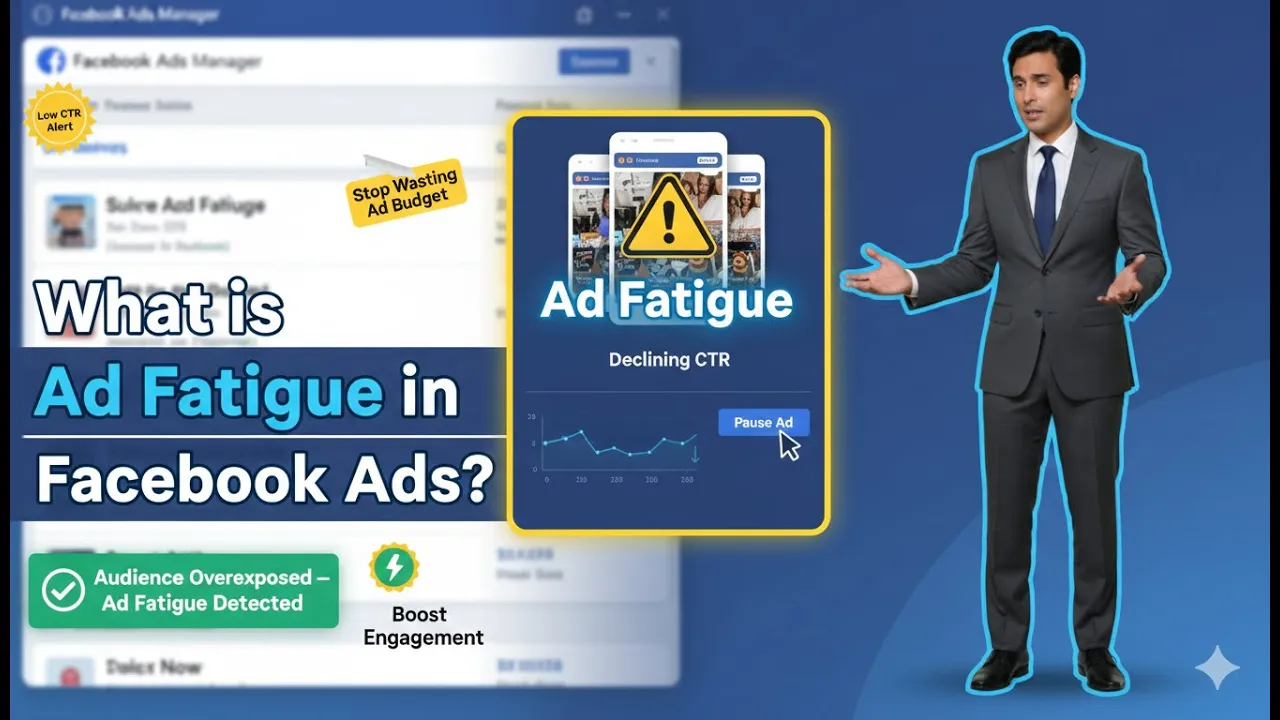
In this article, we will discuss an important concept in digital advertising known as ad fatigue, especially in the context of Facebook ads. Ad fatigue is a common issue faced by advertisers when running campaigns for a long period of time without changing creatives. Understanding ad fatigue is essential because it directly affects ad performance, engagement, reach, and overall results.
When ad fatigue occurs, users stop responding to your ads, even if your budget is high. This leads to reduced inquiries, lower engagement, and declining campaign performance. Let us understand what ad fatigue is, why it happens, how it affects your campaigns, and how it can be resolved.
What Is Ad Fatigue?
Ad fatigue is a situation where users stop responding to your ad creative because they have seen the same ad multiple times. When people repeatedly watch the same banner, image, or video, they become bored and uninterested. As a result, they stop engaging with the ad.
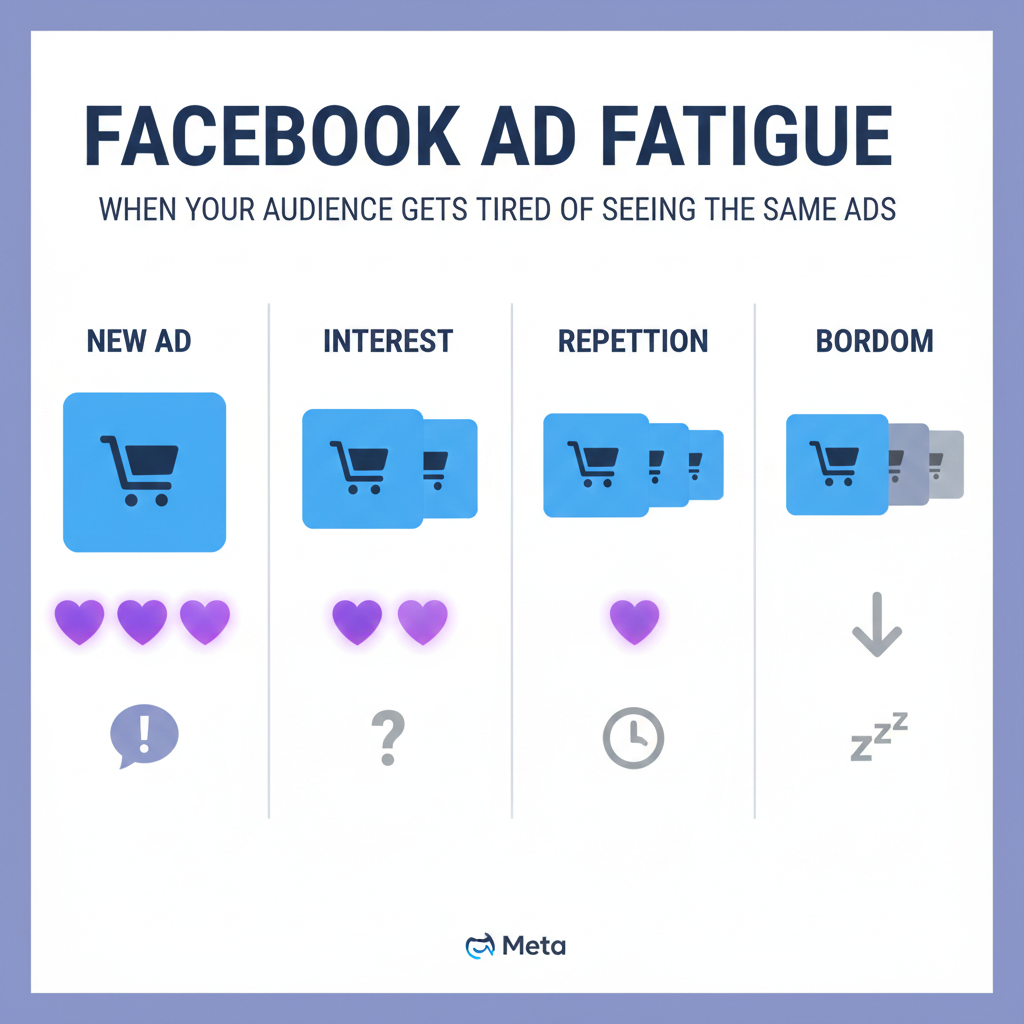
Initially, when a new ad is launched, users show interest. They watch the ad, click on it, and some of them convert into leads or inquiries. However, when the same creative keeps appearing again and again, users lose interest. This loss of interest is known as ad fatigue.
Ad fatigue does not happen suddenly. It develops over time as your ad continues to show to the same audience repeatedly.
Why Ad Fatigue Happens in Facebook Ads
Ad fatigue usually occurs when advertisers run campaigns with high budgets in limited locations or small audience sizes. When the number of users is limited and the budget is high, the same users see the ad repeatedly.
For example, if you are running an ad campaign in a small location, only a limited number of users live in that area. If your ad budget is high, Facebook will keep showing the same ad to the same people again and again because there are no new users available to reach.
This repeated exposure causes users to lose interest in your ad creative.

Relationship Between Budget, Location, and Audience Size
When an ad campaign is launched, it initially receives good reach because the ad is new and Facebook shows it to many users. During this phase, engagement is usually high.
However, after some time:
- The reach stops increasing
- Impressions continue to grow
- Ad Frequency increases
This means the same group of users is seeing your ad multiple times instead of new users seeing it for the first time.
When frequency increases, it is a strong indicator of ad fatigue.

Understanding Reach, Impressions, and Frequency
To understand ad fatigue clearly, it is important to know the difference between reach, impressions, and frequency.
- Reach refers to the number of unique users who see your ad
- Impressions refer to the total number of times your ad is shown
- Frequency refers to how many times, on average, a single user sees your ad
In ad fatigue situations:
- Reach stops growing
- Impressions keep increasing
- Frequency becomes very high
This means Facebook is repeatedly showing your ad to the same users.

What Happens When Frequency Increases
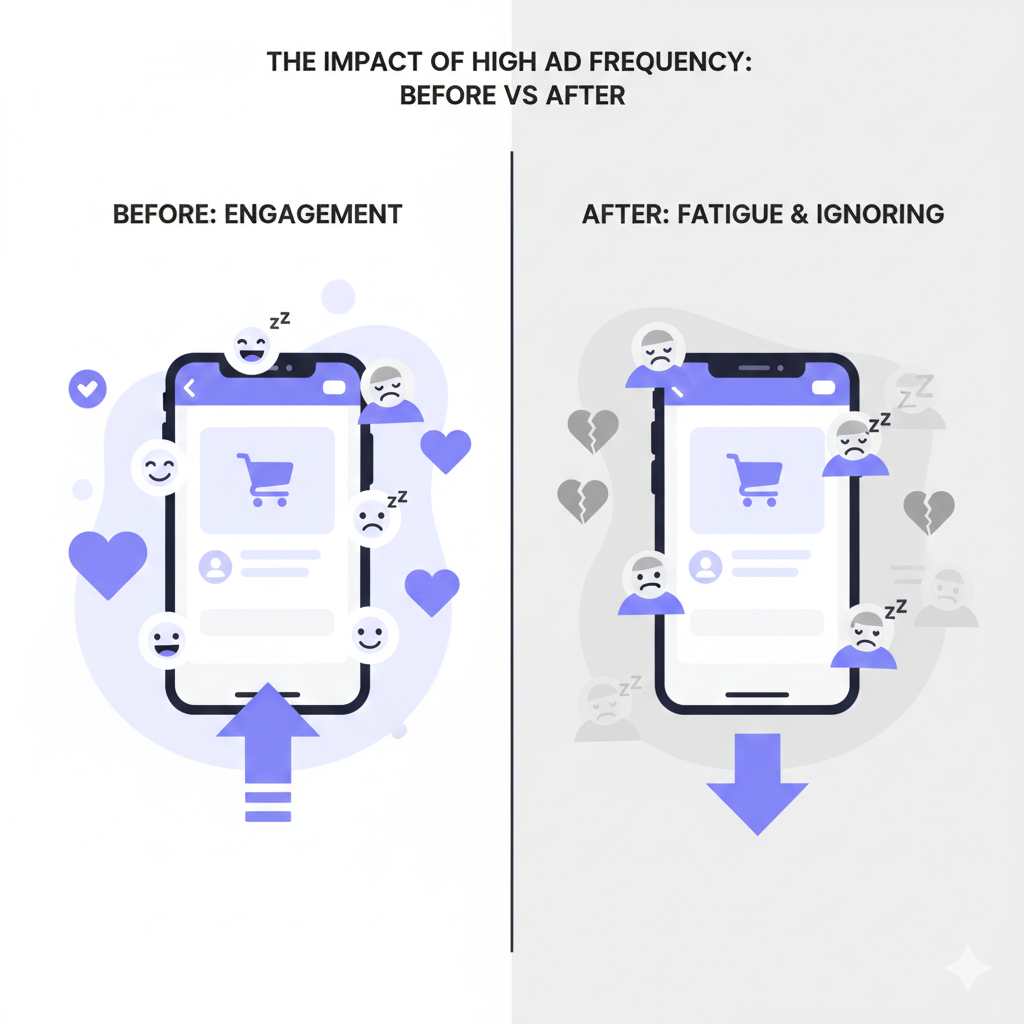
When users see the same ad creative multiple times, their behavior starts changing.
Initially:
- Users watch the ad carefully
- They spend time on the creative
- They click or engage
Later:
- Users start ignoring the ad
- They scroll past it quickly
- They stop engaging or clicking
At this stage, even though your ad is still running, it stops delivering results.
Impact of Ad Fatigue on Engagement and Inquiries
When ad fatigue sets in, the number of inquiries starts decreasing. This happens because the users who were interested in your product or service have already responded.
You have already received inquiries from:
- Users who needed your product
- Users who were interested at that time
After that, the remaining audience consists of users who are either not interested or already familiar with the ad. These users do not respond again.
As a result:
- Lead count decreases
- Engagement rate drops
- Cost per result increases

User Behavior During Ad Fatigue
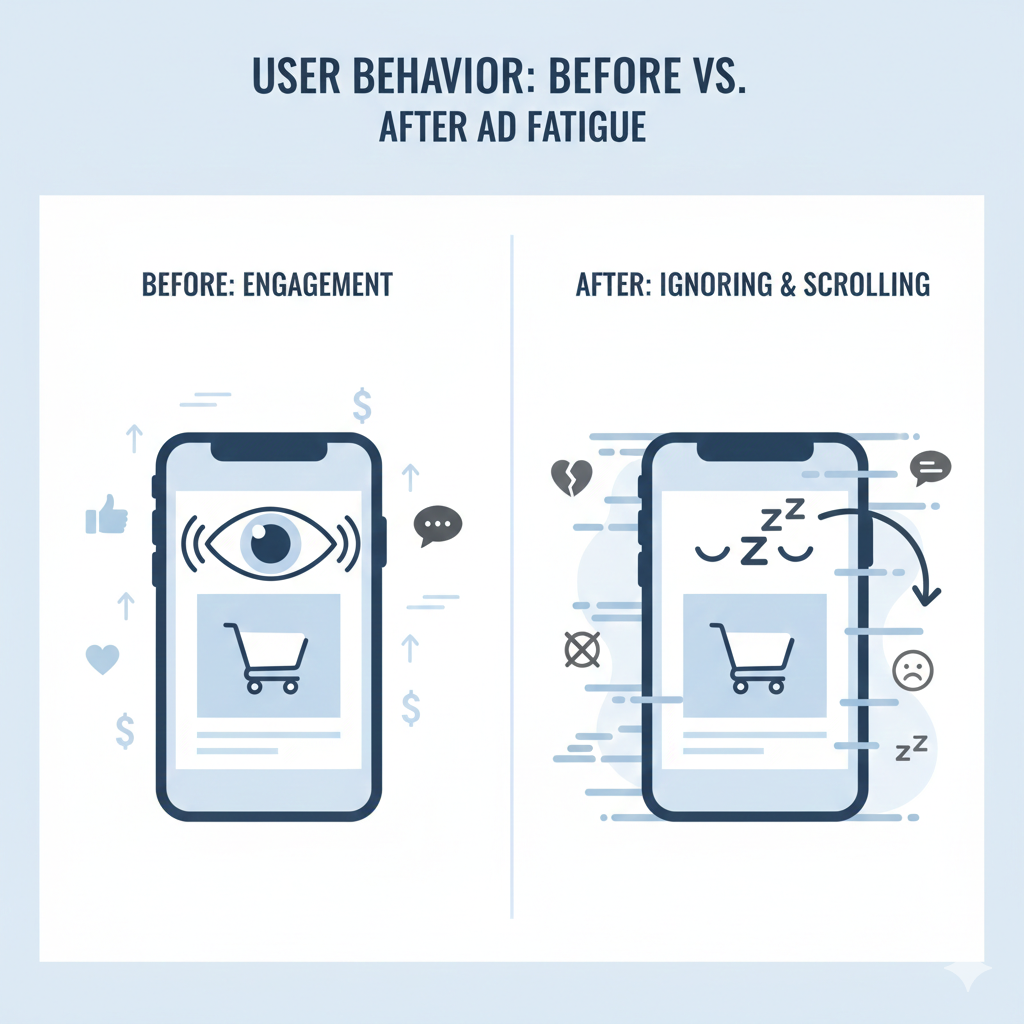
During ad fatigue, users behave differently when your ad appears on platforms like Facebook and Instagram.
Earlier behavior:
- Users watched the ad for a longer duration
- They showed curiosity and interest
Later behavior:
- Users instantly scroll past the ad
- They do not watch the video
- They do not click or engage
This scrolling behavior clearly indicates that the audience is tired of seeing the same creative.
Why Ad Performance Keeps Downgrading
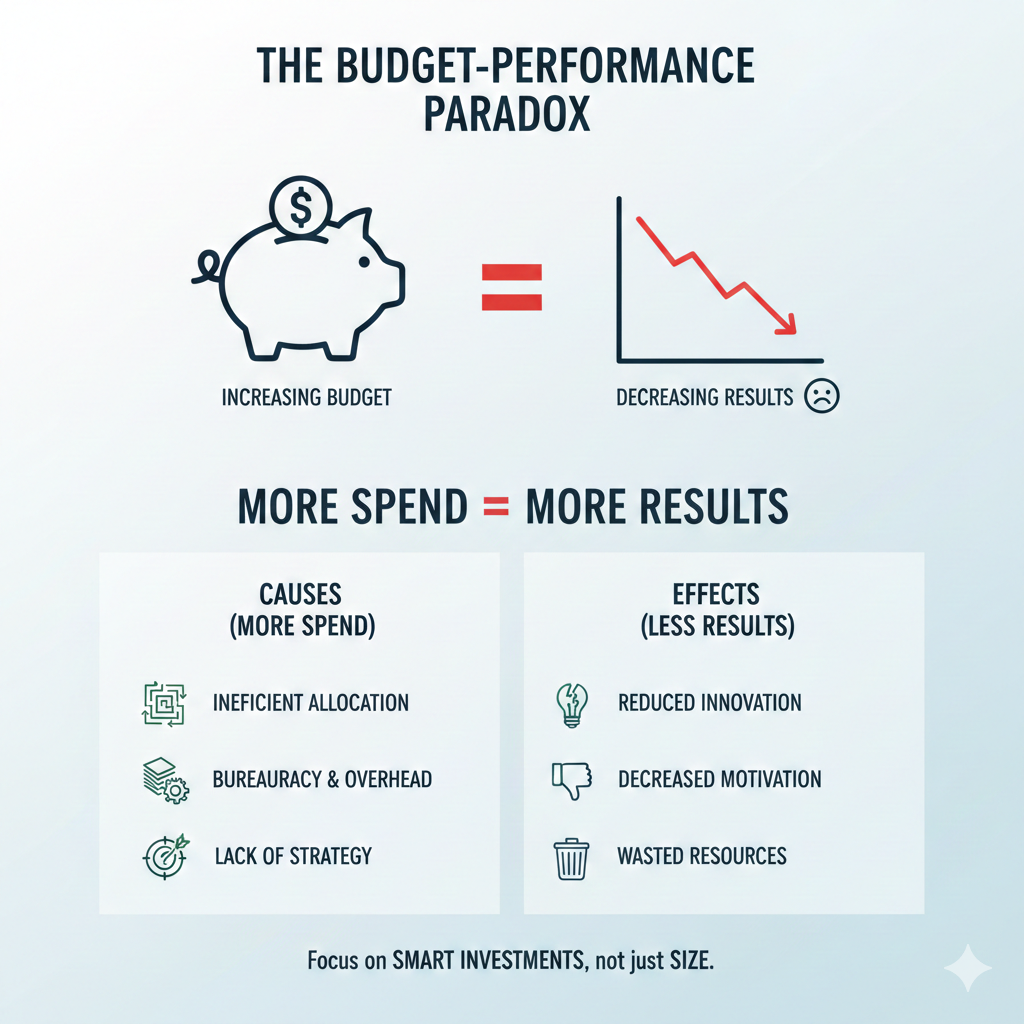
Ad fatigue leads to poor ad performance even when the budget is increased. This happens because money alone cannot force users to engage with boring or repetitive creatives.
In ad fatigue situations:
- You spend more money
- You get fewer results
- Performance keeps declining
This is one of the biggest mistakes advertisers make—trying to fix ad fatigue by increasing the budget instead of refreshing creatives.
Signs That Your Ad Is Experiencing Ad Fatigue
Some common signs of ad fatigue include:
- Drop in inquiries
- Lower engagement rate
- High ad frequency
- Reach not increasing
- Impressions increasing rapidly
- Users ignoring the ad
When these signs appear, it is time to take action.
How to Resolve the Ad Fatigue Issue
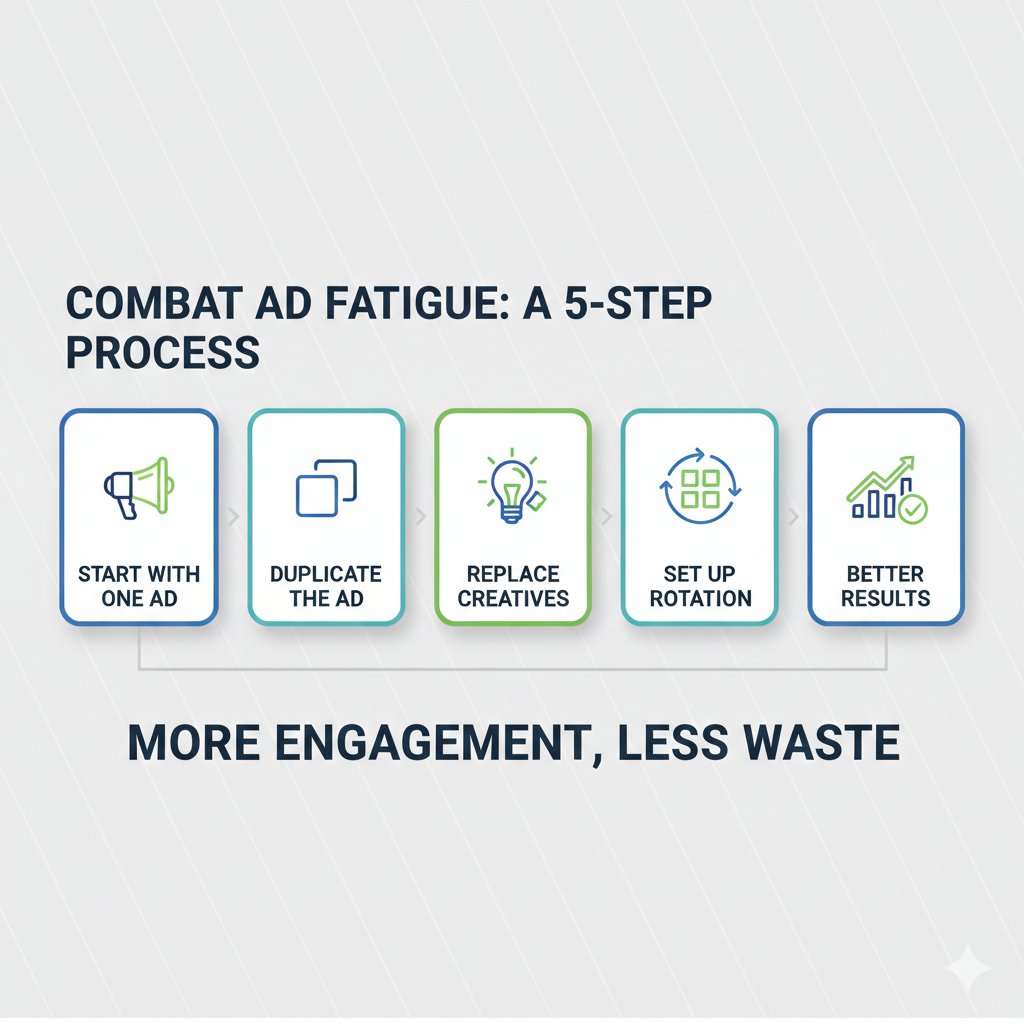
The best way to reduce ad fatigue is by introducing multiple ad creatives within the same campaign. Instead of running only one creative, you should create several variations.
Facebook allows you to use multiple ad creatives within a single ad set. This helps keep your campaign fresh and engaging.
Steps to Reduce Ad Fatigue Using Multiple Ad Creatives
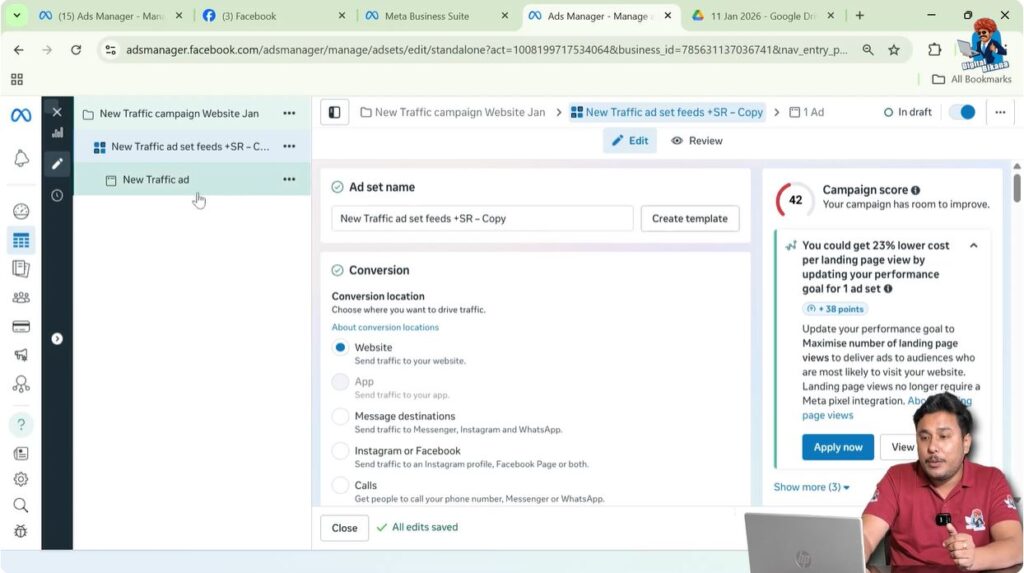
Step 1: Go to the Ad Creative Level
Locate the Ad Creative Options
At the ad creative level, you will see a triple dot option. This option allows you to manage and modify your existing ad creatives.
Step 2: Duplicate the Existing Ad Creative
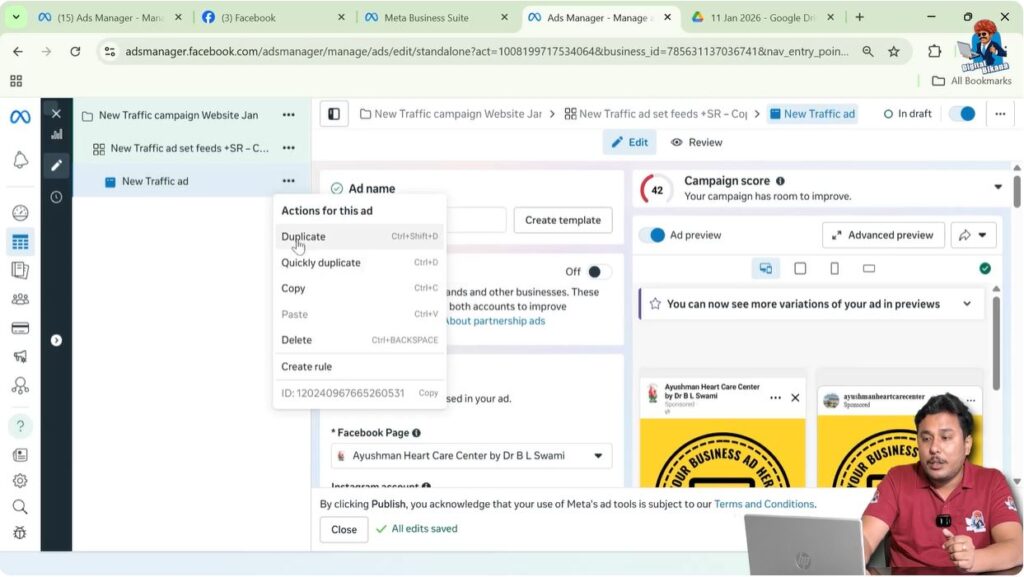
Create Multiple Copies
Click on the duplicate option and create multiple copies of the same ad. For example, you can duplicate the ad five times.
This gives you multiple ad slots within the same ad set.
Step 3: Replace Creatives With New Variations
Use Different Visuals and Formats
Now, replace each duplicated ad with different creatives such as:
- Different banners
- Different images
- Different videos
- Different designs
Even though the campaign and targeting remain the same, the creatives should be different.
Step 4: Use Different Attraction Styles
Change the Look and Feel
Each ad creative should have a different attraction power. Some users may like banners, while others may prefer videos. Some creatives may focus on visuals, while others may focus on messaging.
This variation increases the chances of user interaction.
Step 5: Allow Facebook to Rotate Creatives
Let the Algorithm Optimize
When multiple creatives are used, Facebook automatically shows different ads to different users. This prevents users from seeing the same creative repeatedly.
As a result:
- Ad fatigue reduces
- Engagement improves
- Response rate increases
Why Multiple Ad Creatives Work
Using multiple ad creatives helps because users are exposed to new versions of your ad instead of seeing the same one again and again.
Benefits include:
- Reduced boredom
- Increased curiosity
- Better engagement
- Improved performance
Each creative attracts users differently, which keeps the campaign fresh.
Ad Fatigue Explained in Simple Words
Ad fatigue is a situation where:
- You use a high ad budget
- You target a small location or limited audience
- The same users see your ad repeatedly
- Ad frequency increases
- Reach stops increasing
- Impressions keep growing
- Users stop responding
This leads to fewer inquiries and poor ad performance.
Final Conclusion
Ad fatigue is a common but serious problem in Facebook advertising. It happens when the same ad creative is shown multiple times to the same audience. Over time, users lose interest, stop engaging, and ignore the ad completely.
This results in lower inquiries, higher costs, and declining performance, even when budgets are increased. The most effective way to solve ad fatigue is by creating multiple ad creatives within the same campaign and rotating them regularly.
By using different banners, videos, and creative styles, you can keep your ads fresh, reduce ad fatigue, and improve overall campaign results.
Understanding and managing ad fatigue is essential for running successful and sustainable Facebook ad campaigns.

Related Posts