
An XML sitemap is an important part of search engine optimization (SEO) that helps search engines discover and understand the structure of a website. It is a special file that lists the important pages of a website in a structured format so search engines can find them easily. Without a proper sitemap, some pages of a website may not be discovered by search engines, which can affect search visibility.
Search engines use automated programs to crawl websites and collect information about webpages. An XML sitemap makes this process easier by providing a clear list of important pages. This helps search engines explore websites more efficiently and improves indexing.
An XML sitemap plays an important role in improving website visibility because it ensures that important pages are discovered and indexed. Proper sitemap management helps search engines understand the structure of a website and improves SEO performance.
What is an XML Sitemap?
An XML sitemap is a special file that lists all important pages of a website in a structured format so search engines can find them easily. It works like a roadmap that helps search engines understand which pages should be crawled and indexed.
An XML sitemap is written in code, but it follows a clear structure that search engines can easily understand. Each entry in a sitemap includes a webpage URL and optional details that provide additional information about the page.
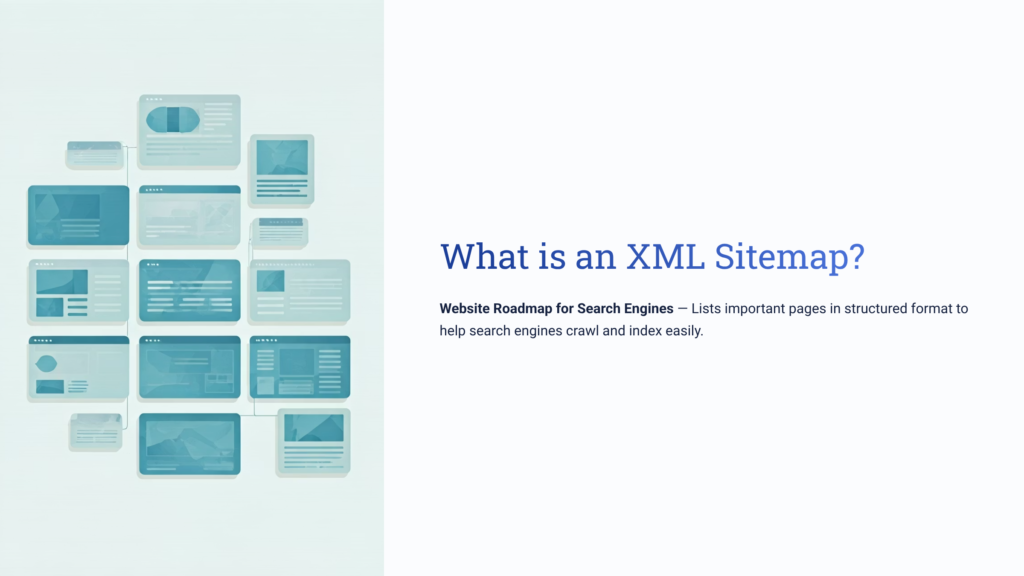
Search engines use sitemaps to discover pages that may not be easily found through normal crawling. This helps improve crawl efficiency and ensures that important pages are not missed.
XML sitemaps are especially useful for websites with many pages because they help search engines navigate the website structure more effectively.
Importance of XML Sitemap for SEO
An XML sitemap improves SEO by ensuring that important pages are discovered, crawled, and indexed by search engines. When search engines can easily find website pages, those pages have a better chance of appearing in search results.
Sitemaps help search engines identify important pages quickly. This improves crawl efficiency and reduces the chances of missing important content.
Websites with well-organized sitemaps provide better signals to search engines. This helps improve indexing and search visibility.
XML sitemaps are particularly useful for new websites because they help search engines discover pages faster and more efficiently.
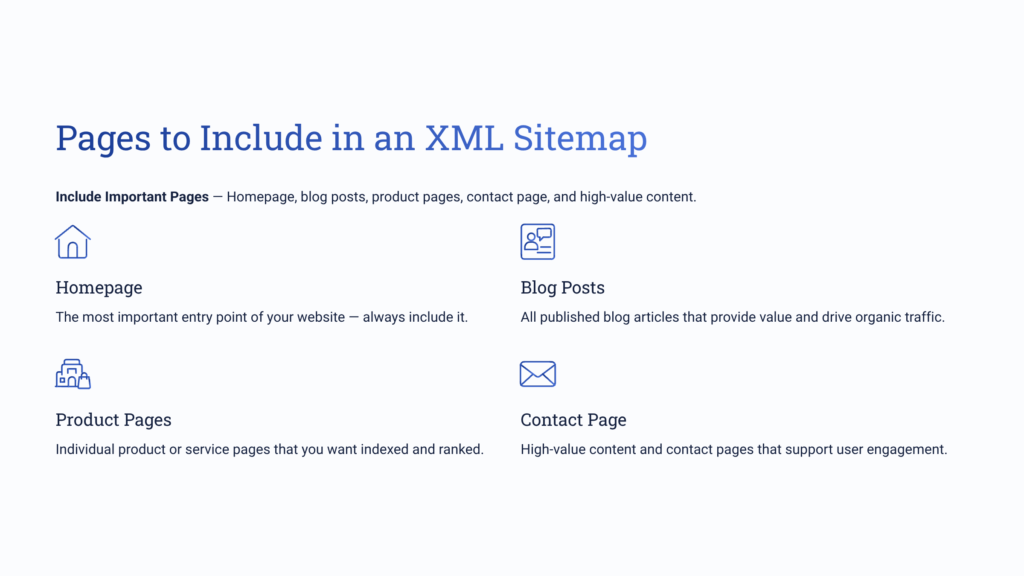
Pages to Include in an XML Sitemap
An XML sitemap should include high-value pages that need to be indexed by search engines. Important pages should always be part of the sitemap because they contribute to search visibility.
The homepage is one of the most important pages and should always be included. Product pages should also be included because they provide important information for visitors and search engines.
Blog posts should be included because they contain valuable content that attracts search traffic. The contact page should also be included because it provides important business information.
Any other content pages that need to be indexed should also be included in the sitemap. Including important pages helps search engines understand website content and structure.
Structure of an XML Sitemap
An XML sitemap is written in code, but it follows a clear and organized structure that search engines can easily read. The structured format allows search engines to interpret webpage information accurately.
Each sitemap entry includes a URL that identifies the webpage. Some entries may also include optional details that provide additional information about the page.
A properly structured sitemap helps search engines process information efficiently. Clear formatting improves crawl efficiency and indexing.
Creating an XML Sitemap
XML sitemaps can be created using SEO plugins or sitemap generator tools. Many website platforms provide tools that make sitemap creation simple and automatic.
SEO plugins can generate XML sitemaps automatically and update them whenever new content is added. This makes sitemap management easier and saves time.
Sitemap generator tools can also be used to create XML sitemaps. These tools scan websites and produce sitemap files that can be submitted to search engines.
Many platforms such as WordPress provide built-in tools or plugins that simplify sitemap creation and management.
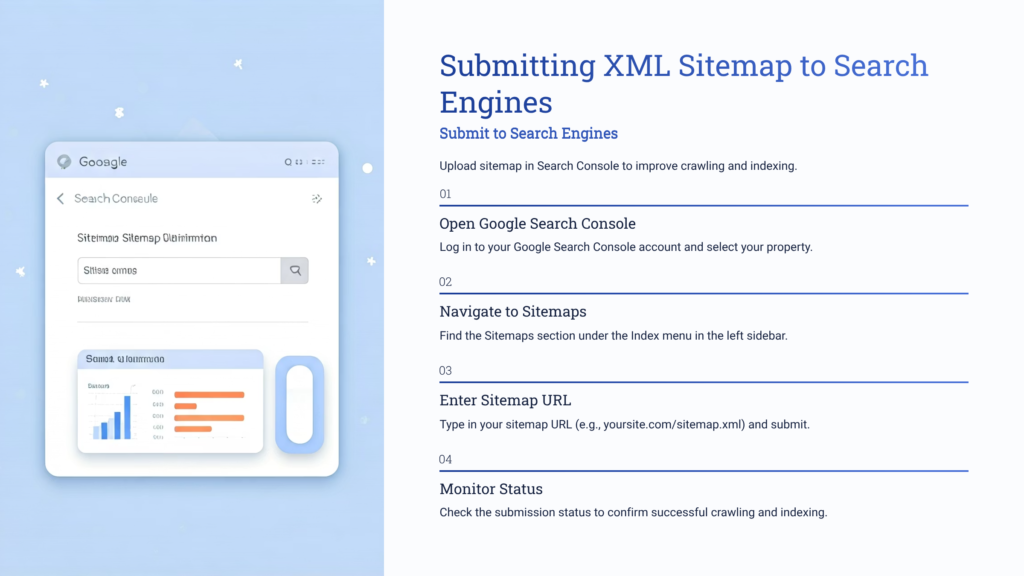
Submitting XML Sitemap to Search Engines
After creating an XML sitemap, it should be submitted to Google using Google Search Console. Submitting a sitemap helps search engines crawl website content more efficiently.
Search Console allows website owners to inform search engines about sitemap locations. This helps search engines discover pages faster and improves indexing.
Submitting sitemaps also helps monitor crawl activity and identify potential issues.
Maintaining an XML Sitemap
XML sitemaps should be updated regularly to maintain accuracy. Updated sitemaps help search engines discover new content quickly and improve indexing.
Broken links should be removed from the sitemap because they reduce crawl efficiency and create errors.
Pages that should not be indexed should be excluded from the sitemap. These pages may include admin login pages or thank-you pages.
Keeping sitemaps updated improves SEO performance and helps search engines crawl websites properly.
Common Sitemap Mistakes to Avoid
XML sitemaps should not contain unnecessary pages because including irrelevant pages reduces sitemap quality.
Broken links should not be included because they create errors and reduce crawl efficiency. Duplicate pages should also be avoided because they create confusion for search engines.
Format errors should be avoided because incorrect formatting may prevent search engines from reading the sitemap properly.
Careful sitemap management helps improve SEO results.
XML Sitemap as an Essential SEO Element
An XML sitemap helps search engines crawl and index websites efficiently. It provides a clear structure that helps search engines understand website content.
Sitemaps support proper indexing and improve search visibility. Well-managed sitemaps improve crawl efficiency and website performance.
XML sitemaps are an essential part of SEO because they help search engines discover and organize website pages.
Conclusion
An XML sitemap is a special file that lists important pages of a website in a structured format so search engines can find them easily. It improves SEO by ensuring that important pages are discovered, crawled, and indexed.
XML sitemaps include important pages such as the homepage, product pages, blog posts, contact pages, and other content pages that need indexing.
Sitemaps can be created using SEO plugins or sitemap generators and should be submitted through Google Search Console.
XML sitemaps should be updated regularly and should not include broken links or unnecessary pages. Proper sitemap management helps search engines crawl and index websites efficiently and supports long-term SEO success.

Related Posts