Welcome to this article. Today we will understand the difference between natural and unnatural links and why it matters so much in SEO. Links play a major role in search engine optimization because search engines use them to evaluate the authority and trustworthiness of a website. Understanding the difference between natural and unnatural links helps website owners build safer and more effective SEO strategies.
Link building is one of the strongest ranking factors, but not all links are beneficial. Some links help improve search rankings, while others may harm a website’s performance. Search engines carefully analyze links to determine whether they are earned naturally or created to manipulate rankings.
A proper understanding of natural and unnatural links helps protect websites from penalties and ensures long-term SEO success.
What Are Natural Links?
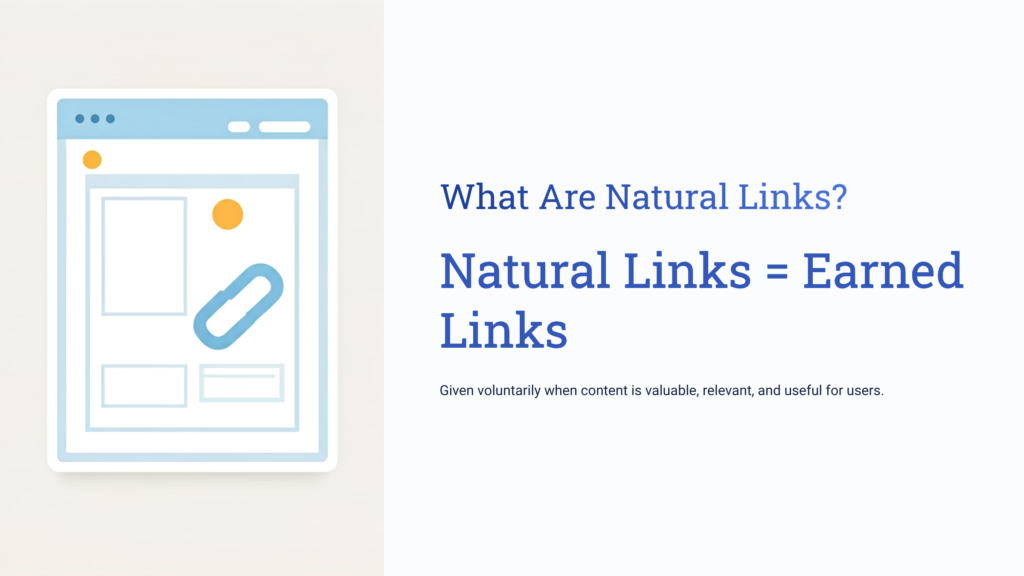
A natural link is a link that is given voluntarily by another website. It means your content is valuable and worth referencing. These links are earned without forcing or paying for them.
Natural links usually occur when website owners or content creators find useful information and decide to link to it as a reference. These links indicate that the content provides value and helps users.
Natural links are considered trustworthy because they are based on genuine recommendations rather than manipulation. Search engines treat natural links as positive signals that improve ranking potential.
Natural links often come from:
- Blog articles
- Research references
- News websites
- Resource pages
- Educational content
These links show that the content is useful and relevant.
Natural links develop over time as content gains visibility and recognition.
What Are Unnatural Links?
An unnatural link is created with the intent to manipulate search engine rankings. These links are not earned naturally and are often created artificially.
Unnatural links are usually placed in exchange for money or through spammy tactics. These links are created to influence search engine rankings rather than to provide value to users.
Search engines consider unnatural links as manipulative because they do not reflect genuine recommendations.
Unnatural links often include:
- Paid links
- Link schemes
- Spam comments
- Low-quality directories
- Automated link building
These links may provide short-term ranking improvements but create long-term risks.
Unnatural links reduce trust signals and may negatively affect search performance.
Natural vs Unnatural Links Comparison
It is important to compare natural and unnatural links to clearly understand the differences.
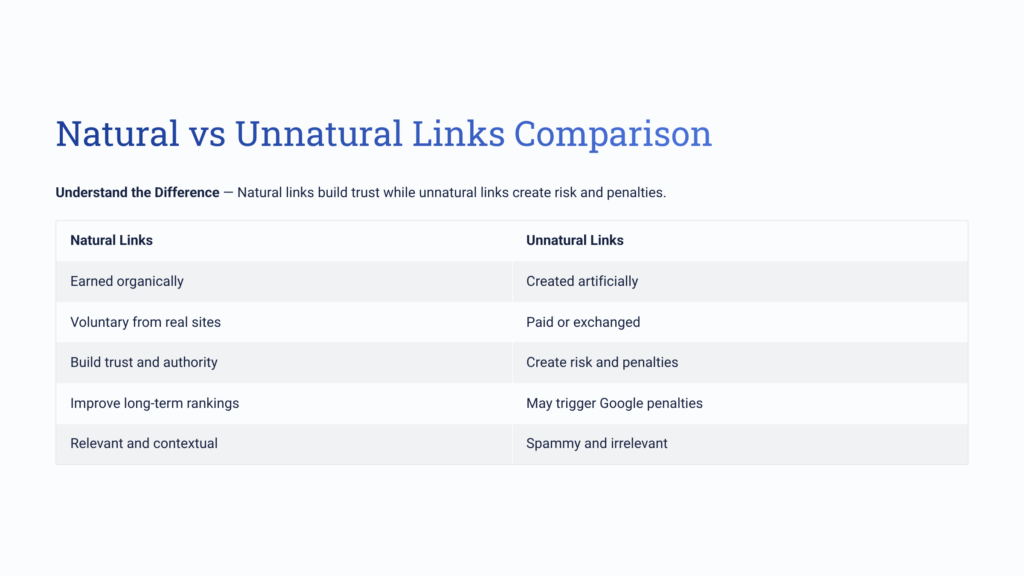
Natural links are created voluntarily because the content provides value. Unnatural links are created intentionally to manipulate search engine rankings.
Natural links come from relevant and trustworthy websites, while unnatural links often come from low-quality or unrelated sources.
Natural links improve SEO performance and build authority. Unnatural links create risk and may lead to penalties.
Natural links appear naturally within content, while unnatural links often appear forced or out of context.
Understanding these differences helps create safer link building strategies.
Examples of Natural Links
Here are some examples of how natural links are created in the real world.
Natural links often appear when content creators reference useful information. A blogger may link to a helpful article as a source of information.
Educational websites often link to useful resources that help readers understand topics better.
Industry websites may link to guides and tutorials that provide valuable information.
News websites often link to sources when reporting information.
These links are created voluntarily and provide value to readers.
Natural links help build authority and trust.
Examples of Unnatural Links
Now let us look at examples of unnatural links that could trigger search engine penalties.
Unnatural links often come from paid placements where links are added only to improve rankings.
Spam comments with links are another example of unnatural links. These links usually provide little or no value.
Link exchanges where websites agree to link to each other only to improve rankings are considered unnatural.
Low-quality directory submissions and automated link building are also considered unnatural.
These links do not provide value and may harm SEO performance.
Unnatural links often appear unnatural and irrelevant to the content.
How Search Engines Treat Natural and Unnatural Links
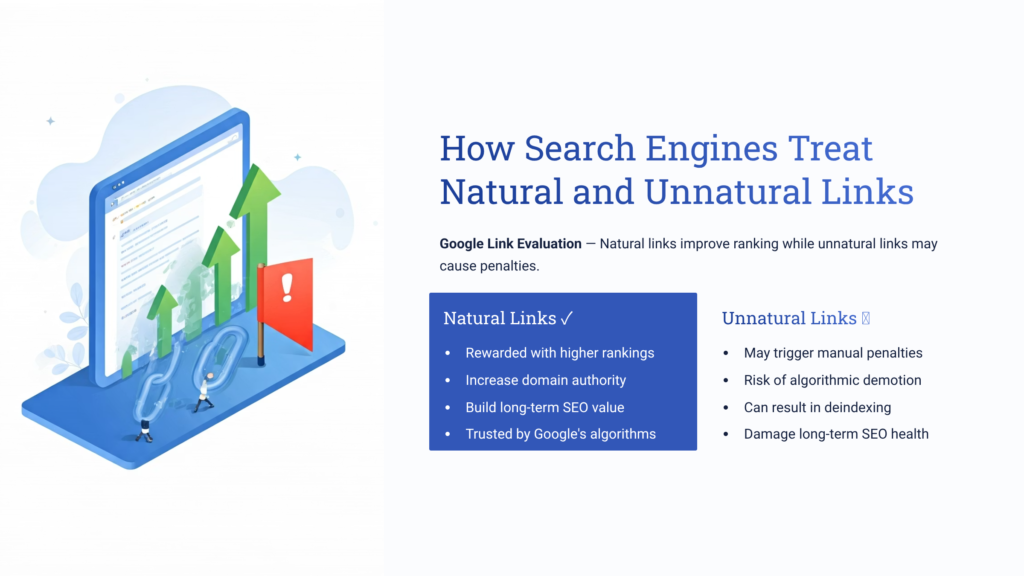
Google rewards natural links and penalizes unnatural ones. Search engines aim to provide reliable results to users, and link quality plays an important role in evaluating websites.
Natural links improve trust signals and help search engines identify useful content. Websites with strong natural link profiles often perform better in search results.
Websites using manipulative link techniques may see drops in search engine rankings or even de-indexing. Search engines use advanced algorithms to detect unnatural linking patterns.
Search engines evaluate:
- Link quality
- Link relevance
- Link patterns
- Anchor text usage
Natural link profiles help maintain stable rankings.
Unnatural link profiles create risks and instability.
How to Earn Natural Links
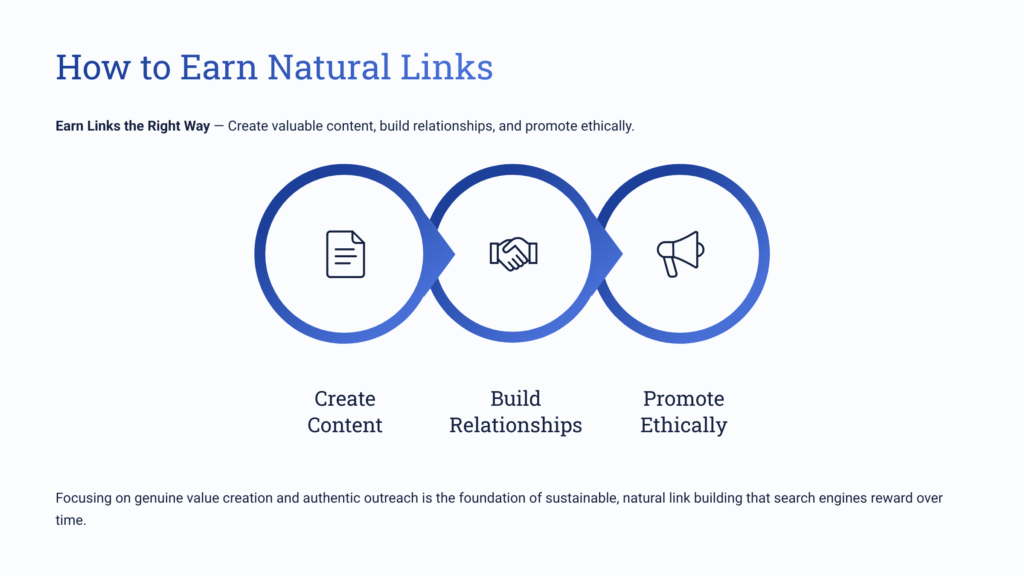
You can earn natural links by creating valuable content, building relationships, and promoting your work in ethical ways.
Step 1: Create Valuable Content
Creating valuable content is the most effective way to earn natural links. Useful content attracts attention and encourages other websites to reference it.
High-quality content includes:
- Guides
- Tutorials
- Research articles
- Informative blog posts
Valuable content increases the chances of earning natural backlinks.
Step 2: Build Relationships
Building relationships with website owners and content creators helps earn natural links.
Networking improves opportunities for collaboration.
Strong relationships lead to more link opportunities.
Relationship-based links are natural and trustworthy.
Step 3: Promote Your Content Ethically
Promoting your content in ethical ways helps increase visibility.
Ethical promotion includes:
- Sharing content
- Outreach
- Social media promotion
Promotion helps content reach the right audience.
Better visibility increases the chances of earning links.
How to Avoid Unnatural Links
To stay safe, never buy links or participate in link schemes. These practices violate search engine guidelines and create long-term risks.
Avoid Buying Links
Buying links is one of the most common unnatural link practices.
Paid links may lead to search engine penalties.
Natural links are safer and more effective.
Avoid Link Schemes
Link schemes involve artificial link exchanges designed to manipulate rankings.
Search engines may penalize websites that participate in link schemes.
Ethical SEO practices produce better long-term results.
Conclusion
To sum up, natural links are earned and safe, while unnatural links are risky and can damage your SEO reputation.
Natural links improve authority and trust, while unnatural links create penalties and ranking risks. Building natural links through valuable content and ethical promotion leads to long-term SEO success.
Focusing on ethical SEO practices helps protect your website and ensures stable growth over time.

Related Posts