Welcome. In this article, we are exploring a very important digital marketing concept: the difference between organic search and paid search. If you have ever wondered how websites appear on Google, this explanation will clear your doubts.
Search engines display different types of results when a user enters a query. Some results appear naturally based on relevance and optimization, while others appear because businesses have paid for visibility. Understanding how these two methods work is essential for anyone involved in blogging, business, or digital marketing.
What Is Organic Search?
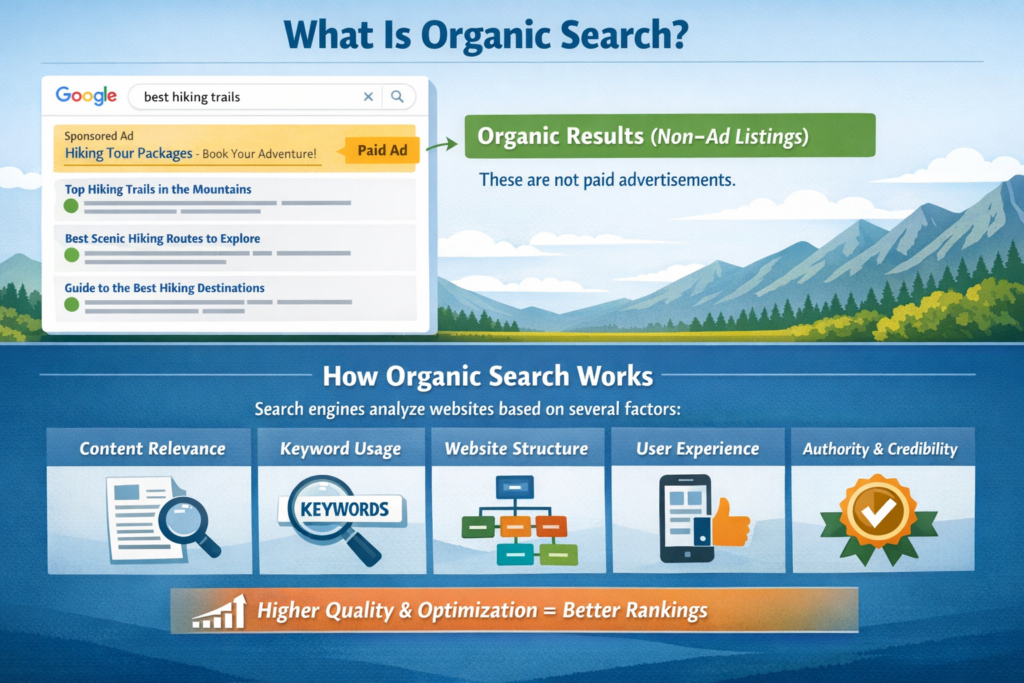
When you search on Google and click on a non-ad result, that is called organic search. These results appear naturally and are not paid advertisements.
Organic results are displayed based on search engine optimization (SEO). Websites rank in these positions because search engines consider them relevant, useful, and properly optimized for the search query.
How Organic Search Works
Search engines use algorithms to analyze websites. They examine factors such as:
- Content relevance
- Keyword usage
- Website structure
- User experience
- Authority and credibility
Based on these factors, search engines rank websites in order of relevance and quality. The higher the quality and optimization, the better the ranking.
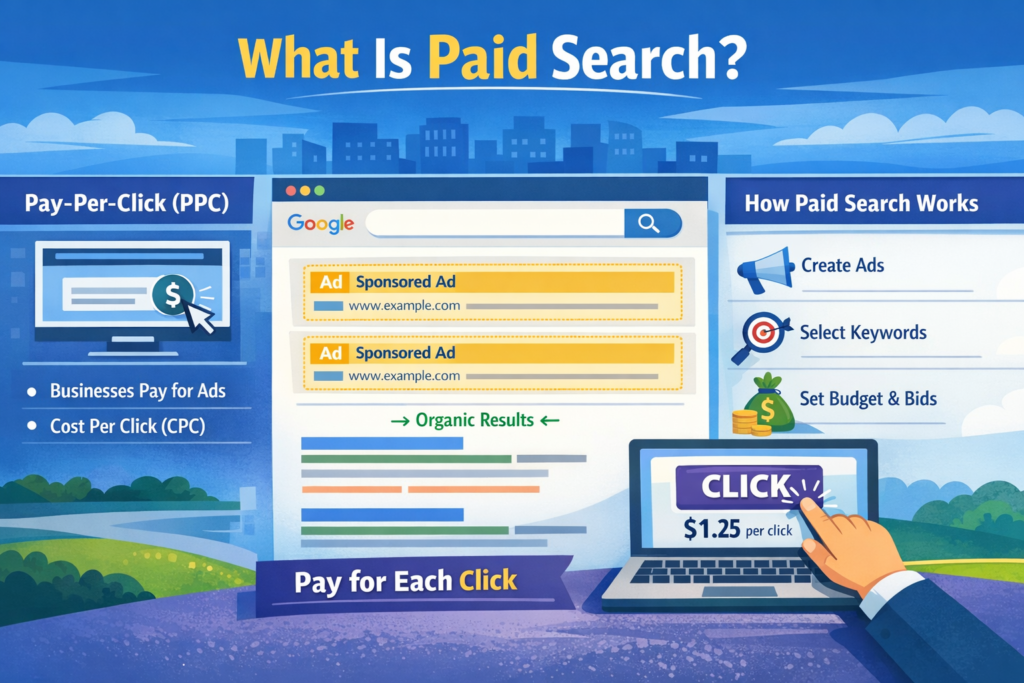
What Is Paid Search?
Paid search refers to advertisements that appear at the top or bottom of search results. These listings are marked as “Ad.”
Businesses pay Google for each click they receive on these advertisements. This model is commonly known as pay-per-click (PPC).
How Paid Search Works
In paid search:
- Businesses create advertisements.
- They choose keywords they want to target.
- They set a budget and bidding strategy.
- Their ads appear when users search for those keywords.
Each time someone clicks the ad, the advertiser pays a certain amount to the search engine.
Direct Comparison Between Organic and Paid Search
Let us now directly compare the two methods. Both organic search and paid search aim to increase website visibility, but they function differently.
Organic search relies on SEO and content quality. Paid search relies on advertising budgets and bidding strategies. While both can generate traffic, the approach and long-term impact differ significantly.
When to Use Organic Search
Organic search is ideal if you want to build a long-lasting online presence. It works best for:
- Blogs
- Content-driven websites
- Brands focusing on trust and authority
Organic SEO builds credibility over time. When users consistently see your website ranking high without an “Ad” label, it strengthens trust in your brand.
When to Use Paid Search
Paid search is great when you need quick results. It is especially useful for:
- Launching a new product
- Running a limited-time sale
- Promoting seasonal offers
- Generating immediate traffic
Because paid ads appear instantly once activated, they provide immediate visibility.
Combining Organic and Paid Search
Many successful businesses combine both strategies. Paid search gets quick traffic, while organic SEO builds long-term value.
Using both methods together allows businesses to:
- Capture immediate leads
- Maintain consistent visibility
- Strengthen brand authority
- Maximize overall search presence
Instead of choosing one over the other, combining them often produces better results.
Example of Search Results Display
Let us consider a simple example. If someone searches “buy online,” paid ads appear at the top, followed by organic listings.
Both paid and organic results serve the same user intent. However, they use different methods to appear:
- Paid listings appear because businesses bid on the keyword.
- Organic listings appear because they are optimized and relevant.
This example clearly shows how both methods coexist on search engine results pages.
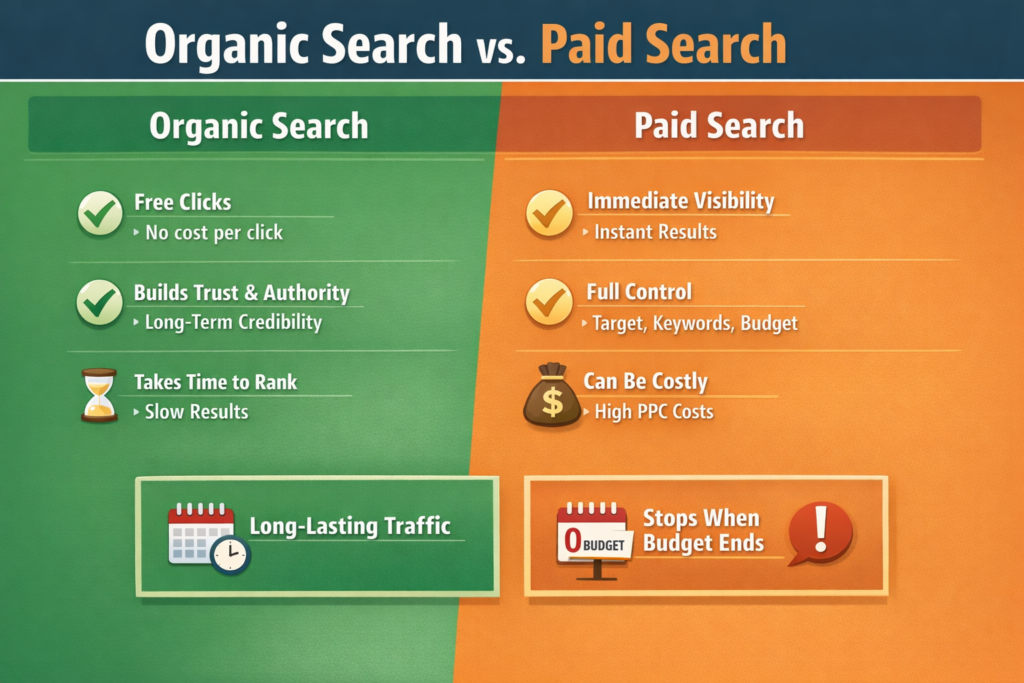
Side-by-Side Comparison of Organic and Paid Search
Let us break it down further with a detailed side-by-side comparison.
Organic Search: Advantages
Free Clicks
Organic search is completely free when someone clicks on your link. You do not pay per click.
Builds Trust and Authority
Over time, organic rankings help build trust and brand authority. Users often trust organic listings more than ads.
Long-Term Benefits
Once your website ranks well, it can continue to receive traffic for months or even years without additional cost.
Organic Search: Disadvantages
Takes Time
Organic search does not provide instant results. It takes time for search engines to crawl, index, and rank your website.
Requires SEO Knowledge
To compete effectively, you need a strong understanding of SEO. Without proper optimization, ranking becomes difficult.
Paid Search: Advantages
Immediate Visibility
Paid search gives you instant visibility. As soon as your campaign goes live, your ads can appear in search results.
Full Control
You have complete control over:
This control allows you to adjust campaigns based on performance.
Paid Search: Disadvantages
Can Be Expensive
Paid advertising can become expensive, especially in competitive industries where cost per click is high.
Traffic Stops When Budget Ends
The biggest drawback is that traffic stops the moment your ad spend ends. Unlike organic rankings, paid ads do not provide lasting visibility once the campaign is paused.
Step-by-Step Breakdown of Organic Search
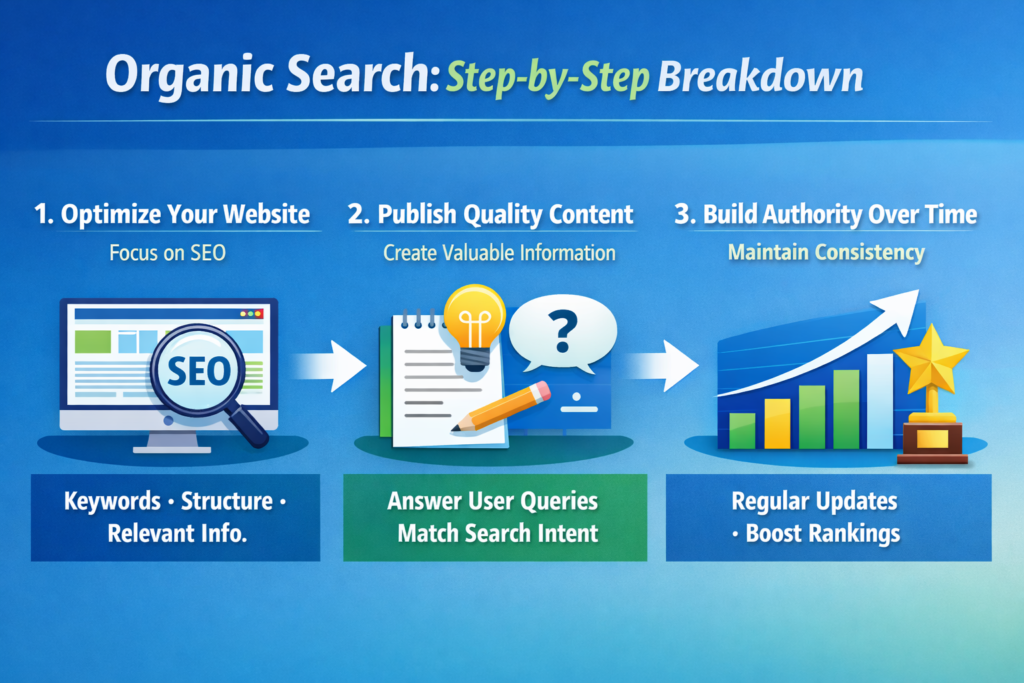
Step 1: Optimize Your Website
Focus on SEO
Ensure your website is optimized with proper keywords, structured content, and relevant information.
Step 2: Publish Quality Content
Create Valuable Information
Develop content that answers user queries and matches search intent.
Step 3: Build Authority Over Time
Maintain Consistency
Regular updates and high-quality content help improve rankings gradually.
Step-by-Step Breakdown of Paid Search
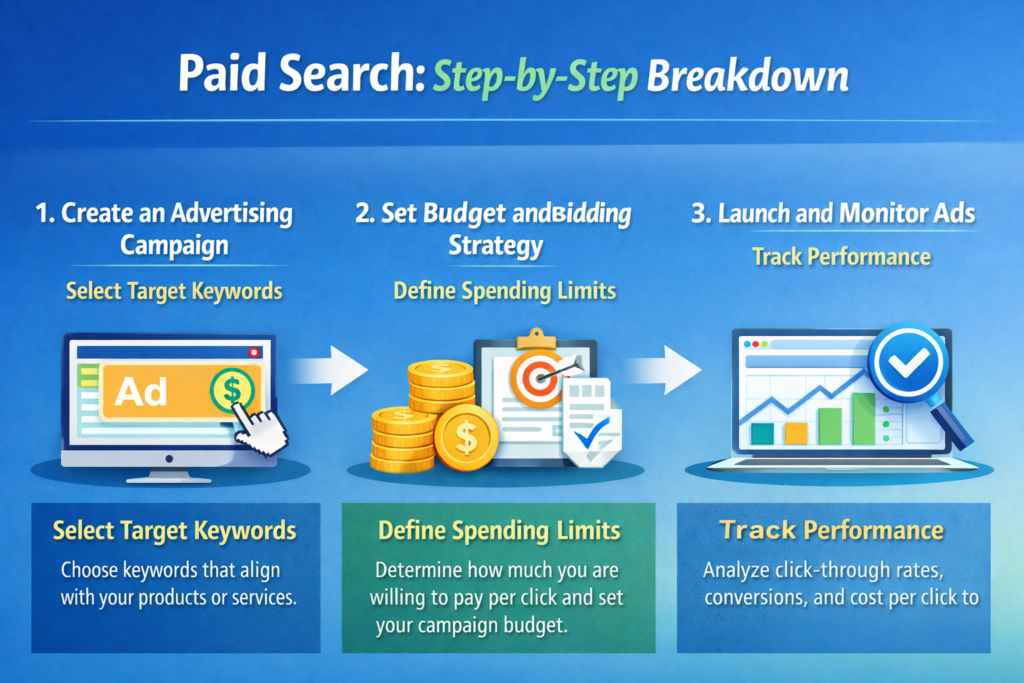
Step 1: Create an Advertising Campaign
Select Target Keywords
Choose keywords that align with your products or services.
Step 2: Set Budget and Bidding Strategy
Define Spending Limits
Determine how much you are willing to pay per click and set your campaign budget.
Step 3: Launch and Monitor Ads
Track Performance
Analyze click-through rates, conversions, and cost per click to optimize performance.
Choosing the Right Strategy
Both organic and paid search have their place in digital marketing. Your strategy depends on:
- Your goals
- Your timeline
- Your available resources
If you want sustainable, long-term growth, organic SEO is essential. If you need quick results, paid search is highly effective.
Understanding your business objectives will help you decide how to allocate your efforts and budget.
Long-Term Value vs Immediate Results
Organic search focuses on long-term value. It builds gradually and strengthens over time.
Paid search focuses on immediate results. It delivers quick traffic but requires continuous investment.
The difference lies in sustainability. Organic search compounds over time, while paid search delivers instant but temporary visibility.
Final Summary
To wrap up, organic search and paid search are both powerful in their own ways. Organic search helps build trust, authority, and long-term visibility without paying for every click. Paid search provides immediate visibility and complete control but requires ongoing budget allocation.
Understanding when and how to use them can help you grow your website effectively and smartly. A balanced approach often produces the best results.
By knowing the difference between organic and paid search, you can make informed decisions that align with your digital marketing goals and build a strong online presence.

Related Posts