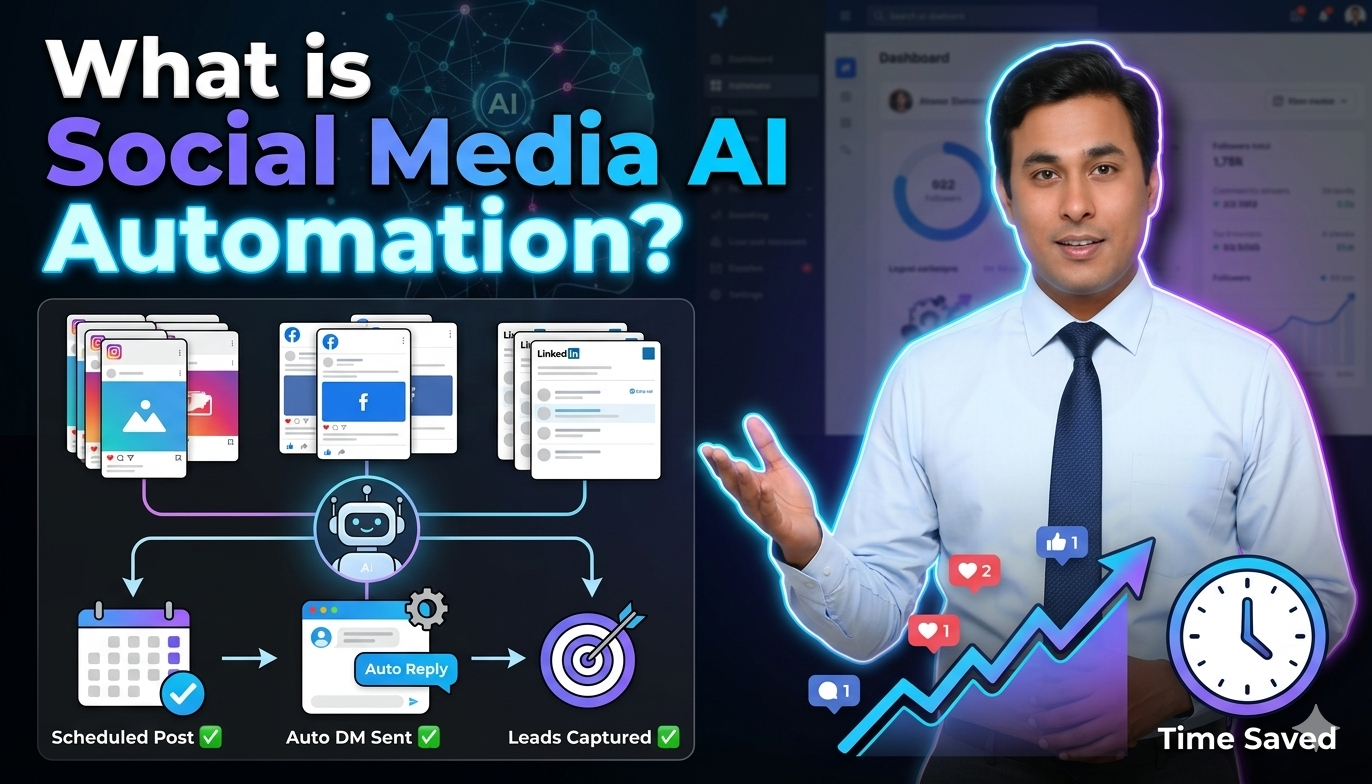
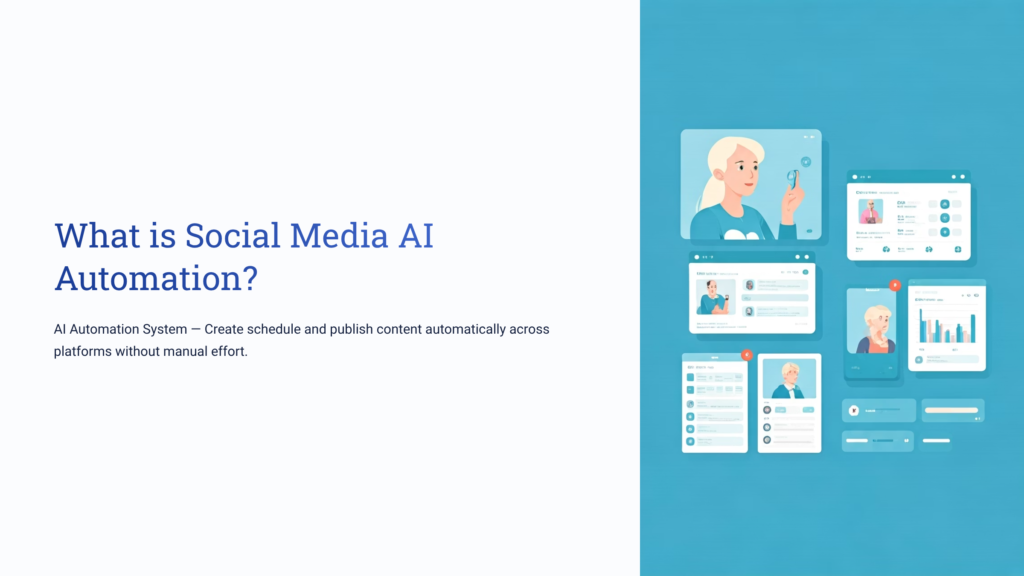
Social Media AI Automation is a system that allows content creation, scheduling, and publishing across multiple social media platforms without constant manual effort. Instead of posting content individually on each platform, AI-powered tools can generate, optimize, and distribute content automatically based on predefined workflows. This transforms social media management from a time-consuming daily task into a streamlined and efficient process.
At its core, social media AI automation combines artificial intelligence with workflow automation tools to create a fully functional content engine. It can gather information from different sources, process that information into engaging posts, and publish them across platforms such as Facebook, Instagram, LinkedIn, and more. The entire process runs in the background once properly configured, allowing users to maintain consistent activity without actively managing every step.
The Importance of Consistency in Social Media Growth
Consistency plays a crucial role in building and growing social media presence. Platforms prioritize accounts that post regularly and engage audiences frequently. However, maintaining this consistency manually can be challenging, especially when multiple platforms are involved.
AI automation solves this problem by ensuring that content is posted at regular intervals without interruption. Instead of relying on manual effort, automated systems handle posting schedules, ensuring that content reaches the audience consistently. This not only improves visibility but also strengthens audience engagement over time.
Moreover, consistent posting helps in building trust and authority within a niche. When audiences see regular updates, they are more likely to engage, follow, and interact with the content. Automation ensures that this consistency is maintained without requiring continuous effort.
How Social Media AI Automation Works
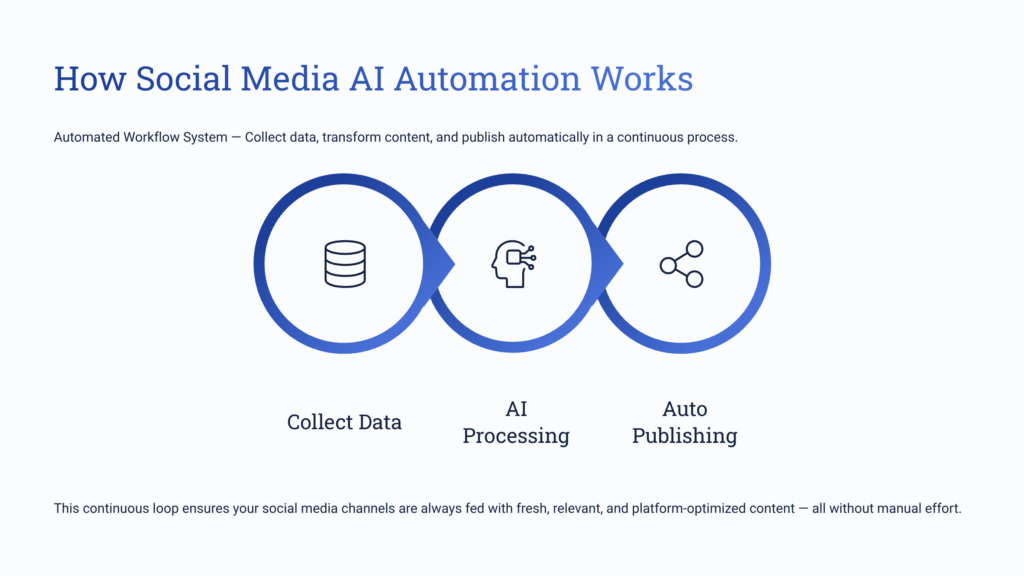
Social media AI automation operates through a structured workflow that connects multiple processes into a single system. The workflow begins with data collection, followed by content transformation, and ends with automated publishing.
The system first gathers information from selected sources such as news feeds, articles, or specific topics. This data is then processed by AI models, which convert it into unique and engaging social media posts. These posts are further optimized for different platforms based on their requirements, such as character limits or formatting styles.
Finally, the content is automatically published across multiple platforms. This entire process is controlled through an automation tool that manages connections between different applications. Once activated, the system runs continuously, handling content creation and distribution without manual intervention.
The Role of Automation Platforms
Automation platforms serve as the backbone of social media AI automation. These platforms provide a visual interface where workflows can be created, modified, and managed easily. Instead of writing complex code, users can build automation systems using drag-and-drop modules.
These platforms allow integration with multiple tools and services, enabling seamless data flow between them. Each module in the workflow performs a specific task, such as fetching data, processing content, or publishing posts.
The simplicity of these platforms makes them accessible to users without technical expertise. Despite their simplicity, they are capable of handling complex workflows involving multiple steps and integrations.
Creating a Content Source for Automation
Understanding Content Feeds
The first step in social media automation is identifying a reliable source of content. This source provides the raw information that will be transformed into social media posts.
Content feeds can include news articles, blog posts, updates from specific topics, or any other source that provides relevant information. These feeds ensure that the content being shared is fresh, informative, and aligned with the chosen niche.
Using RSS Feeds for Data Collection
RSS feeds are commonly used to collect content automatically from various sources. They act as a bridge between content sources and automation systems, allowing real-time data retrieval.
By setting up an RSS feed based on specific keywords or topics, the system can continuously fetch new information. This ensures that the content pipeline remains active and updated without manual input.
Transforming Content Using AI
Summarizing Information
Once data is collected, the next step is to process it into usable content. AI models are used to summarize articles and extract key insights. This makes the content concise and suitable for social media formats.
Summarization ensures that only the most relevant information is used, making posts more engaging and easier to consume.
Creating Unique Social Media Posts
AI tools can transform summarized content into platform-specific posts. Each platform has its own style, format, and audience expectations. AI adapts the content accordingly, ensuring that it fits each platform perfectly.
This includes adjusting tone, length, and structure to match platform requirements. The result is unique content tailored for each channel.
Using Routers for Multi-Platform Distribution
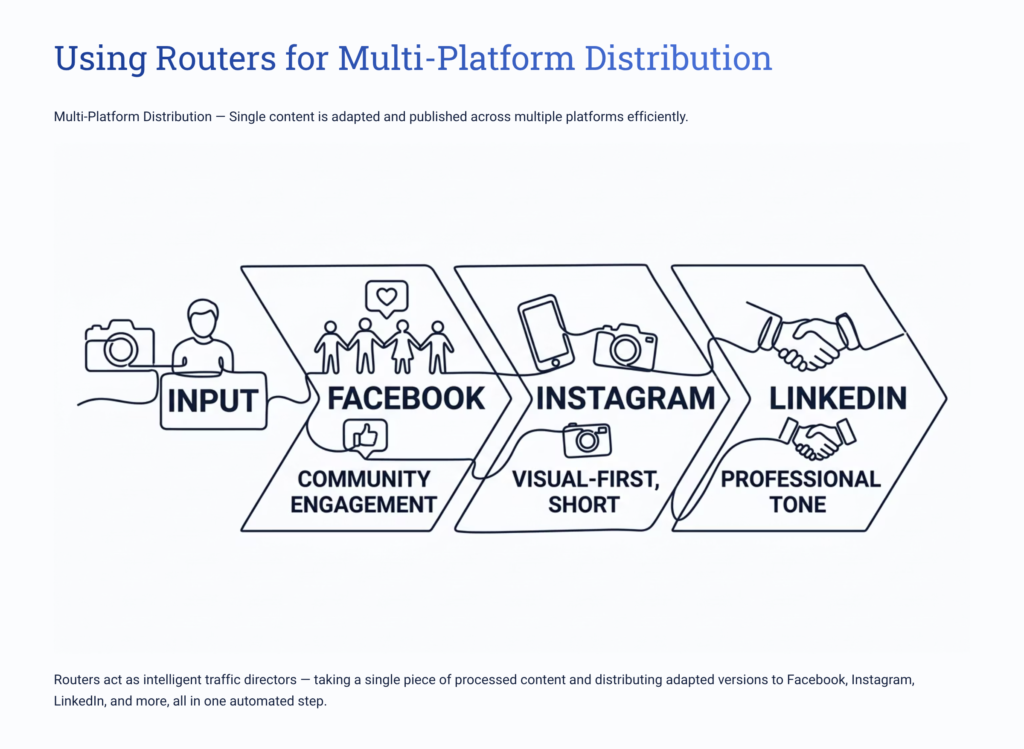
Routers play a critical role in automation workflows by allowing a single input to generate multiple outputs. Once content is processed, the router distributes it across different paths.
Each path represents a specific platform, such as Facebook, Instagram, YouTube or LinkedIn. This allows the same content to be adapted and posted across multiple platforms simultaneously.
This parallel processing increases efficiency and ensures that all platforms remain active without additional effort.
Platform-Specific Content Optimization
Facebook Content Strategy
Content for Facebook typically allows longer text and encourages engagement through detailed posts. AI-generated content can include structured information, engaging captions, and relevant formatting.
Instagram Content Strategy
Instagram focuses more on visuals and concise captions. AI automation can generate both captions and images, ensuring that posts are visually appealing and aligned with platform standards.
Short-Form Content Platforms
Platforms with character limits require concise and impactful content. AI ensures that posts remain within limits while still delivering value.
Adding Visual Content with AI
Visual content is a key component of social media engagement. Automation systems can generate images that complement the text content.
AI image generation tools create visuals based on the content of the post. These images are designed to enhance engagement and make posts more attractive.
It is important to ensure that visuals align with platform guidelines and maintain consistency in style and quality.
Automating Social Media Posting
Connecting Social Media Accounts
The automation system connects directly to social media accounts, allowing it to publish content automatically. This eliminates the need for manual posting.
Mapping Content to Outputs
Each post is linked to specific outputs within the workflow. This ensures that the correct content is published on the right platform.
Testing the Automation
Before activating the system, it is important to test each module. Testing ensures that data flows correctly and that posts are generated and published as expected.
Setting Up Scheduling and Frequency
Step 1: Access Scheduling Settings
Navigate to the scheduling section within the automation platform.
Step 2: Define Posting Frequency
Set how often the system should run, such as every few hours or daily.
Step 3: Activate the Workflow
Turn on the automation to start the process.
Scheduling ensures that content is distributed consistently without overwhelming the audience.

Monitoring and Verifying Results
Once the automation is active, it is essential to monitor its performance. This includes checking whether posts are being published correctly and whether the content aligns with expectations.
Regular monitoring helps identify issues and ensures that the system continues to operate smoothly.
Enhancing Automation with AI Assistance
AI can also assist in improving and expanding automation workflows. It can help generate new modules, suggest improvements, and troubleshoot issues.
By leveraging AI assistance, users can enhance their workflows and make them more efficient. This reduces the need for manual adjustments and simplifies complex configurations.
Advantages of Social Media AI Automation
Social media AI automation offers several benefits that make it a powerful tool for digital growth.
Time Efficiency
Automation reduces the need for manual posting and content creation.
Consistency
Content is published regularly without interruptions.
Scalability
Multiple platforms can be managed simultaneously.
Content Optimization
AI ensures that content is tailored for each platform.
Challenges in Social Media AI Automation
Despite its advantages, there are challenges associated with automation.
Content Quality
Ensuring high-quality output requires proper configuration and monitoring.
Over-Automation
Excessive automation can make content feel less personal.
Learning Curve
Understanding tools and workflows may take time initially.
Building a Fully Automated Social Media System
A successful automation system requires careful planning and execution. It involves selecting the right tools, defining workflows, and ensuring proper integration between modules.
Once established, the system can operate independently, handling content creation and distribution efficiently. This allows users to focus on strategy and growth rather than daily execution.
The Future of Social Media AI Automation
As technology advances, social media automation is becoming more sophisticated. AI models are improving in their ability to generate high-quality content and adapt to platform changes.
The integration of AI with automation tools is creating new opportunities for managing digital presence. This evolution is making it easier to maintain consistent and effective social media strategies.
Conclusion
Social media AI automation is transforming how content is created and distributed. By combining artificial intelligence with automation tools, it enables a fully streamlined system that handles multiple tasks efficiently.
From content sourcing to publishing, every step can be automated to ensure consistency and scalability. With the right setup, social media management becomes less about manual effort and more about strategic growth.
As the demand for consistent and engaging content continues to rise, social media AI automation offers a practical and efficient solution for managing digital presence across multiple platforms.

Related Posts