
Robots.txt is an important part of technical SEO that helps control how search engines crawl a website. It is a simple text file that provides instructions to search engine crawlers about which pages they are allowed to visit and which pages they should avoid. This file helps website owners manage how search engines interact with their websites.
Search engines use automated bots to crawl websites and collect information about webpages. Robots.txt helps guide these bots by defining which areas of a website should be accessed. This improves crawl efficiency and prevents unnecessary pages from being explored.
Robots.txt plays an important role in SEO because it helps manage crawl behavior and ensures that search engines focus on important content. Proper use of robots.txt helps improve website organization and search engine performance.
What is Robots.txt?
Robots.txt is a simple text file placed on a website that tells search engines and crawlers which pages they are allowed to visit and which pages they should avoid. It provides clear instructions that control crawler access.
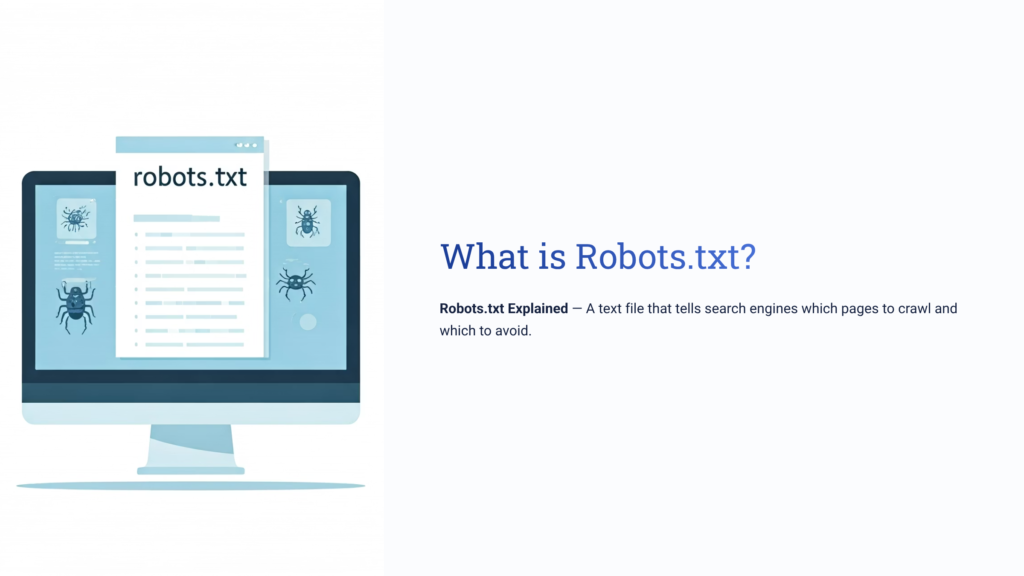
The robots.txt file helps search engines understand which parts of a website should be crawled. This allows website owners to protect certain areas from being explored by search engines.
Robots.txt helps manage website crawling in an organized way. Proper configuration ensures that important pages remain accessible while unnecessary pages are avoided.
Robots.txt is one of the basic technical SEO elements that helps improve crawl efficiency.
Location of Robots.txt File
The robots.txt file is located in the root directory of a website. It must be placed in the main directory so that search engines can find it easily.
The robots.txt file can be accessed by adding “/robots.txt” to the website domain. For example, a website with the domain example.com would have the robots.txt file at example.com/robots.txt.
Search engine crawlers look for the robots.txt file automatically when they visit a website. Proper placement ensures that search engines can read the instructions correctly.
Correct file location is necessary for robots.txt to function properly.
Importance of Robots.txt for SEO
Robots.txt is important for SEO because it helps guide search engines and manage crawl behavior. It allows website owners to control which pages search engines should explore.
Robots.txt helps manage crawl budget by preventing search engines from wasting time on unnecessary or unimportant pages. This allows search engines to focus on valuable content.
Robots.txt also helps protect sensitive or incomplete pages from being crawled. This improves website organization and SEO performance.
Proper use of robots.txt improves crawl efficiency and website structure.

Robots.txt Syntax
The syntax of robots.txt is simple and easy to understand. The file contains instructions that define which crawlers should follow certain rules and which pages should be allowed or disallowed.
User Agent
The user agent defines which search engine crawler the rules apply to. Different search engines have different crawlers.
User agent instructions allow website owners to create specific rules for different crawlers.
Proper user agent configuration improves control over crawling.
Allow and Disallow Rules
Allow and disallow rules define which pages can be crawled and which pages should be blocked. These rules control crawler access to different parts of the website.
Allow rules permit search engines to crawl certain pages. Disallow rules prevent search engines from crawling specific pages.
Proper rule configuration improves crawl efficiency.
Clear instructions improve search engine understanding.
Pages That Should Not Be Blocked
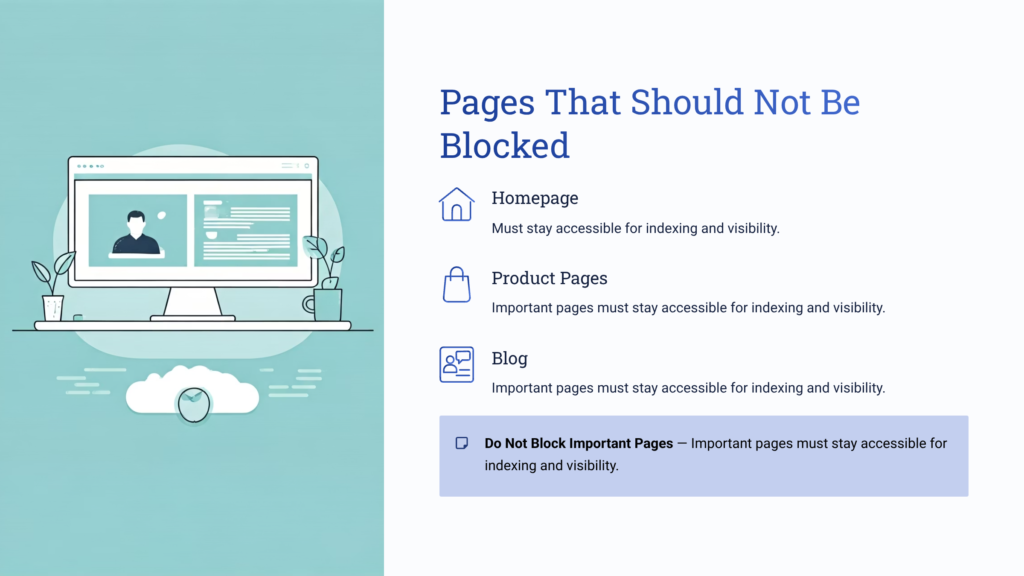
Important pages should never be blocked in robots.txt. Blocking important pages can prevent them from appearing in search results.
Pages such as the homepage, product pages, and blog posts should always remain accessible to search engines. These pages contain valuable content that should be indexed.
Blocking important pages can reduce search visibility.
Proper configuration ensures important pages remain accessible.
Testing Robots.txt
Robots.txt should always be tested to ensure that it works correctly. Testing helps verify that important pages are not blocked by mistake.
Google Search Console provides tools that allow website owners to test robots.txt rules. These tools help confirm that crawler instructions are working properly.
Testing helps detect errors early.
Regular testing improves SEO performance.
When to Use Robots.txt
Robots.txt should be used when certain areas of a website need to be hidden from search engines. This helps control crawler access.
Robots.txt can be used when website pages are still under development. Pages that are not ready for publication can be temporarily blocked.
Robots.txt can also be used to prevent search engines from accessing unnecessary sections of a website.
Proper use improves crawl management.
Robots.txt Practices to Avoid
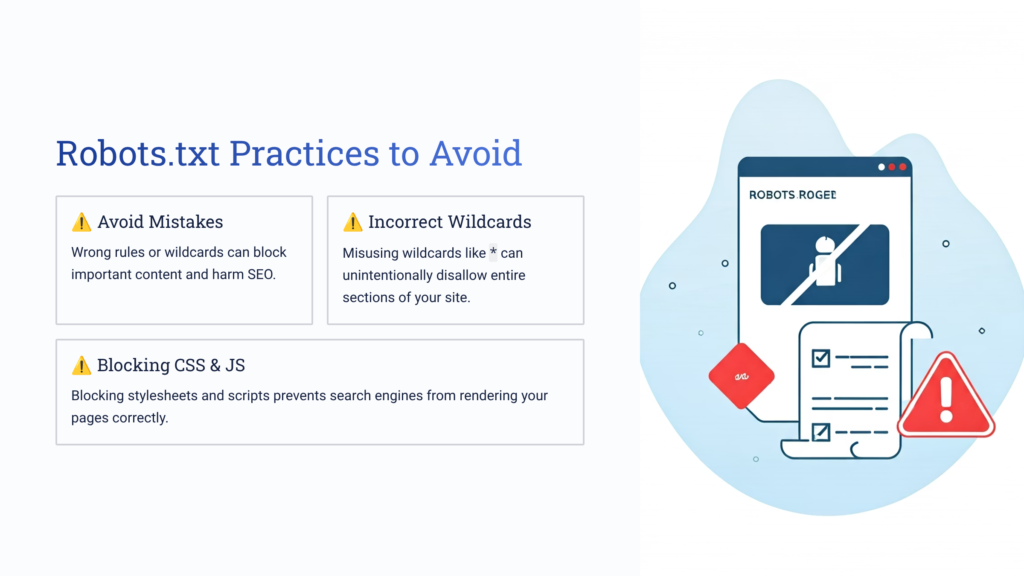
Robots.txt should not be used to block pages that should still appear in search results. Blocking such pages prevents search engines from crawling them.
Wildcards and incorrect paths should be avoided because they may block more content than intended. Incorrect settings can reduce search visibility.
Careless configuration can create SEO problems.
Proper planning prevents errors.
Robots.txt as a Crawl Control Tool
Robots.txt is a powerful file that controls how search engines interact with a website. It provides clear instructions about which pages should be crawled and which pages should remain private.
Proper robots.txt configuration improves crawl efficiency and website organization. It helps search engines explore important content more effectively.
Robots.txt helps maintain better control over website visibility.
Careful implementation improves SEO performance.
Conclusion
Robots.txt is a simple text file placed in the root directory of a website that tells search engines which pages they are allowed to crawl and which pages they should avoid. It helps guide search engines and manage crawl behavior.
Robots.txt helps manage crawl budget by preventing search engines from exploring unnecessary pages. It also helps protect sensitive or unfinished pages.
Important pages such as the homepage, product pages, and blog posts should never be blocked. Robots.txt should always be tested using tools such as Google Search Console.
Robots.txt is a powerful tool that controls how search engines interact with a website. Proper use helps manage crawling and improves SEO performance.

Related Posts