
Link juice is an important concept in search engine optimization (SEO) that helps determine how authority flows between web pages. Understanding link juice helps website owners improve their rankings by building strong and meaningful links. Link juice plays a major role in how search engines evaluate the authority and importance of web pages.
Link juice refers to the value or authority passed from one page to another through hyperlinks. When one webpage links to another webpage, it transfers some of its authority to the linked page. This transfer of authority helps search engines understand which pages are important and trustworthy.
Search engines use link juice to evaluate the strength of webpages. Pages that receive more link juice from trusted websites often rank higher in search results. Because of this, link juice is considered one of the most important concepts in SEO.
Understanding how link juice works helps businesses and website owners build better link-building strategies and improve their search rankings.
What is Link Juice?
Link juice refers to the value or authority passed from one page to another through hyperlinks. It helps in boosting the rankings of the linked page.
When a webpage links to another webpage, it transfers part of its authority. This shared value is known as link juice. Search engines consider this transfer of authority when determining rankings.
If a high-authority website links to your page, some of its ranking power flows to your website. This transfer improves the credibility and ranking potential of your page.
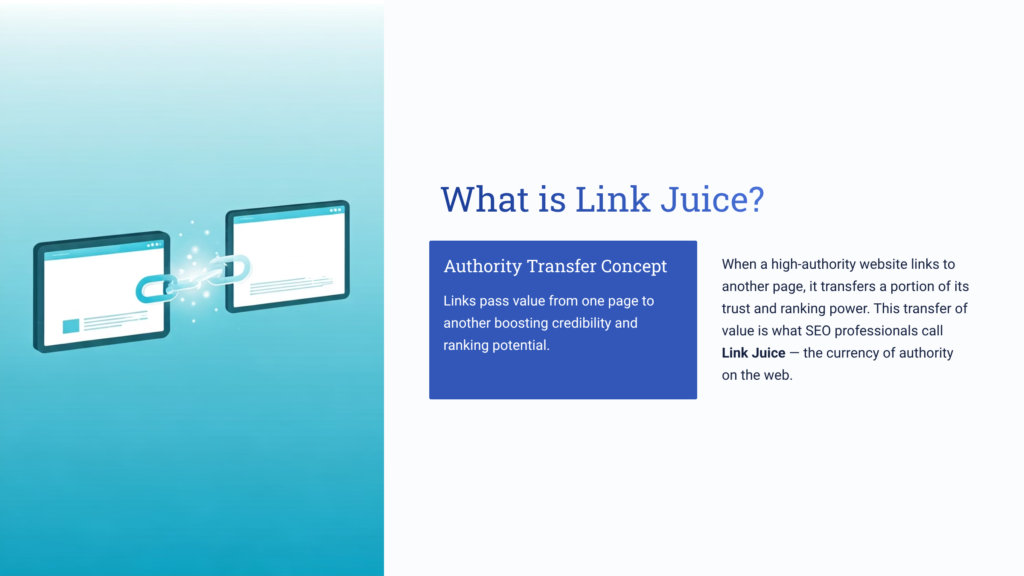
Link juice helps search engines identify pages that are useful and reliable. Pages with stronger link juice signals usually perform better in search results.
Because of its importance, link juice is an essential part of any SEO strategy.
How Link Juice Works
Link juice flows through hyperlinks from one webpage to another. When a page receives links from other websites, it gains authority and ranking power.
High-authority websites pass stronger link juice compared to low-authority websites. Links from trusted websites provide more SEO value.
When multiple websites link to the same page, the link juice increases. More link juice improves the chances of higher rankings.
Search engines analyze link juice to determine which pages deserve better visibility. Pages with stronger authority signals are considered more important.
Link juice works as a signal of trust between websites. The more trusted sources link to a page, the stronger its authority becomes.
Factors That Affect Link Juice
Not all links pass the same amount of link juice. Several factors influence how much authority is transferred through a link.
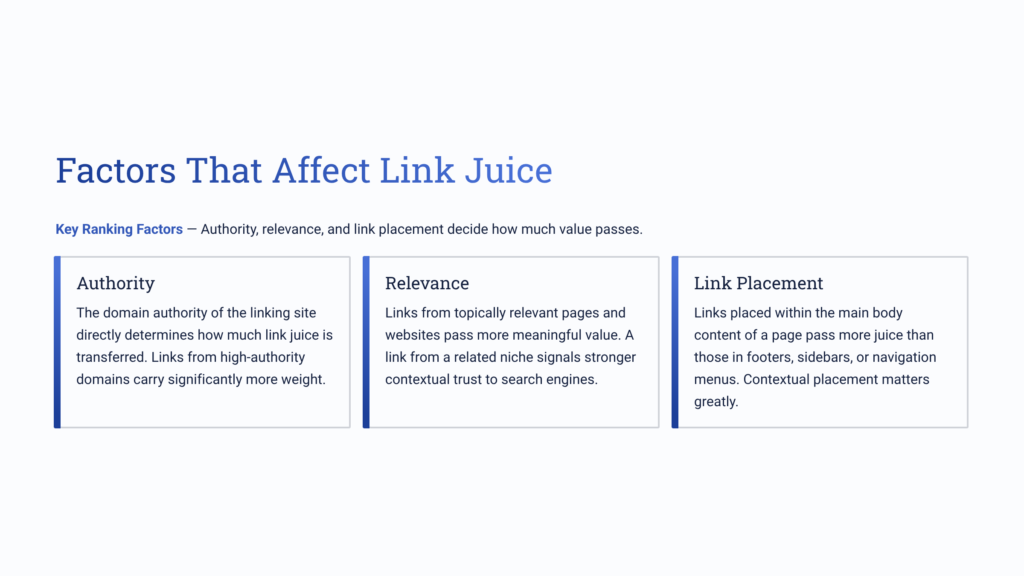
Page Authority
Page authority plays an important role in link juice distribution. Pages with higher authority pass more link juice than pages with lower authority.
Links from well-established websites provide stronger ranking signals.
High-authority links improve SEO performance.
Link Placement
Link placement affects how link juice flows. Links placed within the main content usually pass more value than links placed in footers or sidebars.
Search engines consider contextual links more valuable.
Better link placement improves the effectiveness of link juice.
Relevance
Relevance between the linking page and the linked page is important. Links from related content pass stronger link juice.
Relevant links help search engines understand the topic of a page.
Topical relevance increases the value of link juice.
Do Follow and No Follow Links and Link Juice
Do follow and no follow links influence how link juice flows between pages.
Do Follow Links
Do follow links allow link juice to flow from one page to another. These links pass authority and ranking value.
Do follow links help improve search engine rankings by transferring authority.
Because of this, do follow links are important for SEO.
No Follow Links
No follow links block the flow of link juice. These links do not pass authority to the linked page.
No follow links still have other SEO uses, such as bringing traffic and improving visibility.
Both do follow and no follow links have different roles in SEO.
Internal Linking and Link Juice
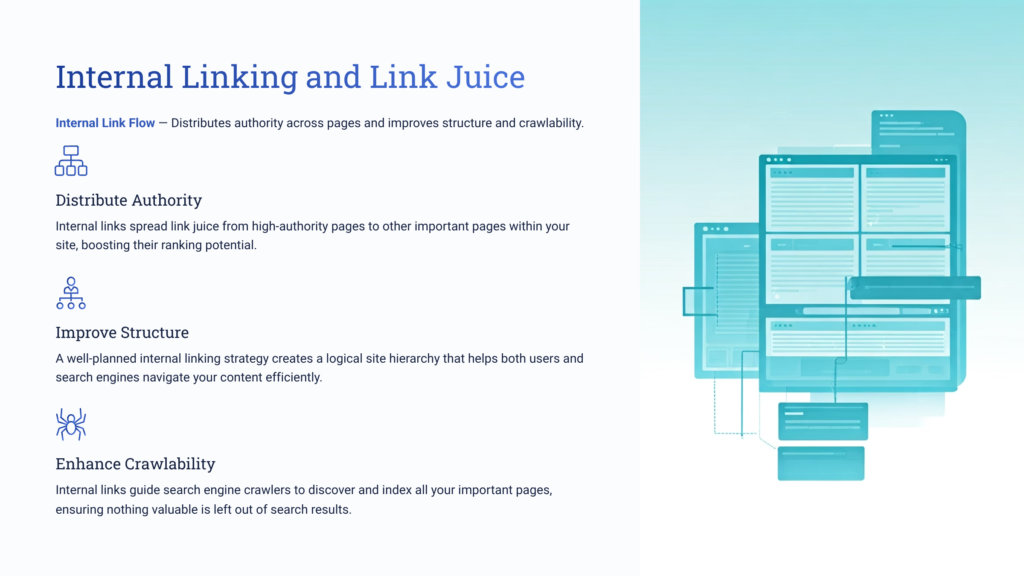
Internal links also pass link juice within a website. Linking from one page of a website to another helps distribute authority across the site.
Internal linking helps search engines understand the structure of a website. It allows search engines to discover important pages.
Internal links help distribute link juice evenly. This improves the authority of multiple pages.
Proper internal linking also improves crawlability. Search engines can navigate the website more easily.
Internal linking strengthens overall SEO performance.
External Links and Link Juice
External links play an important role in gaining link juice from other websites.
When other websites link to your page, they pass link juice to your website. This improves authority and ranking potential.
More links from trusted websites result in stronger link juice signals. High-quality external links provide better SEO results.
External links help build trust and credibility.
Search engines consider external links as important ranking signals.
Ways to Earn Quality Link Juice
Create Valuable Content
Creating valuable content helps attract links naturally. High-quality content encourages other websites to link to your pages.
Useful content increases the chances of earning link juice.
Content quality plays an important role in link building.
Do Guest Posting
Guest posting helps earn link juice by publishing content on other websites.
Guest posts often include links back to the original website.
Guest posting helps build authority and exposure.
Get Featured in Directories
Directory listings can provide link juice when placed on trusted platforms.
Directories help improve visibility and credibility.
Trusted directories provide better SEO value.
Earn Mentions on High Authority Sites
Mentions on high-authority websites help pass strong link juice.
High-authority mentions improve trust and rankings.
Quality mentions strengthen SEO performance.
Practices to Avoid
Avoid Spammy or Irrelevant Links
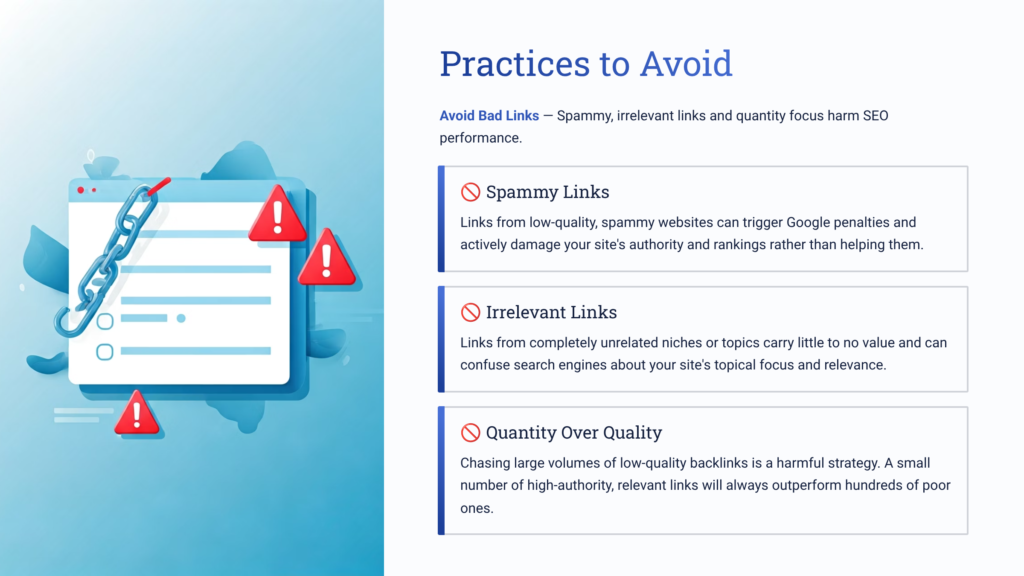
Links from spammy or irrelevant websites should be avoided. These links can reduce SEO effectiveness.
Low-quality links provide little or no link juice.
Spammy links may harm rankings.
Do Not Rely on Quantity
Link building should not focus only on the number of links. A large number of low-quality links does not provide strong results.
Quality links provide more link juice than many weak links.
Quality should always be the priority.
Focus on Quality and Context
The quality and context of links are important factors in link juice distribution.
Relevant and trusted links provide better SEO value.
Contextual links strengthen authority signals.
Importance of Link Juice in SEO
Link juice is one of the most important concepts in SEO. It helps search engines decide which pages have more authority and deserve higher rankings.
Search engines use link juice signals to evaluate trust and relevance. Pages with stronger link juice signals are more likely to rank higher.
Link juice helps improve website authority and search visibility.
Understanding link juice helps website owners make better SEO decisions.
Effective link-building strategies depend on proper link juice distribution.
Conclusion
Link juice is the value or authority passed from one page to another through hyperlinks. It plays a major role in determining search engine rankings.
High-quality links from trusted websites pass stronger link juice and improve SEO performance. Internal links also help distribute link juice across a website.
Do follow links allow link juice to flow, while no follow links block the flow. Both types of links have different SEO uses.
Building quality links through valuable content, guest posting, directories, and high-authority mentions helps improve link juice.
Link juice helps search engines determine which pages deserve higher rankings. Understanding and managing link juice is essential for long-term SEO success.

Related Posts