
Blog commenting is an important off-page SEO technique that helps improve online visibility and engagement. It is a simple method where users add valuable responses or feedback in the comment section of blog posts. This method allows businesses and individuals to connect with content creators and audiences while improving their online presence.
Blog commenting is widely used in SEO because it helps websites gain exposure and build relationships within their niche. When done properly, blog commenting can help improve search engine visibility and bring targeted visitors to a website.
Blog commenting is not only about leaving comments. It involves reading blog content carefully and sharing useful thoughts that contribute to the discussion. Meaningful comments increase credibility and help establish authority in a specific niche.
This method is considered a simple and free way to participate in online discussions while supporting SEO efforts. When used correctly, blog commenting can contribute to long-term SEO growth.
What is Blog Commenting?
Blog commenting means adding valuable responses or feedback in the comment section of a blog post. These comments are usually related to the topic of the article and help continue the discussion.
Blog comments allow users to interact with blog content and share their opinions or experiences. In many cases, blog commenting also allows users to include a link to their website. This link can help readers visit the website and learn more about the commenter.
Search engines recognize blog comments as part of a website’s online presence. When comments are relevant and meaningful, they contribute positively to SEO efforts.
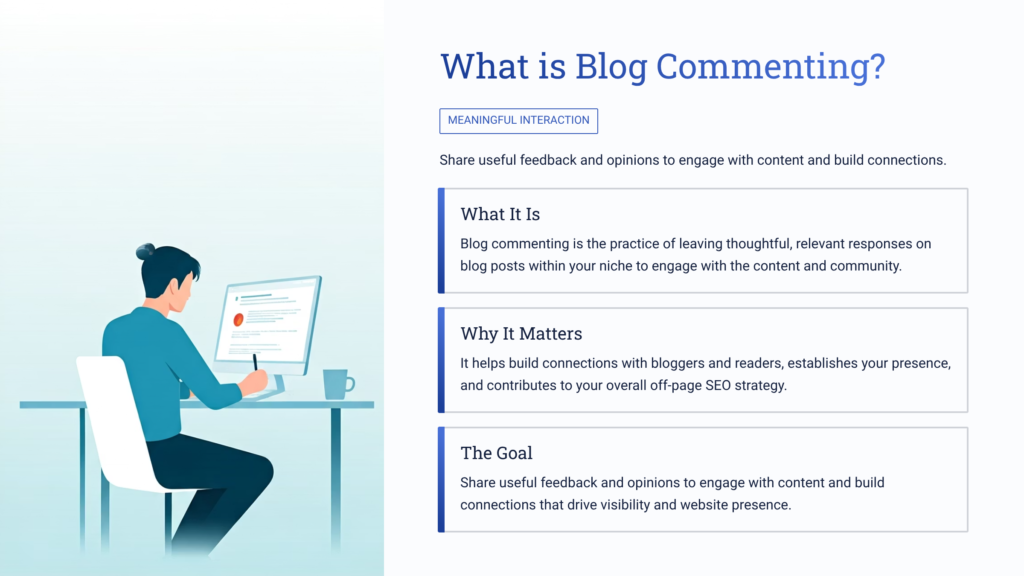
Blog commenting should always focus on adding value to the conversation. Comments that provide useful insights are more likely to be approved and appreciated by blog owners.
Proper blog commenting helps build connections with blog authors and readers. It creates opportunities for networking and engagement within a niche.
Types of Blog Comments
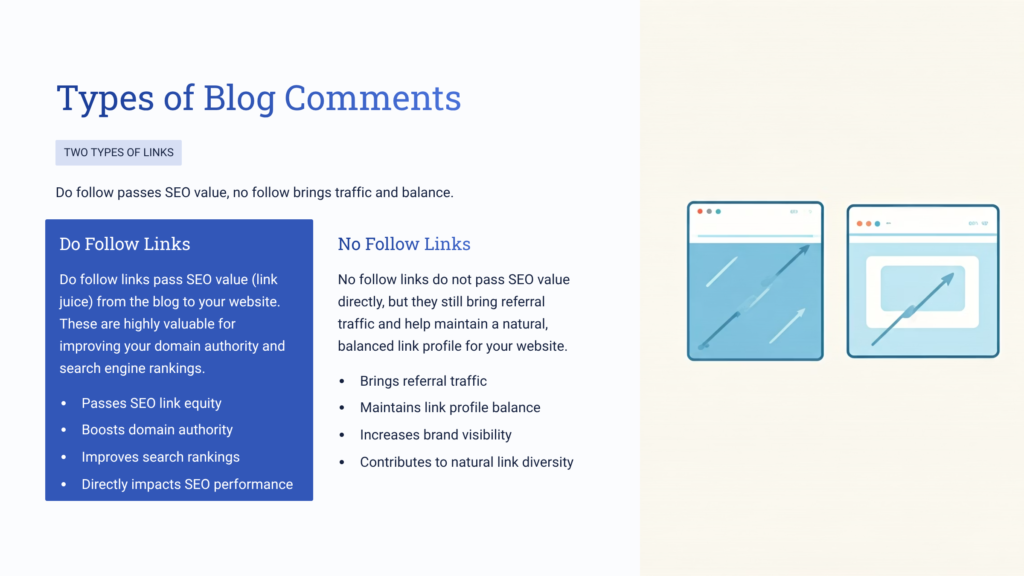
There are two types of blog comments based on the type of links they allow. These types determine how the links affect SEO.
Do Follow Blog Comments
Do follow blog comments allow search engines to follow the links included in the comment. These links pass SEO value and contribute to backlink building.
Do follow comments can help improve search engine rankings because they create backlinks pointing to a website. These backlinks signal search engines that the website is connected to relevant content.
Do follow blog comments are valuable when placed on quality blogs that are related to the niche.
No Follow Blog Comments
No follow blog comments contain links that search engines do not follow for ranking purposes. These links do not pass direct SEO value.
Even though no follow links do not pass ranking value, they still provide benefits. They help increase visibility and can bring visitors to a website.
No follow blog comments also help create a natural backlink profile, which is important for SEO.
Both do follow and no follow blog comments are useful when used correctly. A balanced approach helps improve overall SEO performance.
How Blog Commenting Helps in SEO
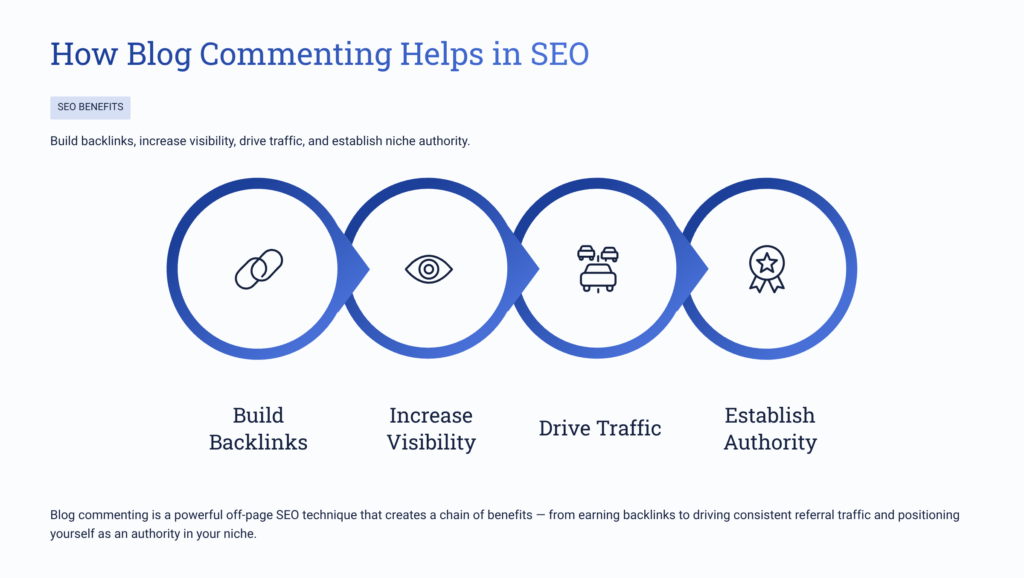
Blog commenting supports SEO in several ways. It helps improve visibility, build backlinks, drive traffic, and establish authority within a niche.
Building Backlinks
Blog commenting helps in building backlinks when comments include website links. These backlinks connect the website with other relevant content on the internet.
Backlinks are important signals that search engines use to evaluate websites. Relevant backlinks help improve search engine trust.
Meaningful blog comments on relevant blogs can create useful backlinks that support SEO growth.
Improving Visibility
Blog commenting increases online visibility by placing your name and website in front of new audiences. Readers who find the comments helpful may visit the website to learn more.
Participating in blog discussions helps expand online presence and awareness.
Regular commenting on relevant blogs helps maintain visibility within a niche.
Driving Traffic
Blog comments can bring referral traffic to a website. Visitors who read helpful comments may click on the website link.
Referral traffic from blog comments often includes users who are interested in the topic. This makes the traffic more relevant.
Consistent blog commenting can gradually increase website traffic.
Establishing Authority in the Niche
Blog commenting helps establish authority in a niche by sharing useful knowledge and opinions. Valuable comments show expertise and understanding of the subject.
Over time, consistent participation in blog discussions helps build credibility.
Authority in a niche improves trust among readers and blog owners.
Choosing the Right Blogs
Choosing the right blogs is an important part of blog commenting. Comments should be posted on blogs that are related to your niche.
Relevant blogs attract audiences who are interested in similar topics. This increases the chances of engagement and traffic.
Commenting on unrelated blogs does not provide meaningful SEO benefits. It also reduces the quality of backlinks.
Niche-related blogs help build stronger connections and improve SEO effectiveness.
Steps for Effective Blog Commenting
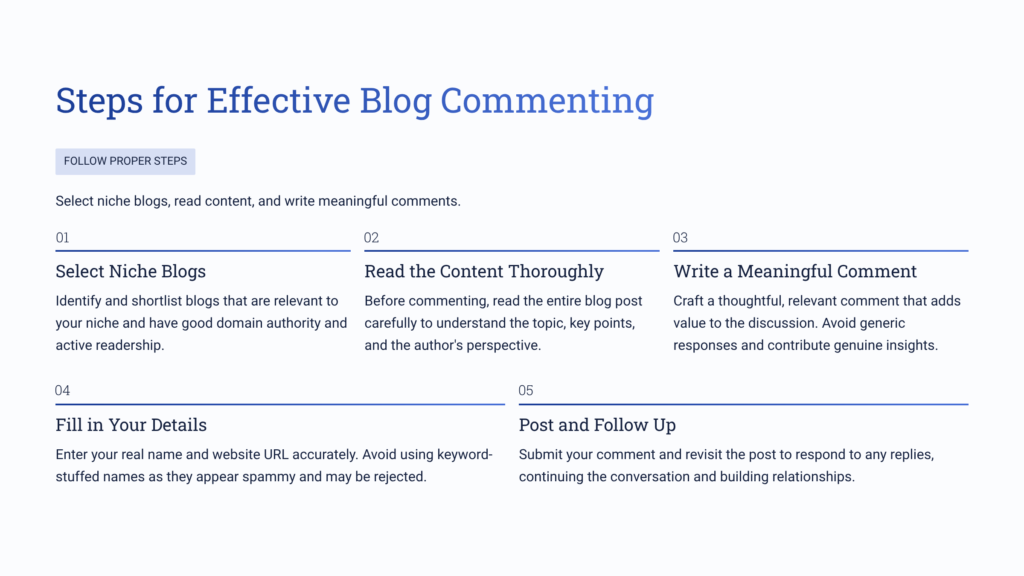
Choose Blogs Related to Your Niche
The first step in blog commenting is selecting blogs that match your niche. Relevant blogs provide better SEO value and targeted audiences.
Niche-related blogs increase the chances that readers will be interested in your website.
Choosing the right blogs improves the effectiveness of blog commenting.
Read the Article Completely
Before writing a comment, the article should be read completely. Understanding the content helps create meaningful responses.
Reading the article ensures that the comment stays relevant to the topic.
Complete understanding of the article improves the quality of comments.
Write a Meaningful Comment
A meaningful comment adds value to the blog post. It should include useful thoughts, opinions, or experiences related to the topic.
Quality comments are more likely to be approved by blog owners.
Meaningful comments help build trust and credibility.
Common Mistakes to Avoid
Posting Spammy or Copied Comments
Spammy or copied comments reduce credibility and may be rejected by blog owners. These comments do not add value to the discussion.
Search engines may also consider spammy comments as low-quality SEO practices.
Original and useful comments produce better results.
Using Keywords as Your Name
Using keywords as a name instead of a real name looks unnatural and unprofessional. Blog owners often reject such comments.
Using a real name improves trust and authenticity.
Natural commenting practices produce better SEO results.
Linking in Every Comment
Adding links in every comment may appear spammy. Excessive linking reduces credibility.
Links should be used only when necessary and relevant.
Balanced linking helps maintain quality.
Tracking Blog Commenting Results
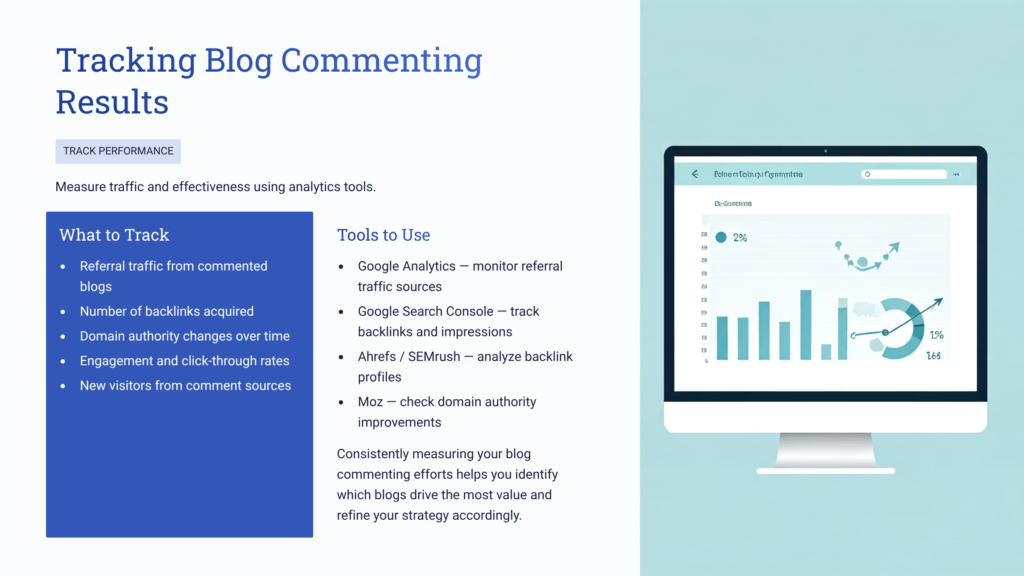
Blog commenting results can be tracked using tools such as Google Analytics or UTM parameters. These tools help measure referral traffic generated by blog comments.
Tracking allows website owners to understand which comments bring visitors. This helps evaluate the effectiveness of blog commenting efforts.
Referral traffic data shows how users reach the website through blog comments.
Regular tracking helps improve blog commenting strategies over time.
Benefits and Drawbacks of Blog Commenting
Blog commenting has many benefits but also some drawbacks. Understanding both helps use this method wisely.
The benefits include improved visibility, backlinks, traffic, and authority. These advantages support overall SEO growth.
However, blog commenting requires time and effort to produce meaningful results. Poor-quality comments do not provide benefits.
Blog commenting should focus on quality rather than quantity. Meaningful comments produce better long-term results.
Conclusion
Blog commenting is a free and simple way to build connections, earn visibility, and grow SEO when done properly. It allows businesses and individuals to engage with content and reach new audiences.
Meaningful comments on niche-related blogs help improve online visibility and drive traffic. Consistent participation in blog discussions helps establish authority and credibility.
Blog commenting should always focus on quality rather than quantity. Careful and thoughtful commenting produces better results over time.
When used wisely, blog commenting becomes an effective method for improving SEO and building a stronger online presence.

Related Posts