Welcome. In today’s lesson, we will learn about anchor text and why it plays a big role in SEO and link building strategy. Anchor text is an important part of search engine optimization because it helps both users and search engines understand what a link is about. When used correctly, anchor text improves search visibility and supports a strong link building strategy.
Anchor text helps search engines understand the relationship between pages and the topic of the linked content. It also improves navigation by helping users know what to expect when they click on a link. A proper understanding of anchor text allows website owners and marketers to create better SEO strategies and improve rankings over time.
What is Anchor Text?
Anchor text is the visible text that you click on in a hyperlink. It helps users understand what page they will land on and helps search engines understand link context. Anchor text usually appears highlighted or underlined, and it allows users to move from one page to another.
Search engines analyze anchor text to determine the topic of the linked page. When anchor text clearly describes the destination page, search engines can better understand the relevance of the link. This helps improve ranking signals and strengthens the connection between related pages.
Clear and meaningful anchor text improves user experience because visitors can easily understand where a link will take them before clicking it. Proper anchor text makes content easier to navigate and more useful for readers.
Types of Anchor Text
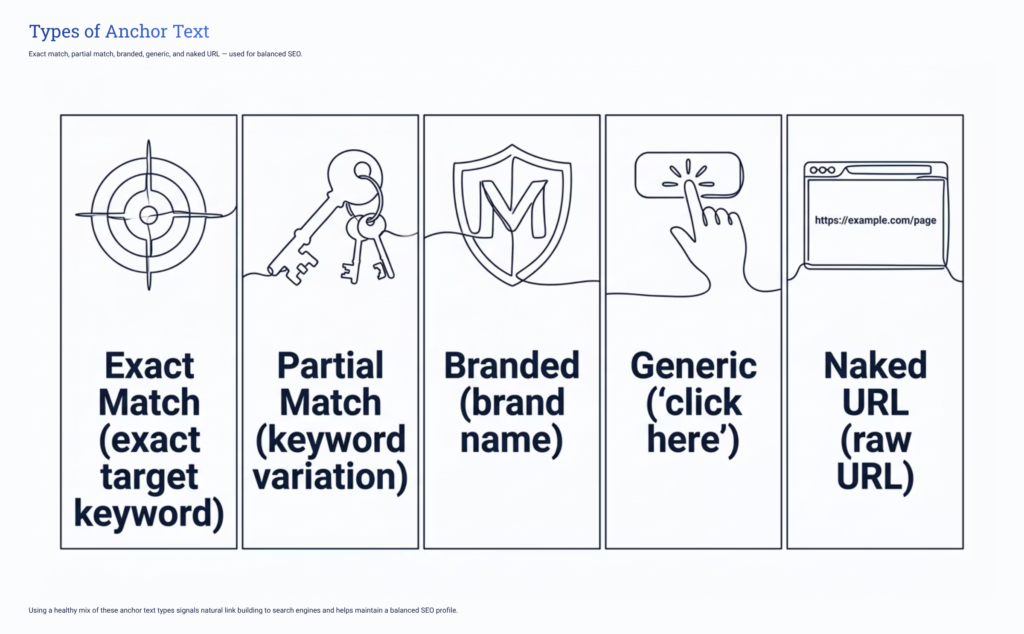
There are different types of anchor text. Each type has a unique impact on SEO when used properly. Using a balanced mix of anchor text types helps create a natural link profile and reduces the risk of search engine penalties.
Exact Match Anchor Text
Exact match anchor text contains the exact keyword of the target page. This type of anchor text sends strong relevance signals to search engines because it directly matches the topic of the linked page.
Exact match anchors can improve rankings when used carefully. However, excessive use of exact match anchor text can appear unnatural and may negatively affect SEO performance.
Partial Match Anchor Text
Partial match anchor text contains a variation of the main keyword. Instead of using the exact keyword, it includes related words or phrases that describe the linked page.
Partial match anchors appear more natural than exact match anchors and help maintain a balanced link profile. They provide strong relevance signals while keeping the content readable and natural.
Branded Anchor Text
Branded anchor text includes the name of a brand or business. This type of anchor text helps improve brand recognition and is considered safe for SEO.
Branded anchors help search engines associate the brand name with specific topics and services. They are commonly used in link building campaigns and are an important part of a natural backlink profile.
Generic Anchor Text
Generic anchor text includes common phrases such as “click here,” “read more,” or “learn more.” These anchors do not provide strong keyword signals but help maintain a natural link profile.
Generic anchors are useful for improving user experience because they provide simple navigation options. They are often used when the surrounding content already explains the link.
Naked URL Anchor Text
Naked URL anchor text uses the full website address as the link text. This type of anchor text is often used in references and citations.
Naked URLs help create a natural backlink profile because many websites link this way. They are commonly used in directories, social media posts, and online references.
Why Anchor Text is Important for SEO
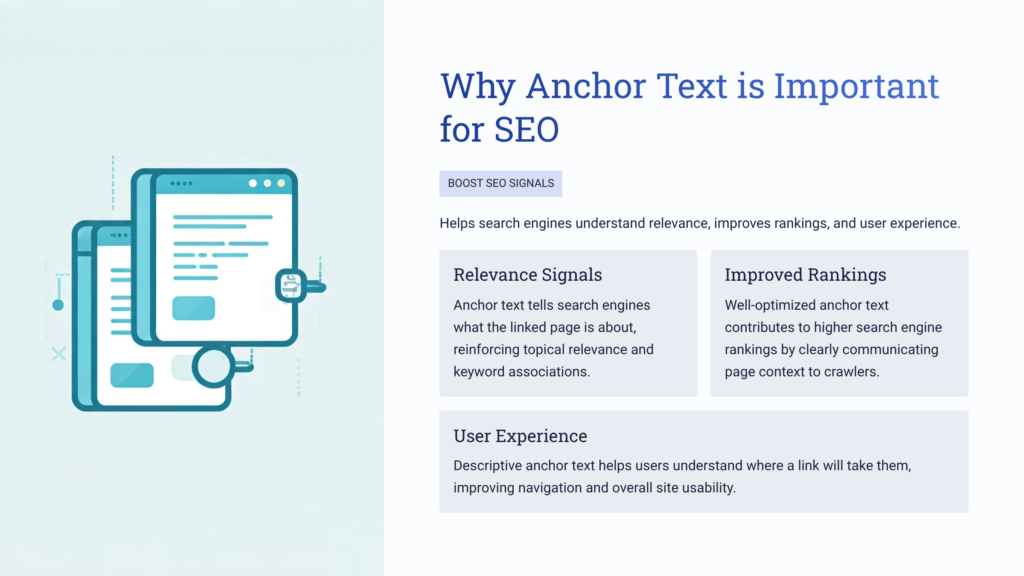
Search engines use anchor text to determine the topic of the linked page. Anchor text provides important signals that help search engines understand page relevance and relationships between content.
Proper anchor text helps improve rankings because it gives search engines clear information about the linked page. When anchor text matches the content topic, search engines can better evaluate relevance.
Anchor text also improves user experience by clearly describing the destination page. Users are more likely to click on links when they understand where the link will take them. Clear anchor text improves navigation and makes content easier to understand.
Balanced anchor text usage supports strong link building strategies and improves long-term SEO performance.
Anchor Text Best Practices
For best results, keep your anchor text relevant, natural, and balanced. Proper anchor text usage improves SEO performance and reduces the risk of penalties.
Keep Anchor Text Relevant
Anchor text should match the content of the linked page. Relevant anchor text helps search engines understand the topic of the destination page and improves ranking signals.
Clear and descriptive anchor text also improves user experience by helping readers understand the purpose of the link.
Use Natural Anchor Text
Anchor text should be used naturally within content. Natural anchor text improves readability and helps maintain content quality.
Unnatural or forced anchor text reduces the value of content and may negatively affect SEO performance. Natural linking creates a better experience for users.
Maintain Anchor Text Balance
Do not overuse keywords or repeat the same anchor text everywhere. Repeating the same anchor text too often looks unnatural and may harm SEO performance.
A balanced mix of anchor text types helps create a natural backlink profile and improves SEO safety.
Anchor Text Mistakes to Avoid
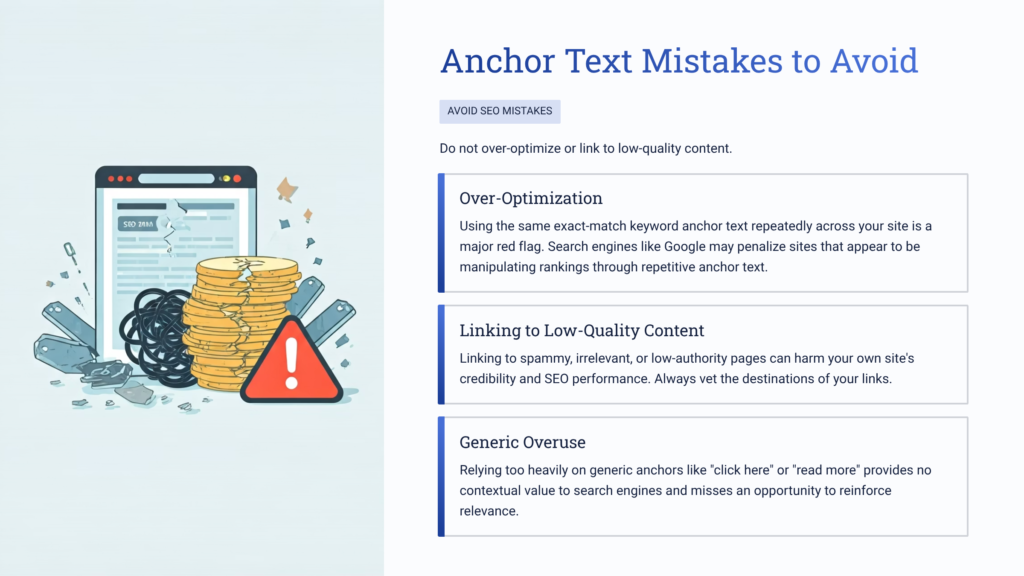
Avoid over-optimization and linking to low-quality content. These mistakes can trigger Google penalties and reduce trust.
Over Optimization
Over-optimization happens when keywords are used excessively in anchor text. Too many keyword-rich anchors can appear manipulative and unnatural.
Search engines may reduce rankings for pages that use excessive keyword anchors. Balanced anchor text is safer and more effective.
Linking to Low-Quality Content
Avoid linking to low-quality content because poor links reduce trust signals. Links should always point to useful and reliable pages.
High-quality links improve SEO performance, while low-quality links may harm website credibility.
Anchor Text Context
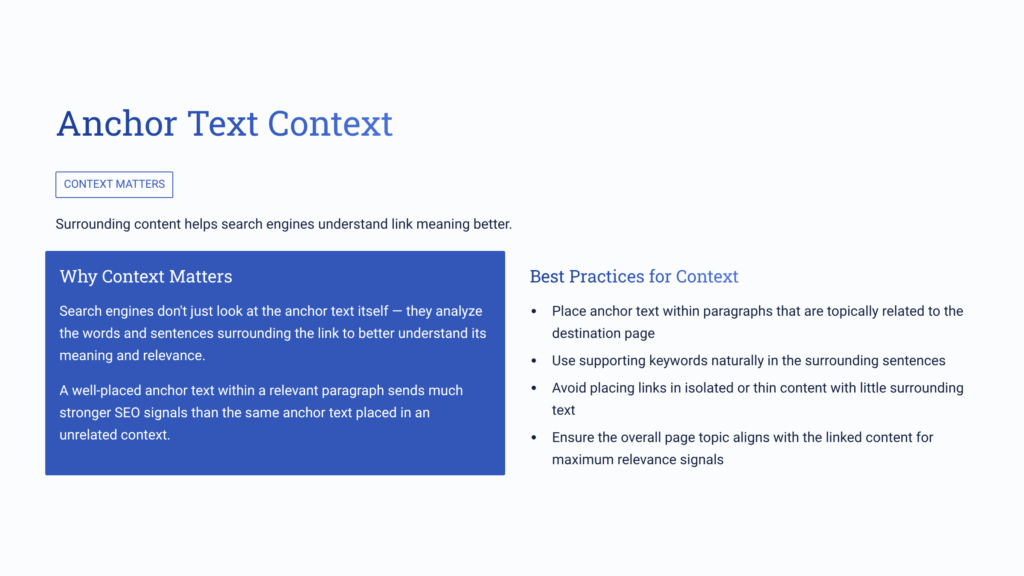
Anchor text works best when surrounded by relevant content. The surrounding text provides context for both users and search engines.
Search engines analyze nearby content to better understand the meaning of anchor text. Relevant context improves link value and helps search engines evaluate page relationships.
Contextual linking improves both user experience and SEO performance.
Tools to Track Anchor Text
Use tools like Ahrefs or SEMrush to track anchor text profiles and backlinks. These tools help ensure your link building strategy stays healthy.
Tracking tools allow you to monitor anchor text usage and identify potential problems such as over-optimization. Regular monitoring helps maintain a balanced backlink profile.
These tools help you understand how your links are performing and allow you to improve your SEO strategy.
Conclusion
Anchor text tells users and search engines what a link is about. Using anchor text properly helps improve rankings and user experience while reducing the risk of SEO penalties.
Balanced and natural anchor text strengthens link building strategies and improves search visibility. When used wisely, anchor text becomes a powerful part of SEO.
Proper anchor text usage supports long-term website growth and helps maintain a strong and healthy link profile.

Related Posts