Do follow and no follow links are among the most common terms in search engine optimization (SEO). These terms are frequently seen in SEO tools such as Ahrefs or Moz, but many beginners do not clearly understand what they actually mean. Understanding the difference between do follow and no follow links is essential for building a strong SEO strategy.
Links play a major role in SEO because search engines use them to understand relationships between websites. The type of link used can influence how search engines evaluate and rank web pages. Both do follow and no follow links serve different purposes, and each type has its own importance.
This article explains what do follow and no follow links are, how they work, and how they contribute to SEO. It also explains when to use no follow links and how to inspect links using SEO tools.
Understanding Links in SEO
Before understanding do follow and no follow links, it is important to understand what a link or backlink is.
A link, also known as a backlink, is a hyperlink from one website to another. When one website links to another website, it creates a connection between the two pages. Search engines use these connections to evaluate the importance and relevance of web pages.
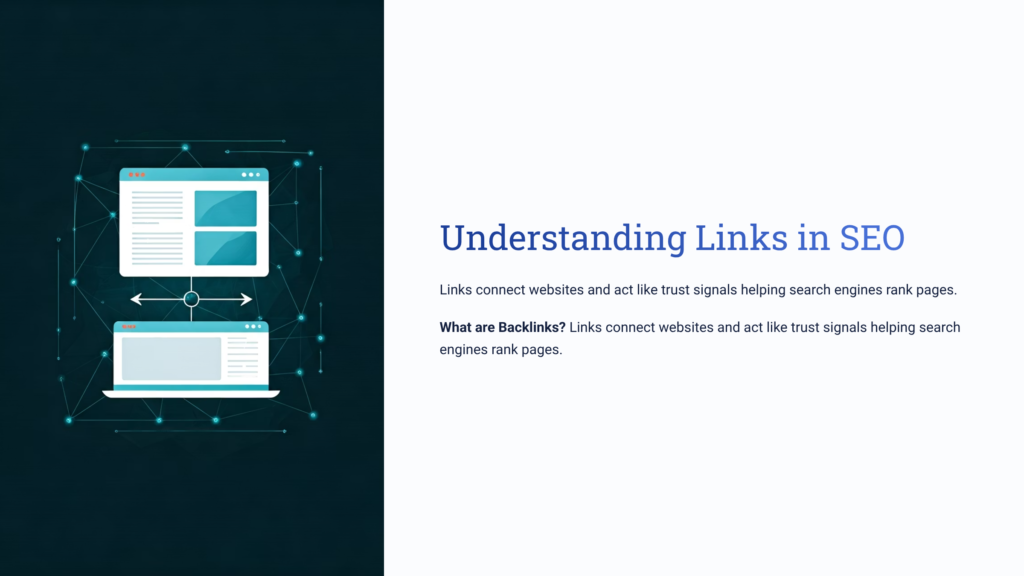
Links are often compared to digital votes. When a website links to another website, it signals trust, authority, and relevance to search engines. Websites with strong and relevant links usually perform better in search engine rankings.
Backlinks help search engines discover new pages and understand how websites relate to each other. Because of this, links are considered one of the most important factors in SEO.
What is a Do Follow Link?
A do follow link is a regular hyperlink that tells search engines to follow the link and pass SEO value to the linked page.
When a search engine follows a do follow link, it transfers ranking value from the linking page to the linked page. This transfer of value helps improve the ranking potential of the linked website.
Do follow links help search engines recognize the linked website as trustworthy and relevant. The more high-quality do follow links a website has, the stronger its authority becomes.
Do follow links are commonly used in articles, blog posts, and website content. These links help create meaningful connections between related content.
Because do follow links pass SEO value, they are considered highly valuable in SEO strategies.
What is a No Follow Link?
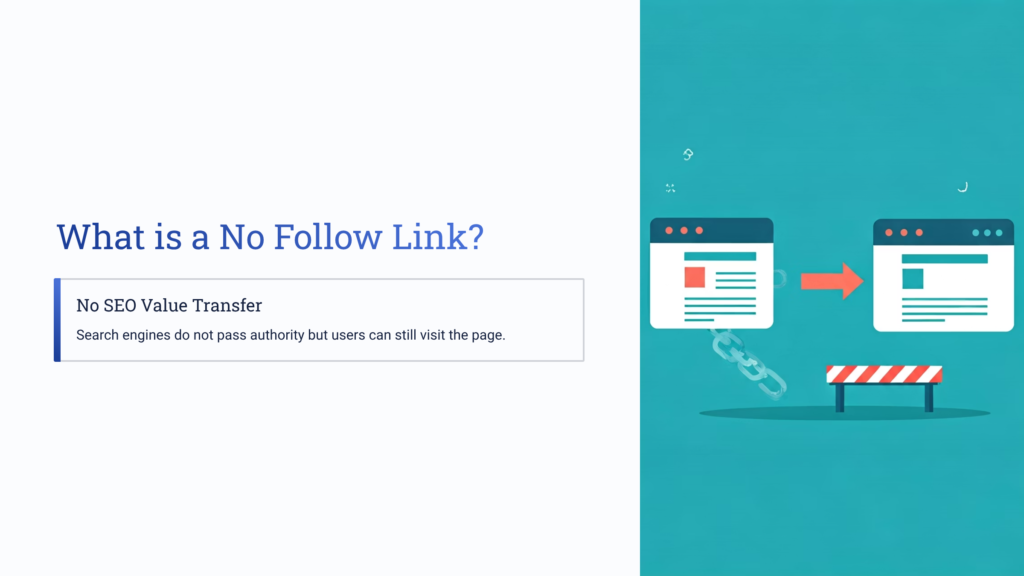
A no follow link is a hyperlink that contains a special tag telling search engines not to pass SEO value to the linked page.
Unlike do follow links, no follow links do not transfer ranking value. These links act more like references than recommendations.
A no follow link allows users to visit the linked page, but search engines do not treat it as a ranking signal in the same way as a do follow link.
No follow links are commonly used in situations where the website owner does not want to endorse the linked content. These links help maintain control over how SEO value is distributed.
Although no follow links do not directly improve search engine rankings, they still have value in SEO.
Do Follow Links vs No Follow Links
Do follow and no follow links serve different roles in SEO. Understanding their differences helps create a balanced link profile.
Do follow links pass SEO value and help improve search engine rankings. These links act as strong signals of trust and authority.
No follow links do not pass SEO value directly. They act as references and help create a natural backlink profile.
Both types of links are important because search engines expect websites to have a mixture of do follow and no follow links.
A balanced link profile improves credibility and reduces the risk of appearing unnatural to search engines.
When to Use No Follow Links
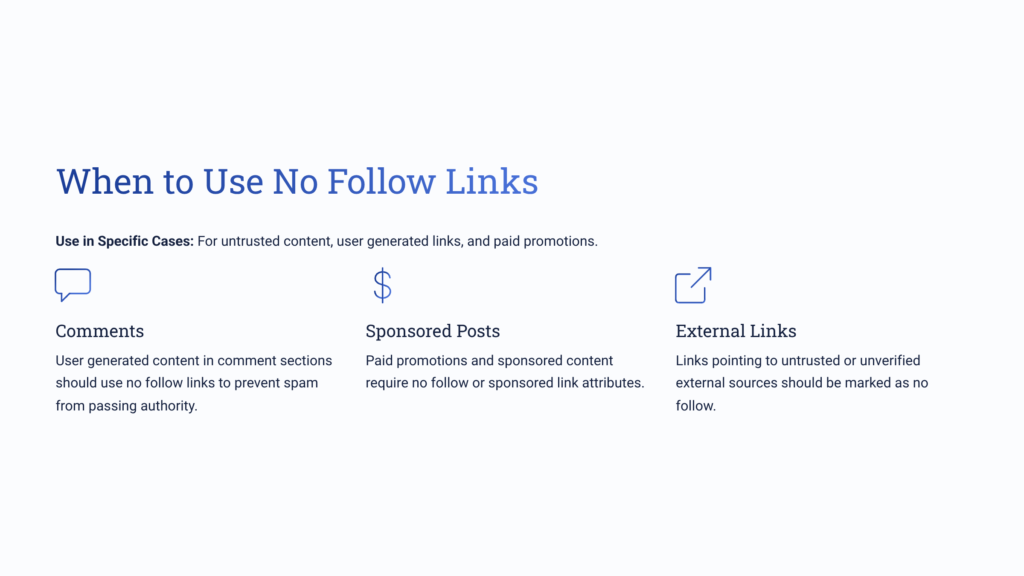
Google recommends using no follow links in certain situations where the linked content should not be fully endorsed.
Content You Do Not Want to Endorse
No follow links should be used when you do not want to endorse the linked content. This includes situations where the content is not fully verified or controlled.
Using no follow links helps prevent passing SEO value to uncertain sources.
User Generated Content
User generated content often includes links added by visitors. These links may appear in blog comments, forums, or discussion sections.
No follow links are recommended for user generated content because website owners cannot fully control these links.
Paid Content
Paid links and sponsored content should use no follow attributes. This helps maintain transparency and follows search engine guidelines.
Using no follow links for paid content prevents manipulation of search engine rankings.
Benefits of No Follow Links
Even though no follow links do not directly boost rankings, they still provide several benefits.
Driving Traffic
No follow links can still send visitors to a website. Users who click on the link can visit the website and explore its content.
Traffic from no follow links can include interested and relevant visitors.
Building Brand Visibility
No follow links help increase brand visibility. When a website appears on multiple platforms, more people become aware of the brand.
Increased visibility helps strengthen online presence.
Leading to Do Follow Links
No follow links can sometimes lead to do follow links in the future. When people discover useful content through no follow links, they may later create do follow links to that content.
This indirect benefit makes no follow links valuable.
Because of these benefits, no follow links should not be ignored.
How to Inspect Do Follow and No Follow Links
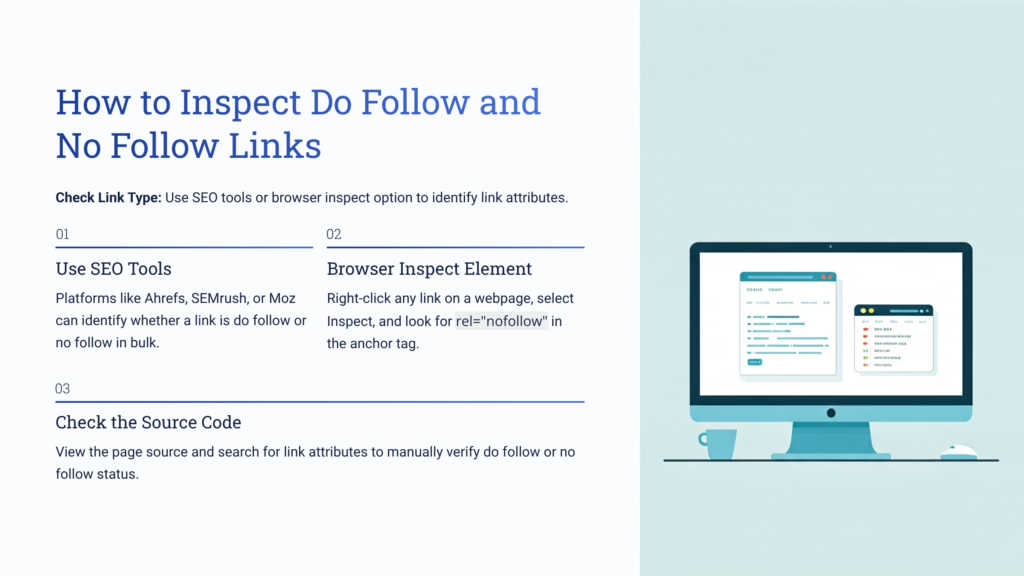
Do follow and no follow links can be inspected using SEO tools and browser features. These tools help identify link attributes easily.
SEO tools make it easier to analyze links and understand backlink profiles.
Using SEO Tools
Tools such as Ahrefs and MozBar help identify do follow and no follow links. These tools show link attributes and provide useful information about backlinks.
SEO tools simplify link analysis and improve understanding of SEO performance.
Using Browser Developer Tools
Browser developer tools can also be used to inspect links. These tools allow users to view the HTML code of a webpage and check link attributes.
Developer tools provide detailed technical information about links.
These methods make it easy to determine whether a link is do follow or no follow.
Role of Do Follow and No Follow Links in SEO
Both do follow and no follow links have important roles in SEO.
Do follow links pass SEO value and help improve rankings. They strengthen website authority and relevance.
No follow links add balance and credibility to a backlink profile. They make link profiles appear natural and trustworthy.
Search engines expect websites to have both types of links. A combination of do follow and no follow links creates a healthy SEO profile.
Ignoring either type of link can reduce SEO effectiveness.
Conclusion
Do follow and no follow links are essential components of SEO. Understanding the difference between these links helps create better SEO strategies.
Do follow links pass SEO value and help improve rankings, while no follow links provide balance and credibility. Both types of links support overall SEO growth.
No follow links can still drive traffic, increase brand visibility, and lead to future opportunities. Because of this, they should not be ignored.
A balanced link profile that includes both do follow and no follow links helps improve search engine trust and long-term SEO success.

Related Posts