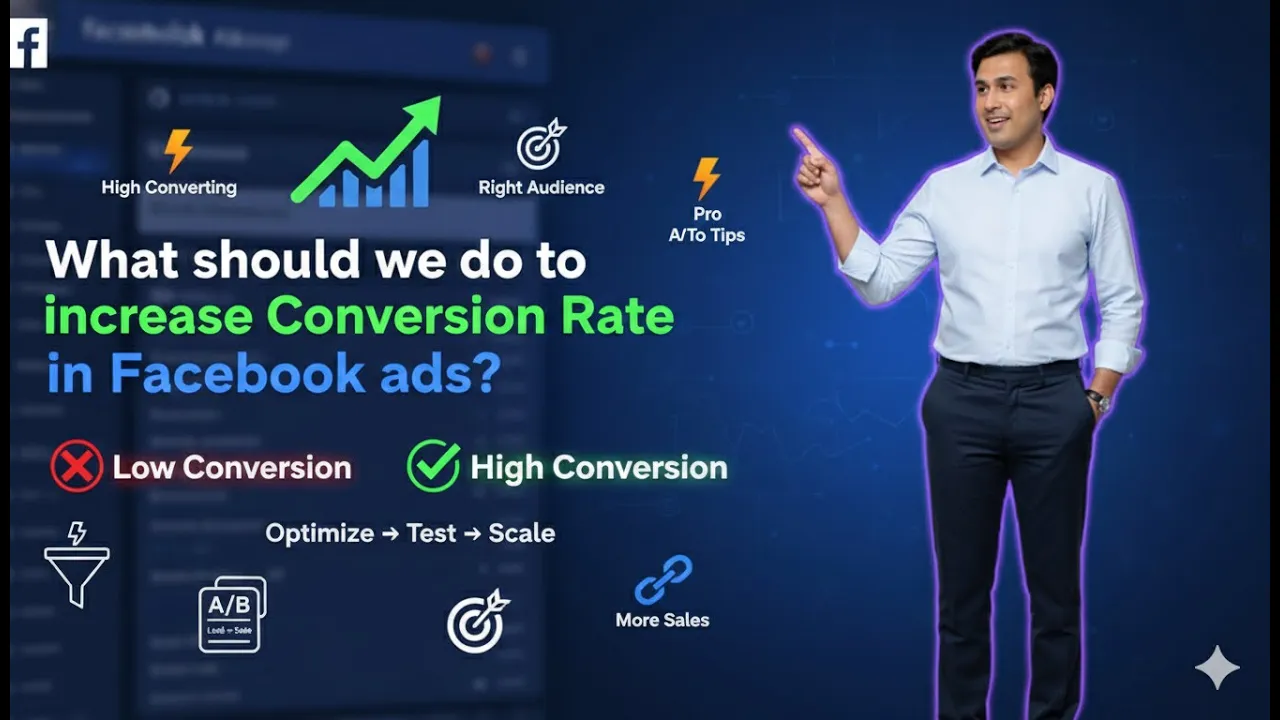
In this article, we are going to discuss an important question faced by many advertisers: how to improve or increase the conversion rate in Facebook ads. Many people are already running Facebook ads, but they are not getting good conversions. Some advertisers get traffic, impressions, or clicks, but conversions do not happen as expected.
Improving conversion rate is not about changing one single thing. It involves working on multiple factors together. These include ad learning phase, ad creatives, ad copy, hooks, call-to-action buttons, landing page optimization, audience targeting, retargeting, ad frequency, and sales funnel structure.
This article explains all these factors in detail and shows how focusing on them can help you improve your Facebook ads conversion rate.
Understanding Conversion Rate in Facebook Ads
Conversion rate in Facebook ads refers to how many users take the desired action after seeing or clicking your ad. This action can be purchasing a product, booking a service, filling out a form, or contacting your business.
If many users see your ad but very few convert, then your conversion rate is low. Improving this rate requires patience, testing, and optimization across different areas of your ad campaign.
Importance of Ad Learning Phase
One of the most important factors in improving conversion rate is waiting for the ad learning phase to complete.
Facebook ads do not deliver optimal results immediately after launching. The system needs time to understand user behavior.
Step 1: Wait for the Ad Learning Phase to Complete
Why the Ad Learning Phase Is Important
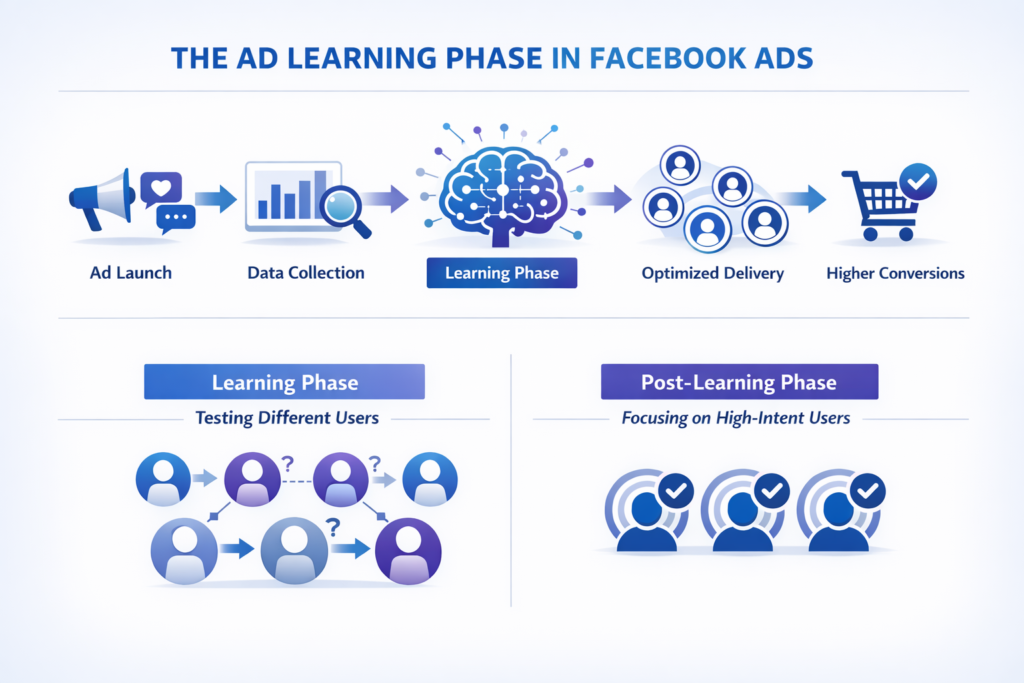
The ad learning phase is the period during which Facebook’s system collects data about how users are interacting with your ad. During this time, Meta analyzes:
- Which users are engaging with your ad
- Which users are clicking
- Which users are converting
Once enough data is collected, Meta starts showing your ads to people who are more likely to convert.
What Happens After the Learning Phase
After the ad learning phase is completed:
- Meta identifies the right type of audience
- Ads are shown to users who are more likely to engage
- Conversion rate improves automatically
This is why the first and most important step is to wait patiently and allow the learning phase to complete.
Importance of High-Quality Ad Creatives
Another major factor that affects conversion rate is the quality of ad creatives.
Step 2: Use Good Quality Ad Creatives
Focus on Creative Quality
Your ad creative is the first thing users see. If the creative is unclear or confusing, users will not convert.
Your ad creative should be:
- Clear
- Simple
- Easy to understand
- Visually appealing
Avoid ambiguous creatives that do not clearly explain what you are offering.

Use UGC Content in Ads
User-generated content (UGC) plays a very important role in improving conversion rate. UGC builds trust and makes ads feel more natural and real.
When users see content created by real people, they feel more confident and are more likely to convert.
Role of Ad Copy in Conversion
Your ad copy must be:
- Compelling
- Convincing
- Straightforward
A good ad copy clearly explains the benefit and encourages users to take action.
Using Strong Hooks in Facebook Ads
Hooks play a critical role in grabbing user attention.
Step 3: Use Strong Hook Lines
Why Hooks Are Important
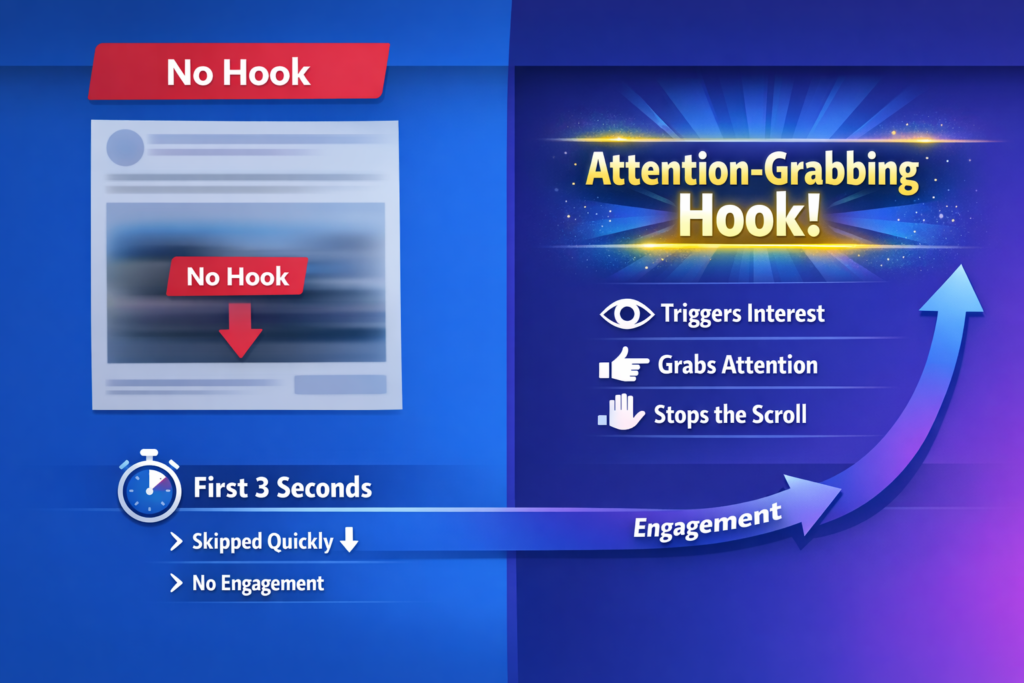
Hook lines are the first few seconds or first few lines of your ad. They decide whether a user will continue watching or scroll away.
A strong hook:
- Triggers user interest
- Captures attention instantly
- Encourages users to watch the full ad
Use Sales-Oriented Hooks
Using sales-focused hooks helps activate user intent. These hooks should directly speak to user needs and problems.
Strong hooks increase the chances of conversion because they keep users engaged.
Using Clear and Direct Call-to-Action Buttons
CTA buttons guide users on what to do next.
Step 4: Use Clear CTA Buttons
Importance of Clear CTA
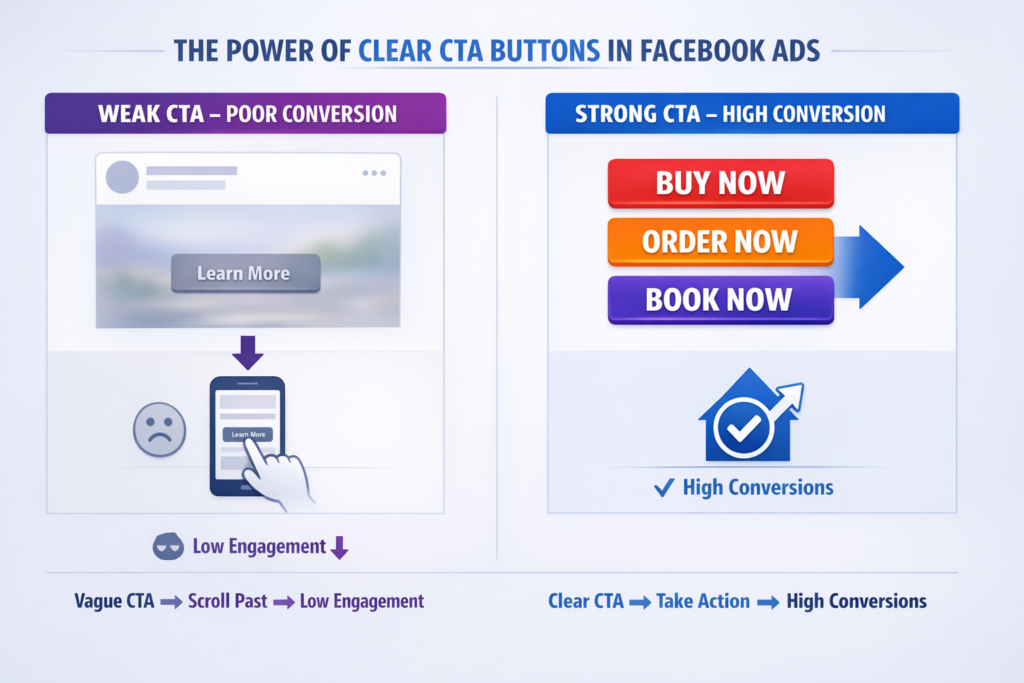
Your CTA button must be clear and direct. Avoid confusing or soft CTAs.
Use CTAs such as:
- Buy Now
- Order Now
- Book Now
Avoid vague CTAs like “Learn More” when your goal is conversion.
Avoid Manipulating Users
Do not use misleading CTAs. Always be clear about the action you want users to take. This builds trust and improves conversion rate.
Optimizing Landing Page for Better Conversions
Many advertisers focus only on ads and ignore landing pages. This is a major mistake.
Step 5: Optimize Your Landing Page
Why Landing Page Optimization Is Important
Even if your ads are perfect, conversions will not happen if your landing page is not optimized.
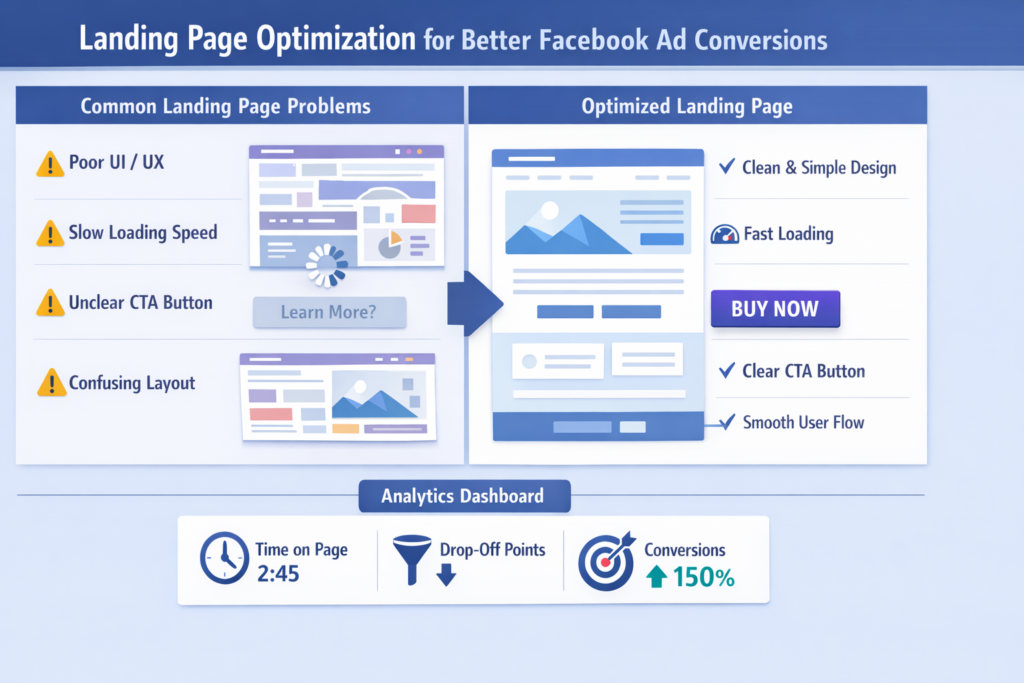
Common landing page issues include:
- Poor UI/UX
- Slow loading speed
- Unclear CTA buttons
- Confusing layout
Role of Analytics in Landing Page Optimization
You should always track website performance using analytics tools. Analytics help you understand:
- How much time users spend on your website
- Where users drop off
- Why conversions are not happening
This data helps identify problem areas.
Common Reasons for Low Website Conversion
Conversions may not happen because:
- CTA buttons are hard to find
- Website loads slowly
- Design is not user-friendly
- Users get confused
Identifying and fixing these issues helps users convert faster.
Importance of Audience Targeting
Targeting the right audience is essential for improving conversion rate.
Step 6: Use Broad Audience Targeting
Avoid Narrow Targeting
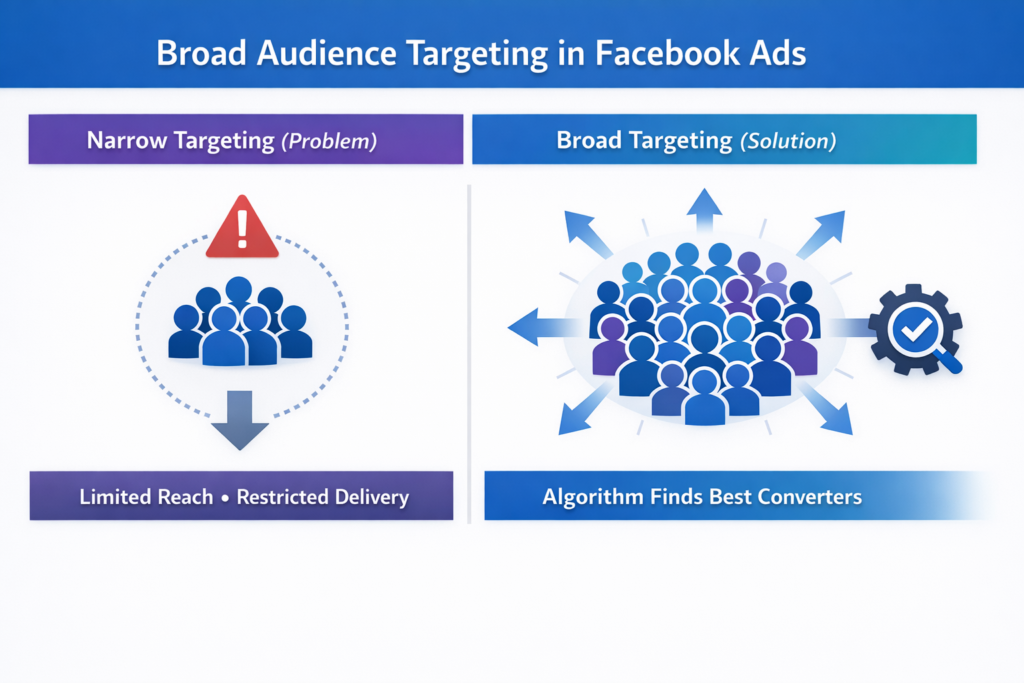
Many advertisers make the mistake of using very narrow audience targeting. This limits reach and affects performance.
Broad targeting allows Facebook’s system to find the right users automatically.
Let Meta Optimize Audience
Using broad targeting gives Meta the flexibility to show ads to users who are most likely to convert based on behavior and interest.
Retargeting for Higher Conversion Rate
Conversions rarely happen in the first interaction.
Step 7: Use Retargeting Campaigns
Why Retargeting Is Important
Users usually need to see an ad multiple times before converting. Retargeting helps you show ads again to users who have already interacted with your business.

Types of Users to Retarget
You can retarget users who:
- Engaged with your ads
- Visited your website
- Interacted with your business previously
Retargeting increases trust and improves conversion rate.
Importance of Ad Frequency
Ad frequency plays a major role in conversion.
Step 8: Focus on Ad Frequency
Why Showing Ads Multiple Times Is Necessary
If you think showing your ad only once will convert users, that is incorrect. Users need repeated exposure.
Showing ads multiple times:
- Builds brand trust
- Improves recall
- Increases conversion chances

Using UGC Content in Retargeting
UGC content is very effective in retargeting. It helps build trust and credibility, which encourages users to convert.
Designing a Sales Funnel for Better Conversions
A proper funnel improves conversion rate significantly.
Step 9: Design a Sales Funnel
Awareness Stage
Start with brand awareness campaigns. These campaigns introduce your brand to new users.
Engagement Stage
Next, target users who engaged with your awareness ads. These users already know your brand.
Retargeting Stage
Finally, run retargeting campaigns using data from website behavior, engagement, and interactions.

Using Meta Pixel Data
Meta Pixel helps track:
- Website visits
- Time spent on pages
- Pages visited
This data helps refine retargeting campaigns.
Key Factors to Focus on for Better Conversion Rate
To improve conversion rate, focus on:
- Ad learning phase
- Ad creative quality
- Strong hooks
- Clear CTAs
- Landing page optimization
- Broad targeting
- Retargeting
- Ad frequency
- Sales funnel
Ignoring any of these factors can reduce conversion rate.
Conversion Rate Improvement Explained in Simple Words
To improve conversion rate:
- Wait for ad learning phase
- Use good creatives and UGC
- Write convincing ad copy
- Use strong hooks
- Add clear CTA buttons
- Optimize landing page
- Use broad targeting
- Retarget users
- Show ads multiple times
- Build a sales funnel
Final Conclusion
Improving conversion rate in Facebook ads is not about shortcuts. It requires patience, testing, and focusing on multiple important factors. Waiting for the ad learning phase to complete is the most critical step. Along with that, high-quality ad creatives, strong hooks, clear CTAs, and optimized landing pages play a vital role.
Broad audience targeting, retargeting campaigns, proper ad frequency, and a well-structured sales funnel further increase conversion chances. When all these elements work together, conversion rate improves naturally.
By consistently focusing on these factors, advertisers can achieve better performance and higher conversion rates in Facebook ads.

Related Posts