
Understanding how much money YouTube pays for 1 million views is one of the most common questions among content creators. Many people believe that reaching 1 million views automatically guarantees a fixed amount of income, but in reality, YouTube does not follow a fixed payment structure. Earnings vary widely depending on several important factors such as content type, audience location, advertiser demand, and engagement levels.
The YouTube monetization system works on advertising revenue, which means creators earn money based on how ads are shown and interacted with on their videos. Because different advertisers pay different rates, two videos with the same number of views can generate completely different earnings. This makes it essential to understand not just the number of views, but the quality and context of those views.
This article explains in detail how much money YouTube pays for 1 million views. It also breaks down the role of RPM, content niche, audience behavior, and consistency in determining total earnings.
How Much Money YouTube Pays for 1 Million Views

No Fixed Earnings for 1 Million Views
There is no fixed amount that YouTube pays for 1 million views. The platform does not have a standard rate because earnings depend on how valuable the content is to advertisers. The same number of views can produce different results depending on the niche, audience engagement, and advertiser competition.
For example, a video in a low-value niche may earn significantly less even if it reaches 1 million views. On the other hand, a video in a high-value niche can generate much higher revenue with the same view count. This variation is what makes YouTube earnings dynamic rather than fixed.
Average Earnings Range
On average, most YouTube channels earn between $6,000 to $10,000 for 1 million views. This estimate is based on a typical RPM range of $7 to $10 per 1,000 views.
However, this is only a general range. Some creators may earn less if their content is not advertiser-friendly, while others may earn more if their audience is highly valuable to advertisers. The actual income depends on how well the video performs in terms of engagement and ad interaction.
Understanding RPM (Revenue Per 1,000 Views)
RPM is the most important factor in calculating YouTube earnings. It represents the amount a creator earns for every 1,000 views after YouTube takes its share.
If a channel has an RPM of $7, then 1 million views will generate approximately $7,000. If the RPM is $10, the same number of views can generate around $10,000. This shows how small differences in RPM can significantly impact total earnings.
RPM is influenced by multiple factors such as audience location, content type, watch time, and advertiser demand. Understanding RPM helps creators estimate their income more accurately.
Factors That Affect Earnings for 1 Million Views

Content Type
The type of content plays a major role in determining how much money is earned from 1 million views. Advertiser-friendly content, such as educational, business, or informative videos, tends to attract higher-paying ads.
In contrast, content that includes controversial topics, violence, or sensitive language often receives limited ads. This reduces the overall revenue, even if the video performs well in terms of views.
Audience Location
Where your viewers come from also affects earnings. Audiences from countries like the United States, Canada, or the United Kingdom generally generate higher RPM because advertisers in these regions pay more.
On the other hand, views from countries with lower advertising budgets may result in lower earnings. This means that two channels with the same number of views can earn very different amounts depending on their audience demographics.
Watch Time and Engagement
Watch time and engagement are critical factors in YouTube monetization. Videos that keep viewers watching for longer durations allow more ads to be displayed, increasing total revenue.
High engagement, such as likes, comments, and shares, also signals to YouTube that the content is valuable. This can improve reach and indirectly increase earnings by attracting more views.
Advertiser Demand
Advertiser demand changes throughout the year and across different niches. During certain periods, such as festive seasons or major sales events, advertisers spend more on ads, which increases RPM.
Similarly, niches with high competition among advertisers tend to have higher earnings. When multiple advertisers compete for the same audience, ad rates increase, benefiting creators.
Why Some Channels Earn More Than Others

High-Value Niches
Certain niches consistently generate higher earnings because they attract valuable audiences. Topics related to finance, business, technology, and education often have higher RPM because advertisers are willing to pay more to reach these viewers.
These audiences are more likely to take action, such as purchasing products or investing in services, which increases their value to advertisers.
Better Audience Behavior
Channels with strong audience retention and engagement tend to earn more. When viewers watch videos completely or interact actively, it increases the chances of ads being shown and clicked.
This makes the content more valuable, leading to higher earnings even with the same number of views.
Earnings Comparison with Lower View Counts
100,000 Views Earnings
For comparison, a video with 100,000 views typically earns between $700 to $1,000 based on the same RPM range. This shows that earnings scale proportionally with views.
Smaller Videos Also Generate Income
Even videos with 10,000 to 50,000 views can generate income. For example, a video with 40,000 views can earn around $300 to $400 depending on its RPM.
This highlights that creators do not need viral videos to start earning. Consistency across multiple videos can lead to stable income over time.
Role of Consistency in Increasing Earnings
Volume of Content
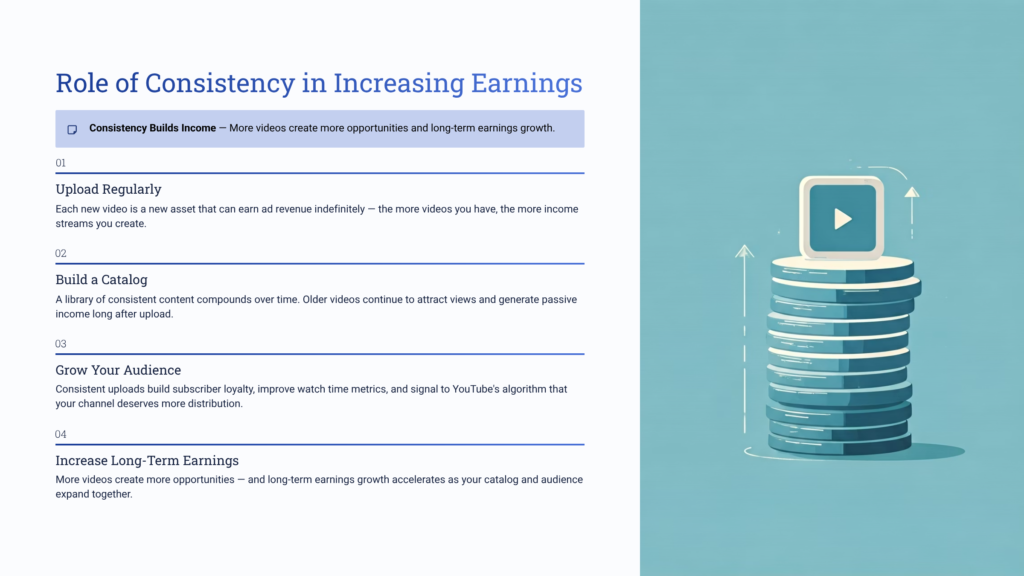
YouTube is largely a volume-based platform. The more videos you upload, the more opportunities you create to generate views and income.
Each video contributes to overall earnings. Instead of relying on one viral video, consistent uploads help build a steady income stream.
Compounding Effect
Every video continues to gain views over time. As more content is added, total views increase, leading to higher cumulative earnings.
This compounding effect is one of the most powerful aspects of YouTube growth. Over time, even small-performing videos contribute to significant income.
Live Videos and Additional Earnings
Higher Watch Time in Live Streams
Live videos often generate higher watch time because viewers stay connected for longer periods. This allows more ads to be displayed, increasing revenue potential.
Earnings After Live Streams
After the live session ends, the video remains available for replay. Additional ads can be placed in the recorded version, creating another source of income.
This makes live content a valuable strategy for increasing earnings beyond regular videos.
Conclusion
The answer to how much money YouTube pays for 1 million views is not fixed, but on average, creators can expect to earn between $6,000 to $10,000 depending on various factors.
Earnings are influenced by content type, audience location, watch time, and advertiser demand. While reaching 1 million views is a significant milestone, maximizing earnings requires a strategic approach to content creation.
By focusing on high-quality, advertiser-friendly content and maintaining consistency, creators can increase their RPM and overall income. Ultimately, success on YouTube is not just about views, but about understanding how the platform works and optimizing content accordingly.

Related Posts