
Ranking videos on YouTube today is no longer about following basic optimization techniques like adding keywords in titles or stuffing tags. The platform has evolved into a highly intelligent system that focuses on user intent, viewer satisfaction, and content relevance. Many creators still rely on outdated methods, believing that simply uploading a video and optimizing a few elements will automatically help them rank. However, this approach often leads to disappointment because YouTube now prioritizes content that genuinely matches what users are searching for and keeps them engaged.
To rank videos on top in search results, creators must understand how YouTube’s algorithm evaluates content. It looks at multiple factors such as how closely the video matches a search query, how users interact with it, how long they watch it, and whether they engage with it. This means ranking is not achieved through a single tactic but through a combination of strategies that work together. A structured approach ensures that every step—from keyword selection to content creation and optimization—is aligned with what the algorithm and audience expect.
Understanding How YouTube Search Works
YouTube search works similarly to a search engine but with a stronger emphasis on user behavior and engagement. When a user types a query, YouTube tries to show the most relevant and useful videos that match that specific intent. Relevance is determined by how well the video’s title, description, and content align with the search query.
However, relevance alone is not enough. YouTube also evaluates performance metrics such as click-through rate (CTR), average watch time, audience retention, and engagement signals like likes, comments, and shares. A video that gets clicked frequently and watched for a longer duration signals to YouTube that viewers find it valuable. As a result, YouTube pushes that video higher in search rankings.
Another important factor is consistency. YouTube Channels that regularly upload valuable content and maintain strong engagement tend to build authority over time. This authority increases the chances of their videos ranking faster and higher compared to newer or inactive channels.
Keyword Research: The First Step to Ranking
Why Keyword Research is Critical
Keyword research is the foundation of ranking videos on YouTube. Without selecting the right keyword, even a high-quality video may fail to reach the intended audience. Keywords represent what users are actively searching for, and targeting them correctly ensures that your content aligns with demand.
Many creators make the mistake of choosing broad or highly competitive keywords. While these keywords may have high search volume, they are often dominated by large channels with strong authority. This makes it difficult for new or smaller channels to compete. Instead, focusing on specific and less competitive keywords increases the chances of ranking faster.
Characteristics of a Rankable Keyword
A keyword that can rank successfully usually has three main characteristics. First, it has manageable competition, meaning that the existing videos are not too strong or difficult to outperform. Second, it has consistent search demand, ensuring that people are actively looking for that topic. Third, it has an opportunity for exact match relevance, where few or no videos are targeting the keyword precisely.
These characteristics create a perfect balance between demand and competition, making it easier for a video to gain visibility and rank higher.
Step-by-Step Keyword Research Process
Step 1: Start with a Broad Idea
Begin with a general topic related to your niche. This helps you understand the overall demand and identify areas where you can create content.
Step 2: Expand into Long-Tail Keywords
Break down the broad topic into more specific phrases. These long-tail keywords are easier to rank for and attract a more targeted audience.
Step 3: Analyze Search Results
Search the keyword on YouTube and study the existing videos. Look at their views, titles, and channel sizes to understand the level of competition.
Step 4: Check for Exact Match Opportunities
Ensure that the keyword is not being used exactly by top-ranking videos. This creates an opportunity to become the most relevant result.
The Power of Exact Match Keywords
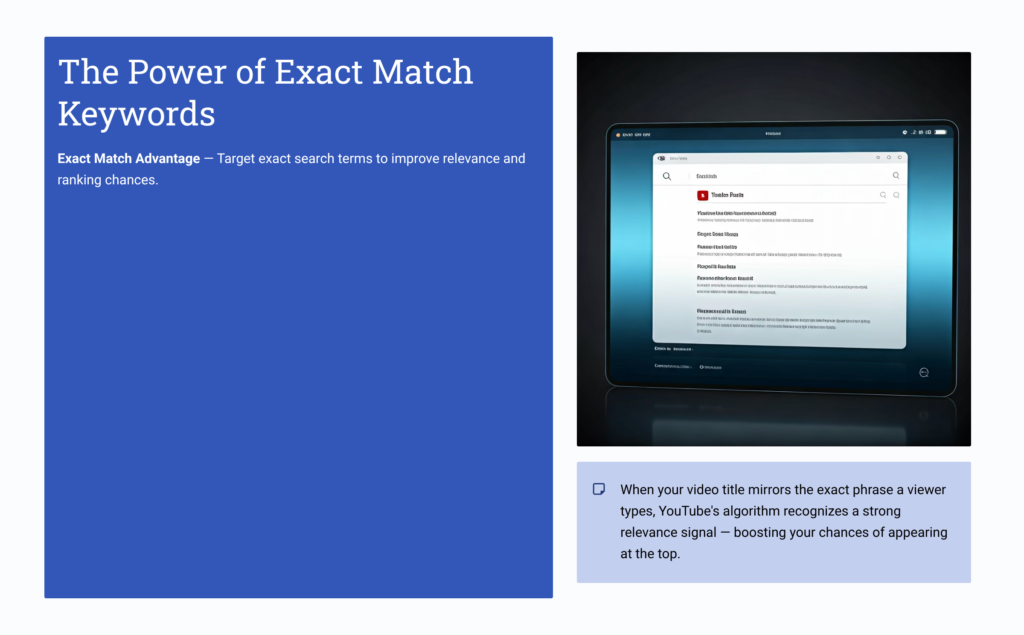
Exact match keywords play a crucial role in YouTube rankings because they directly align with user search queries. When a video title exactly matches what a user searches for, YouTube considers it highly relevant. This increases the chances of the video appearing at the top of search results.
This strategy is particularly effective for smaller channels because it allows them to compete with larger creators. Even if big channels are ranking, they may not be targeting the exact keyword, leaving room for more relevant content to take the top position.
Additionally, exact match keywords improve click-through rates because users are more likely to click on a video that closely matches their search query. This combination of relevance and engagement creates a strong ranking signal.
Creating High-Quality Content That Ranks
Understanding Viewer Intent
Creating content that ranks requires a deep understanding of what the viewer is looking for. When users search for a topic, they have a specific goal in mind. The video must address that goal clearly and effectively.
If a video fails to meet expectations, viewers will leave quickly, which negatively impacts watch time and retention. This signals to YouTube that the video is not valuable, causing it to drop in rankings.
Step-by-Step Content Creation Strategy
Step 1: Study Top Videos
Analyze the top-ranking videos for your keyword. Observe their structure, content depth, and presentation style.
Step 2: Identify Weaknesses
Look for areas where these videos lack clarity, depth, or engagement. These gaps provide opportunities to improve.
Step 3: Incorporate Viewer Feedback
Read comments to understand what viewers liked or disliked. This provides insights into improving your content.
Step 4: Create a Better Version
Develop a video that is more informative, engaging, and complete than existing content.
Importance of Watch Time and Retention
Watch time and audience retention are among the most important ranking factors. Videos that keep viewers engaged for longer durations are more likely to rank higher because they indicate value.
To improve retention, focus on delivering value quickly, maintaining a clear structure, and keeping the content engaging throughout. Avoid unnecessary introductions and ensure that every part of the video contributes to the overall purpose.
Optimizing Video SEO Elements

Crafting a Strong Title
The title is the first thing users notice and plays a major role in both search rankings and click-through rates. Including the main keyword in the title ensures relevance, while adding clarity helps attract clicks.
A well-crafted title should clearly communicate what the video offers. It should be simple, direct, and aligned with the search intent.
Writing a Detailed Description
The description helps YouTube understand the context of the video. Including the main keyword at the beginning reinforces relevance and improves ranking potential.
Step 1: Use Main Keyword Early
Start the description with the exact keyword to establish context.
Step 2: Add Related Keywords
Include variations and related terms naturally to expand reach.
Step 3: Maintain Natural Flow
Ensure that the description reads like normal text rather than a list of keywords.
Using Tags Effectively
Tags provide additional context about the video. While they are not as powerful as before, they still help YouTube understand the content.
Including variations of the main keyword and related terms ensures better categorization and discoverability.
Thumbnail Optimization for Higher Clicks
Importance of Click-Through Rate
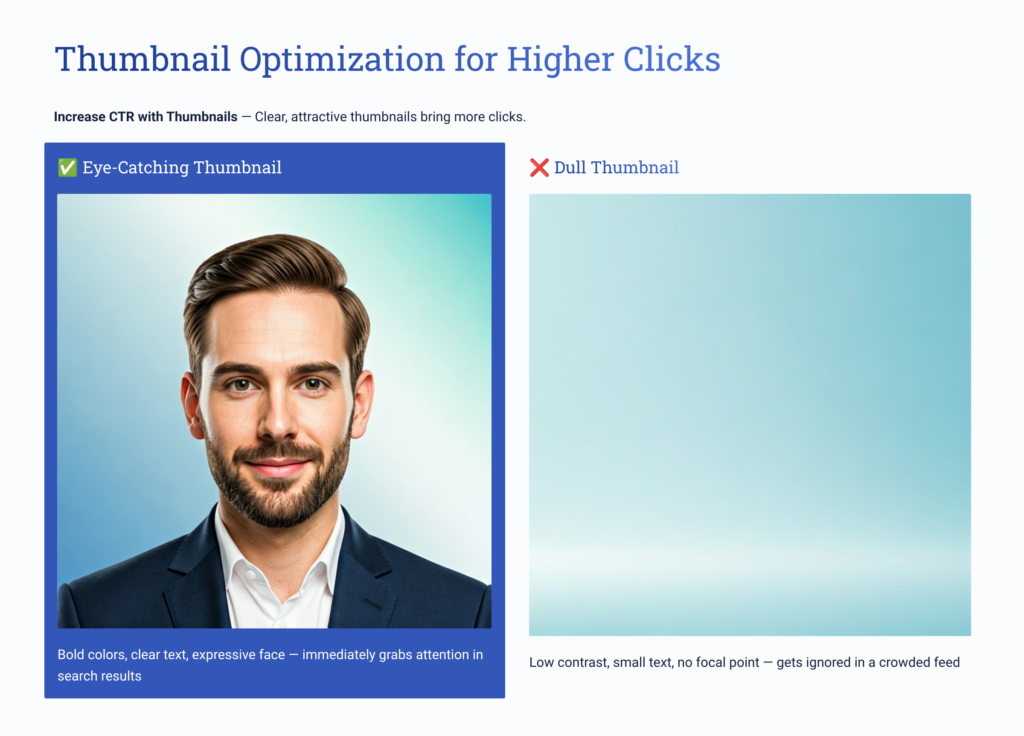
Click-through rate (CTR) measures how many people click on your video after seeing it. A higher CTR indicates that your video is appealing and relevant.
Creating Eye-Catching Thumbnails
A strong thumbnail should stand out from competitors and clearly represent the video’s content. Using contrast, clarity, and simplicity helps attract attention.
Avoid overcrowding the thumbnail with too many elements. Focus on creating a clean and visually appealing design that communicates the message effectively.
Combining Strategy for Consistent Rankings
Ranking videos consistently requires combining keyword research, content creation, and SEO optimization. Each element supports the other, creating a strong foundation for success.
Focusing on only one aspect, such as SEO or content, is not enough. A balanced approach ensures that the video is discoverable, engaging, and valuable to viewers.
Long-Term Growth and Consistency
Consistency plays a major role in YouTube success. Regularly uploading optimized content helps build authority and trust. Over time, this increases the chances of ranking faster and attracting more views.
Analyzing performance and improving strategies is also important. Understanding what works and refining your approach ensures continuous growth.
Conclusion
Ranking YouTube videos on top in search results requires a strategic and consistent approach. It involves understanding user intent, selecting the right keywords, creating valuable content, and optimizing every element effectively.
By focusing on relevance, engagement, and quality, it becomes possible to rank videos consistently and grow a YouTube channel organically. The key is to treat YouTube SEO as a complete system rather than a set of isolated tactics, ensuring long-term success and sustainable growth.

Related Posts