Digital marketing has become one of the most important and in-demand skills in the modern digital world, where almost every activity—from shopping to learning—has shifted online. As internet usage continues to grow, businesses are increasingly focusing on digital platforms to promote their products and services. This shift has created a massive demand for individuals who understand how online marketing works and how to use it effectively to generate results. However, despite its popularity, many people still have a surface-level understanding of digital marketing and often associate it only with courses or quick money-making opportunities.
In reality, digital marketing is much broader and more structured than it appears. It is not a shortcut to instant success but a skill-based field that requires understanding, practice, and consistency. Many people believe that simply enrolling in a digital marketing course will automatically lead to high earnings, but the truth is that knowledge alone is not enough. One must understand the practical aspects of digital marketing, including how different strategies work together to attract, engage, and convert customers.
To fully grasp digital marketing, it is important to understand its purpose and scope. At its core, digital marketing is about using digital devices such as computers, smartphones, and tablets, along with internet platforms, to promote products or services. It involves reaching the right audience at the right time and guiding them toward taking a specific action, such as making a purchase, signing up for a service, or engaging with content.
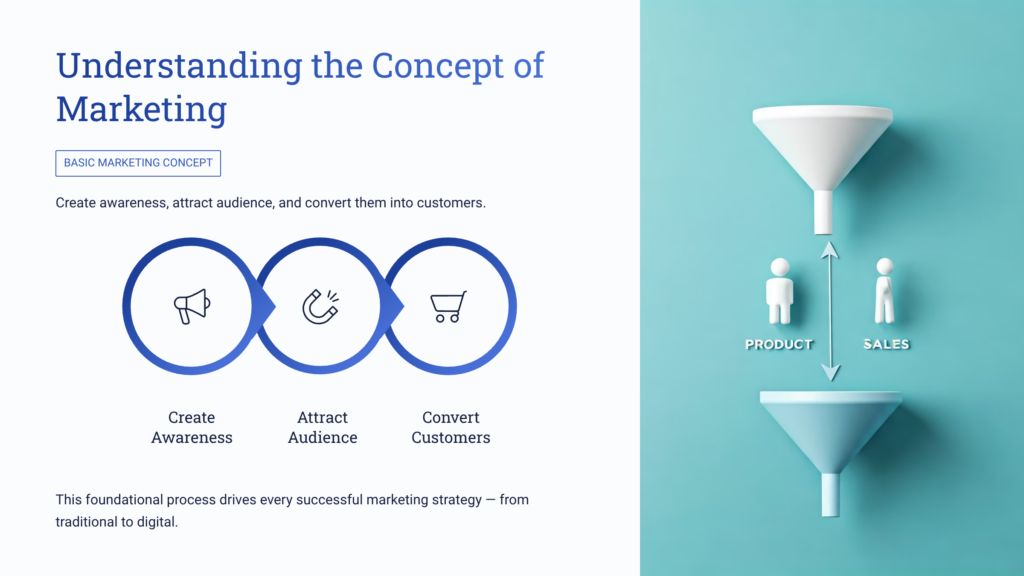
Understanding the Concept of Marketing
Before diving deeper into digital marketing, it is essential to understand the basic concept of marketing itself. Marketing is the process of connecting a product or service with potential customers in a way that creates awareness, interest, and ultimately leads to a transaction. It is not just about selling but about understanding customer needs and presenting solutions in a compelling manner.
Marketing primarily focuses on two key objectives. The first is to reach the target audience, ensuring that people become aware of the product or service being offered. Without awareness, even the best product cannot succeed because customers simply do not know it exists. The second objective is to generate leads and increase sales by converting interested individuals into paying customers. These two goals form the foundation of all marketing activities.
Traditionally, marketing was carried out through offline channels such as newspapers, television advertisements, billboards, and radio. While these methods were effective in their time, they lacked precise targeting and measurable results. With the rise of digital technology, marketing has evolved into a more efficient and data-driven process, allowing businesses to reach specific audiences and track performance in real time.
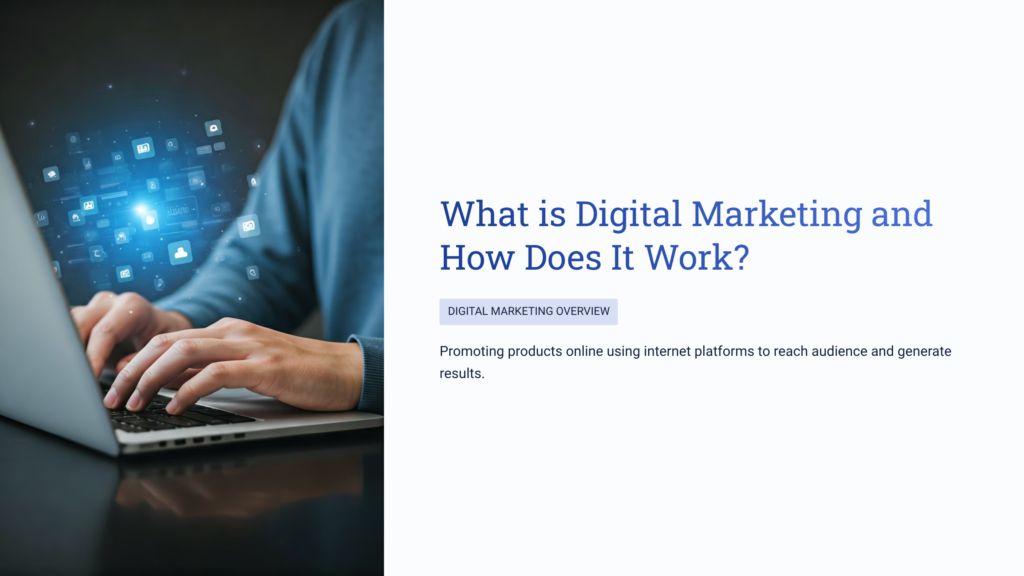
What is Digital Marketing?
Digital marketing is the modern approach to marketing that uses online platforms and digital devices to promote products and services. It involves a wide range of channels, including search engines, social media platforms, email, websites, and mobile applications. Unlike traditional marketing, digital marketing allows businesses to interact with their audience directly and measure the effectiveness of their campaigns.
In simple terms, whenever a business uses the internet to advertise or promote something, it is engaging in digital marketing. This could include running advertisements, publishing blog content, creating videos, sending promotional emails, or optimizing a website to appear in search engine results. Each of these activities contributes to building a brand’s online presence and attracting potential customers.
One of the biggest advantages of digital marketing is its flexibility and scalability. Businesses can start with a small budget and gradually expand their efforts as they see results. Additionally, digital marketing allows for precise targeting, meaning that advertisements and content can be shown to specific groups of people based on their interests, behavior, and demographics.
Types of Digital Marketing
Digital marketing can be broadly divided into two main categories: organic and inorganic marketing. Both approaches have their own advantages and are often used together to achieve the best results.
Organic Digital Marketing
Organic digital marketing refers to strategies that do not involve direct payment for promotion. Instead, it focuses on attracting users naturally through valuable content, search engine optimization, and consistent engagement. This approach requires time and effort but can produce long-lasting results.
For example, when a website appears in search engine results because it is well-optimized for certain keywords, it is considered organic traffic. Similarly, when users discover content through social media posts without any paid promotion, it is also part of organic marketing. This method builds trust and credibility over time, making it a sustainable approach for long-term growth.
Inorganic Digital Marketing
Inorganic digital marketing involves paid methods such as advertisements. Businesses invest money to promote their products or services and reach a larger audience quickly. This includes running ads on search engines, social media platforms, and other websites.
Paid marketing is effective for generating immediate results and increasing visibility. However, it requires careful planning and optimization to ensure that the investment leads to profitable outcomes. The goal is to spend less on advertising while generating higher returns through increased sales.
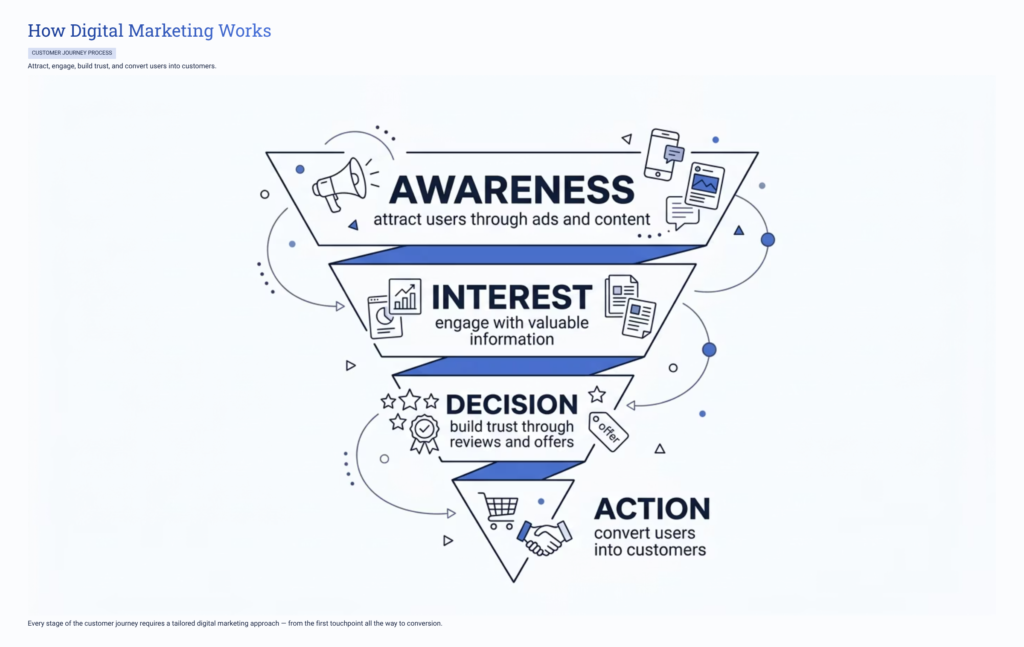
How Digital Marketing Works
Digital marketing works by guiding potential customers through a journey that starts with awareness and ends with conversion. The process begins with identifying the target audience and understanding their needs, preferences, and behavior. Based on this information, marketers create strategies to attract and engage users.
When a user searches for a product or service online, they are presented with multiple options. These options may include organic search results or paid advertisements. The goal of digital marketing is to ensure that a business appears among these options and stands out from the competition.
Once the user interacts with the content, the next step is to provide value and build trust. This can be done through informative articles, engaging videos, or helpful recommendations. As the user becomes more interested, they are guided toward taking a specific action, such as making a purchase or signing up for a service. This entire process involves multiple touchpoints and requires a combination of different digital marketing techniques working together.
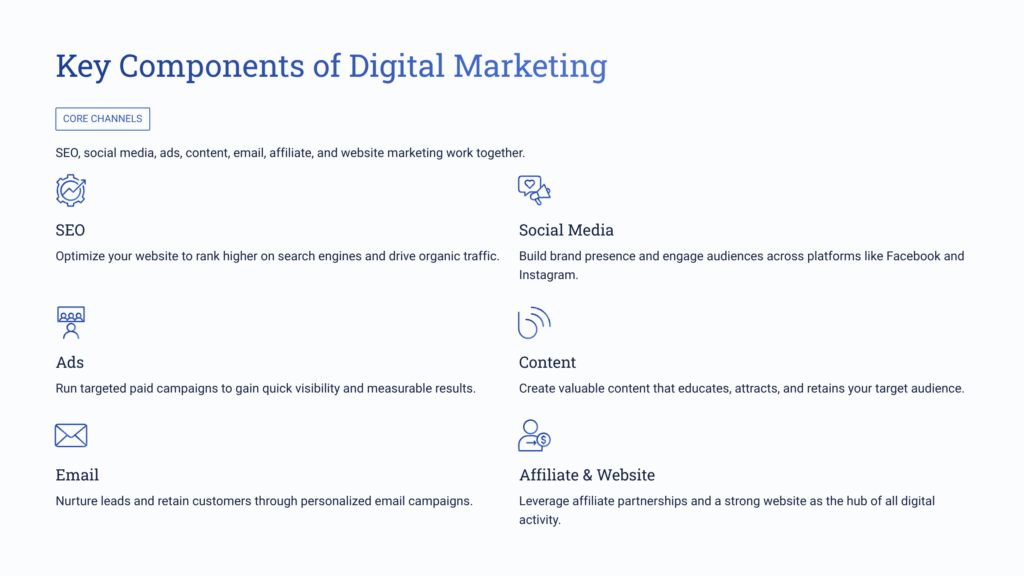
Key Components of Digital Marketing
Digital marketing consists of several components, each playing a vital role in the overall strategy.
Search Engine Optimization (SEO)
Search engine optimization is the process of improving a website’s visibility in search engine results. It involves optimizing content, using relevant keywords, and ensuring that the website meets technical requirements.
SEO is important because it helps attract organic traffic, which is often more valuable than paid traffic. When a website ranks higher in search results, it gains more visibility and increases the chances of attracting potential customers.
Social Media Marketing
Social media marketing involves promoting products or services on platforms where users are highly active. It allows businesses to connect with their audience, share content, and build relationships.
With a large number of users spending time on social media, this channel provides a significant opportunity to increase brand awareness and generate leads. Engaging content and consistent interaction are key to success in social media marketing.
Paid Advertising (Google Ads and Social Ads)
Paid advertising allows businesses to reach their target audience quickly. Ads can appear in search results, on social media feeds, or within mobile applications.
The effectiveness of paid advertising depends on targeting the right audience and optimizing campaigns. By analyzing performance data, marketers can improve their strategies and achieve better results.
Content Marketing
Content marketing focuses on creating valuable and relevant content to attract and engage users. This can include blog posts, videos, and other forms of content.
The goal is to provide useful information that helps users make decisions. By offering value, businesses can build trust and establish authority in their niche.
Email Marketing
Email marketing involves sending targeted messages to users through email. These messages can include promotions, updates, or information about new products.
This method allows businesses to maintain direct communication with their audience and encourage repeat engagement.
Affiliate Marketing
Affiliate marketing is a strategy where individuals promote products or services and earn a commission for each sale. This method expands reach and allows businesses to leverage external promoters.
Website and App Marketing
Websites and mobile applications serve as the central hub for digital marketing efforts. They provide a platform for users to interact with content and make purchases.
Optimizing these platforms ensures a better user experience and improves conversion rates.
Conclusion
Digital marketing is a comprehensive and dynamic field that combines multiple strategies to promote products and services online. It offers numerous opportunities for individuals and businesses to grow and succeed in the digital world.
The key to mastering digital marketing lies in understanding its fundamentals, developing the necessary skills, and applying them consistently. With the right approach and continuous learning, digital marketing can become a powerful tool for achieving long-term success.

Related Posts