
Canonicalization is an important concept in search engine optimization (SEO) that helps search engines understand which version of a webpage should be considered the main version. Many websites have multiple URLs that display the same or very similar content. Without proper canonicalization, search engines may become confused about which version should be indexed.
Canonicalization is the process of choosing a preferred version of a webpage when multiple versions contain similar or duplicate content. This process helps search engines identify the correct page and index it properly.
Canonicalization plays an important role in SEO because it helps search engines understand website structure and prevents duplicate content problems. Proper canonicalization improves crawl efficiency and supports better search performance.
What is Canonicalization?
Canonicalization is the process of selecting a preferred version of a webpage when multiple URLs display the same or similar content. Many websites generate different URLs that lead to identical content.
When search engines find multiple versions of the same content, they may not know which version should appear in search results. This can lead to incorrect indexing or reduced ranking performance.
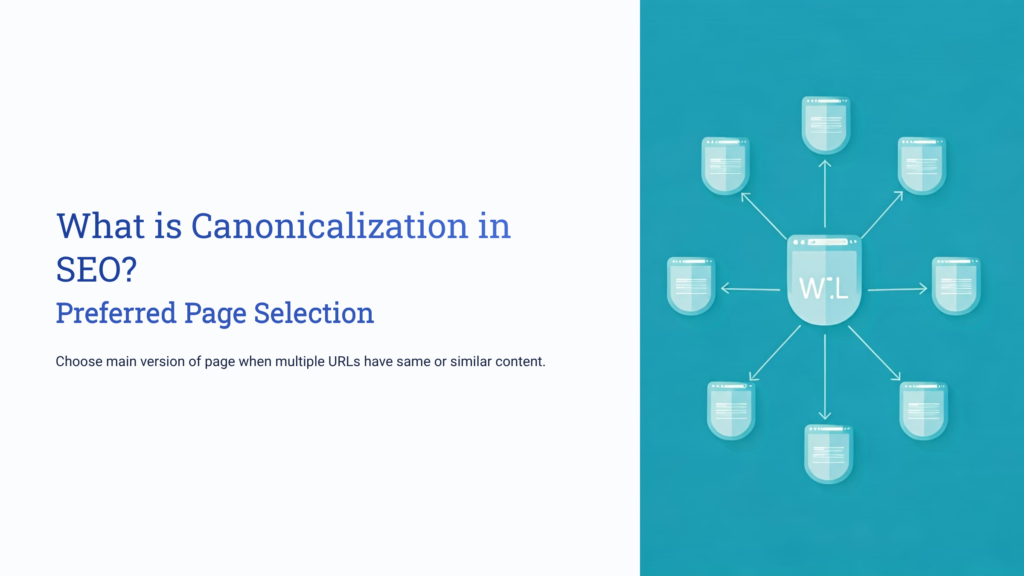
Canonicalization solves this problem by clearly defining the preferred version of a webpage. It ensures that search engines focus on the correct page.
Duplicate URLs and Content Issues
Websites often have different URLs that show the same content. These URLs may exist because of filters, parameters, or different page versions.
Duplicate URLs can create confusion for search engines. When multiple pages contain the same content, search engines may index the wrong version.
Duplicate content can also divide ranking signals across multiple URLs. This reduces the ranking strength of the main page.
Canonicalization helps solve duplicate content problems by identifying the preferred page version.
Canonical Tag
A canonical tag is a piece of HTML code that tells search engines which version of a webpage is the main or original version to index.
The canonical tag helps search engines understand which URL should be treated as the preferred page. This ensures that ranking signals are directed to the correct page.
Canonical tags provide clear instructions to search engines and improve indexing accuracy.
Importance of Canonicalization for SEO
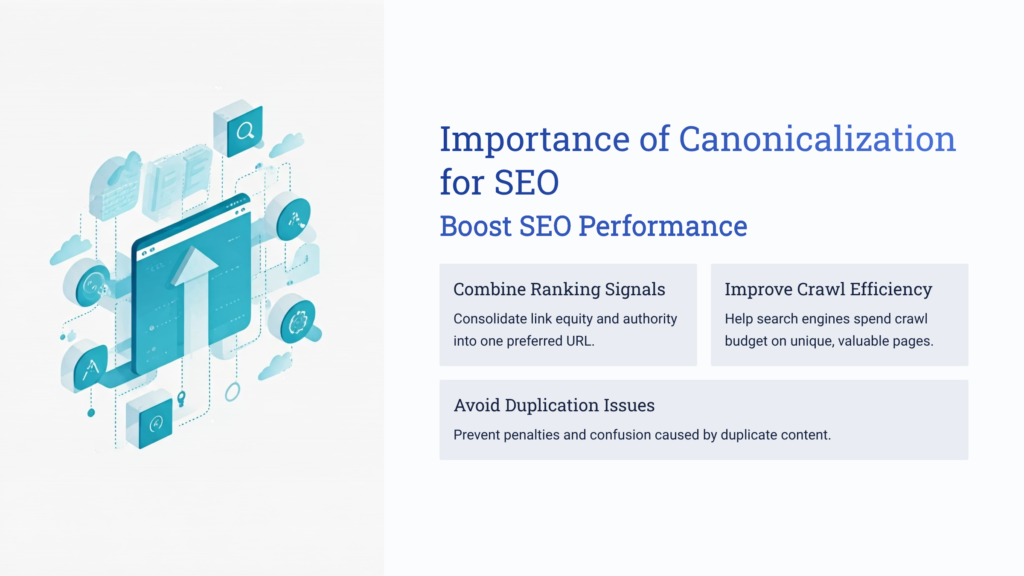
Canonicalization is important because it helps consolidate ranking signals into a single preferred URL. When multiple URLs share the same content, canonicalization ensures that ranking value is combined instead of divided.
Canonicalization also helps avoid duplicate content issues. Duplicate content can reduce SEO effectiveness if search engines cannot determine the original version.
Proper canonicalization improves crawl efficiency because search engines spend less time crawling duplicate pages.
When to Use Canonical Tags
Canonical tags should be used whenever multiple URLs display the same or similar content. This helps search engines identify the correct version of a webpage.
Product filters often create multiple URLs for the same product page, and canonical tags help define the main product page. Similar articles may exist in different categories, and canonical tags help search engines identify the preferred version.
Printer-friendly versions often duplicate the original content, and canonical tags help define the main page version. URL parameters can also create duplicate pages, and canonical tags help prevent indexing confusion.
Canonical Tag Placement
Canonical tags should be placed in the head section of the HTML code. This placement allows search engines to detect canonical instructions easily.
Every page that needs a preferred version should include a canonical tag. Proper placement helps search engines read the tag correctly.
Correct implementation improves indexing accuracy and SEO performance.
Self-Referencing Canonical Tags
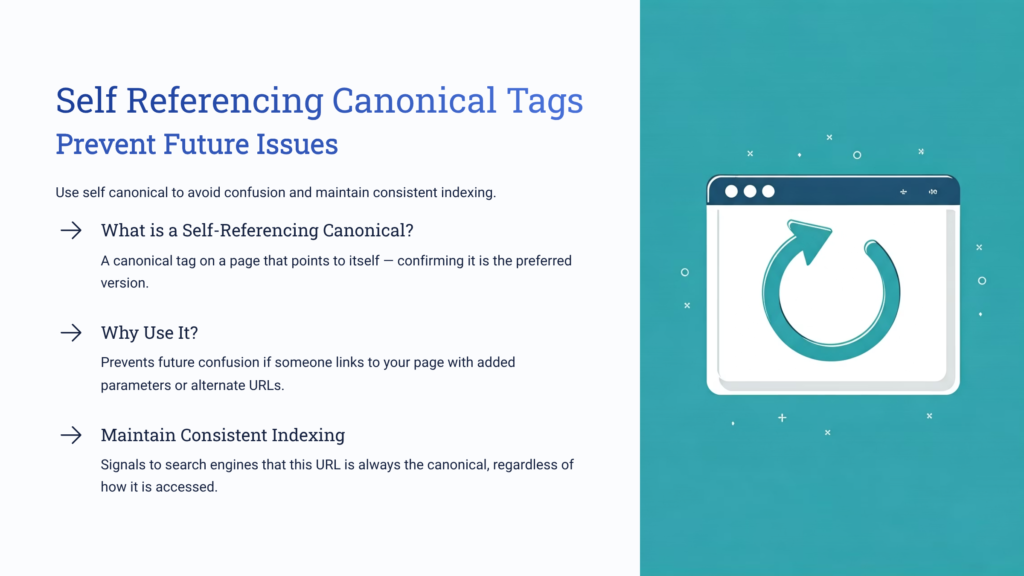
Even if a page does not have duplicate versions, it is good SEO practice to add a self-referencing canonical tag. A self-referencing canonical tag defines the page’s own URL as the preferred version.
Self-referencing canonical tags help prevent confusion if duplicate URLs appear in the future. These tags provide clear instructions to search engines.
This practice supports consistent indexing and improves technical SEO.
Canonical Tags vs 301 Redirects
Canonical tags and 301 redirects serve different purposes. Canonical tags tell search engines which page should be indexed, but they do not redirect users.
Users can still access duplicate pages when canonical tags are used, but search engines treat the preferred page as the main version.
A 301 redirect moves both users and search engine bots to another page. Redirects transfer traffic completely to the new page.
Canonical tags are used for duplicate content management, while redirects are used for permanent page changes.
Common Canonicalization Mistakes
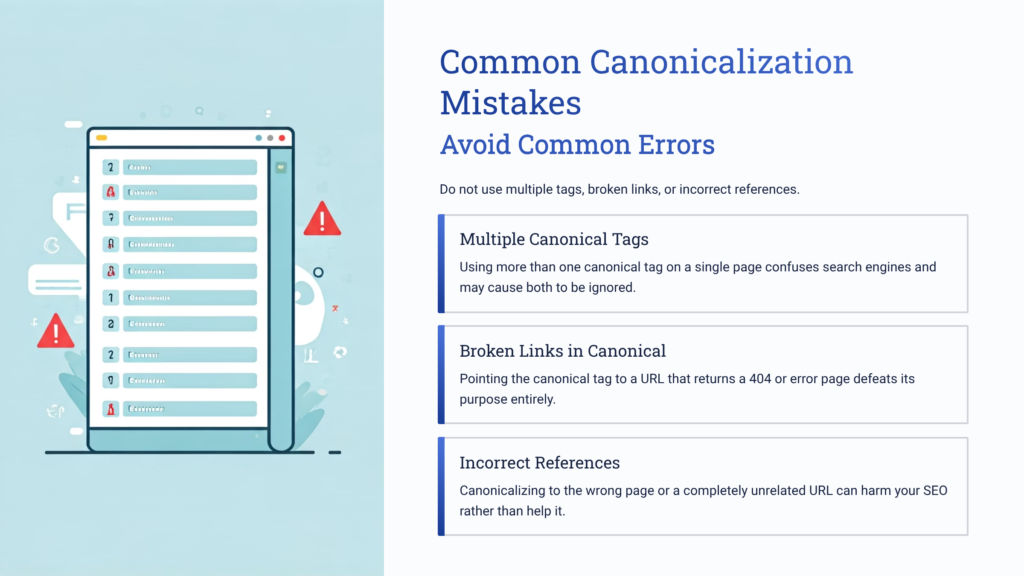
Multiple canonical tags should not be used on a single page because they create confusion for search engines.
Canonical tags should not point to broken URLs because broken links prevent proper indexing. Canonical tags should also not point to irrelevant pages because incorrect references reduce SEO effectiveness.
All canonical implementations should be tested to ensure proper functionality.
Canonicalization as a Solution for Duplicate Content
Canonicalization is essential for solving duplicate content issues. It helps search engines understand which content should be treated as the original version.
Duplicate content problems can reduce SEO performance if not handled properly. Canonicalization helps prevent these problems.
Clear canonical signals improve indexing accuracy and strengthen SEO performance.
Conclusion
Canonicalization is the process of choosing a preferred version of a webpage when multiple versions contain similar or duplicate content. It helps search engines identify the correct page and avoid confusion.
Canonical tags define the preferred version of a page and should be placed in the head section of HTML code. Self-referencing canonical tags are recommended even when duplicate content is not present.
Canonicalization helps consolidate ranking signals, avoid duplicate content issues, and improve crawl efficiency. Proper implementation helps search engines understand preferred content and improves SEO performance.

Related Posts