Toxic backlinks can damage the SEO performance of a website if they are not properly monitored and managed. In search engine optimization, backlinks usually help improve rankings and authority, but not all backlinks are beneficial. Some backlinks can harm a website’s credibility and reduce its visibility in search results.
Toxic backlinks are links that come from spammy, low-quality, or suspicious websites. Instead of improving SEO performance, these links create negative signals for search engines. Websites with a large number of toxic backlinks may experience lower rankings and reduced trust from search engines.
Understanding how to avoid toxic backlinks is important for maintaining a safe and healthy backlink profile. Regular monitoring and ethical link-building practices help protect a website from SEO penalties and ranking losses.
What are Toxic Backlinks?
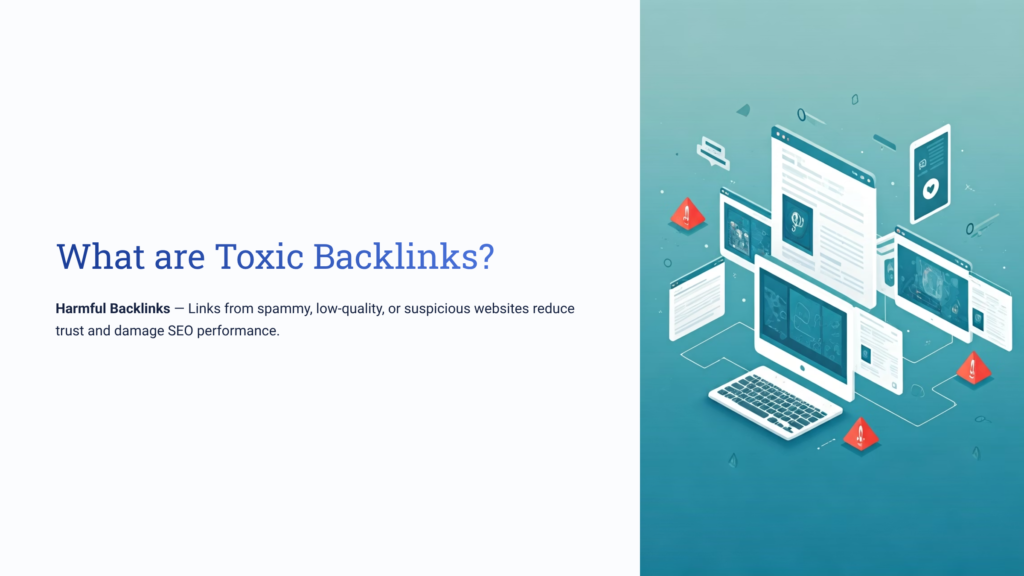
Toxic backlinks are links that originate from spammy, low-quality, or suspicious websites. These links do not provide real value and can harm a website’s SEO performance.
Search engines evaluate the quality of backlinks when determining rankings. Links from trustworthy websites improve credibility, while links from suspicious websites reduce trust.
Toxic backlinks often appear without the website owner’s intention. In some cases, competitors or automated systems may create harmful links pointing to a website.
Because of their negative impact, toxic backlinks should be identified and managed carefully.
Why Toxic Backlinks are Dangerous
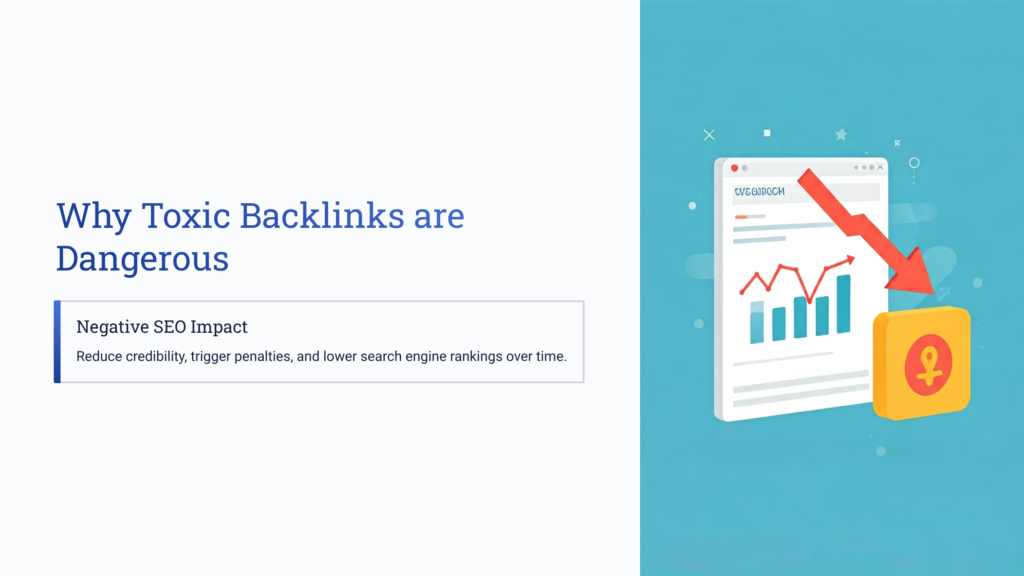
Toxic backlinks are dangerous because they negatively affect a website’s SEO performance and online reputation. These harmful links create signals that reduce trust and authority.
Reduced Site Credibility
Toxic backlinks reduce the credibility of a website. When search engines detect links from spammy sources, they may consider the website less trustworthy.
Lower credibility can affect long-term SEO performance.
Google Penalties
Toxic backlinks can trigger Google penalties. Search engines may take action against websites that appear to use unnatural linking practices.
Penalties can reduce search visibility and organic traffic.
Lower Search Engine Rankings
Toxic backlinks can negatively affect search engine rankings. Websites with poor backlink profiles often struggle to maintain strong rankings.
Removing or ignoring toxic backlinks helps improve ranking stability.
Common Sources of Toxic Backlinks
Toxic backlinks often come from specific types of websites that provide little or no value.
Adult and Gambling Websites
Links from adult or gambling websites are often considered toxic when they are unrelated to the website’s topic.
These links appear unnatural and may harm credibility.
Hacked Websites
Toxic backlinks sometimes come from hacked websites. These websites may contain malicious content or suspicious links.
Search engines treat links from hacked websites as unreliable.
Irrelevant Websites
Links from irrelevant websites provide little SEO value. When links come from unrelated topics, they appear unnatural.
Irrelevant backlinks weaken the backlink profile.
Low-Value Directories
Some directories provide no real value and exist only for link building. These directories usually contain large numbers of low-quality listings.
Links from such directories are often considered toxic.
Spun Content Websites
Spun content websites publish automatically generated or rewritten content. These sites usually have low quality and poor credibility.
Links from spun content sites can harm SEO performance.
Identifying Toxic Backlinks
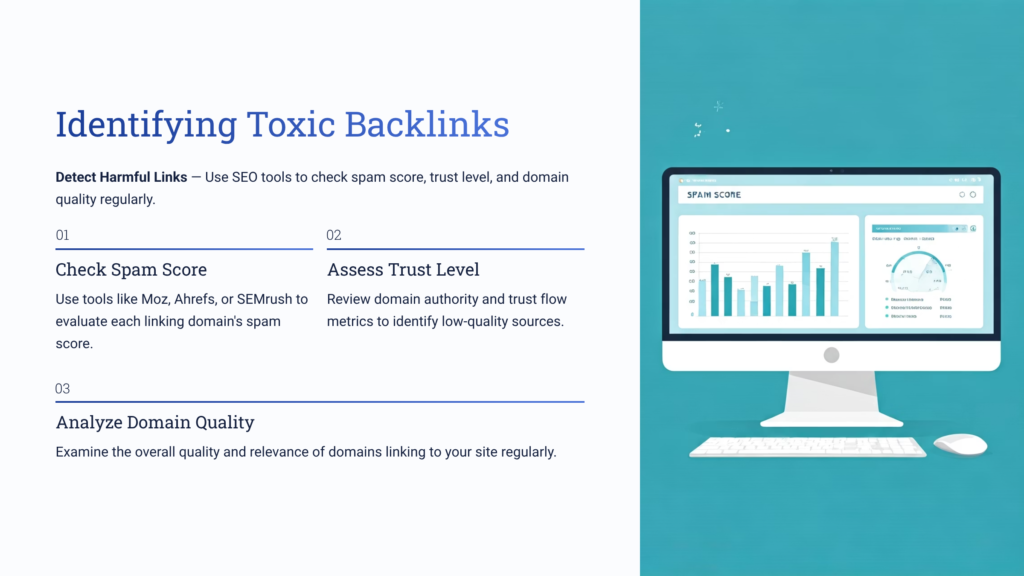
SEO tools can be used to scan backlink profiles and identify toxic links. These tools analyze backlinks and provide useful metrics.
Toxic backlinks can be identified based on spam score, trust flow, and domain reputation. These indicators help determine whether a backlink is safe or harmful.
Regular backlink analysis helps detect toxic links early. Early detection allows website owners to take action before serious damage occurs.
Backlink monitoring should be part of regular SEO maintenance.
How to Avoid Toxic Backlinks
Focus on Ethical Link Building
Ethical link building is the best way to avoid toxic backlinks. Building links naturally helps maintain a healthy backlink profile.
Ethical practices improve trust and credibility.
Natural link building produces better long-term results.
Avoid Black Hat SEO Techniques
Black hat SEO techniques should be avoided because they often create toxic backlinks. Unethical practices can lead to penalties.
Following search engine guidelines helps protect the website.
Safe SEO methods reduce risks.
Never Buy Backlinks from Unknown Sources
Buying backlinks from unknown sources is risky. Many paid links come from low-quality or spammy websites.
Purchased links often become toxic backlinks.
Careful link building helps avoid problems.
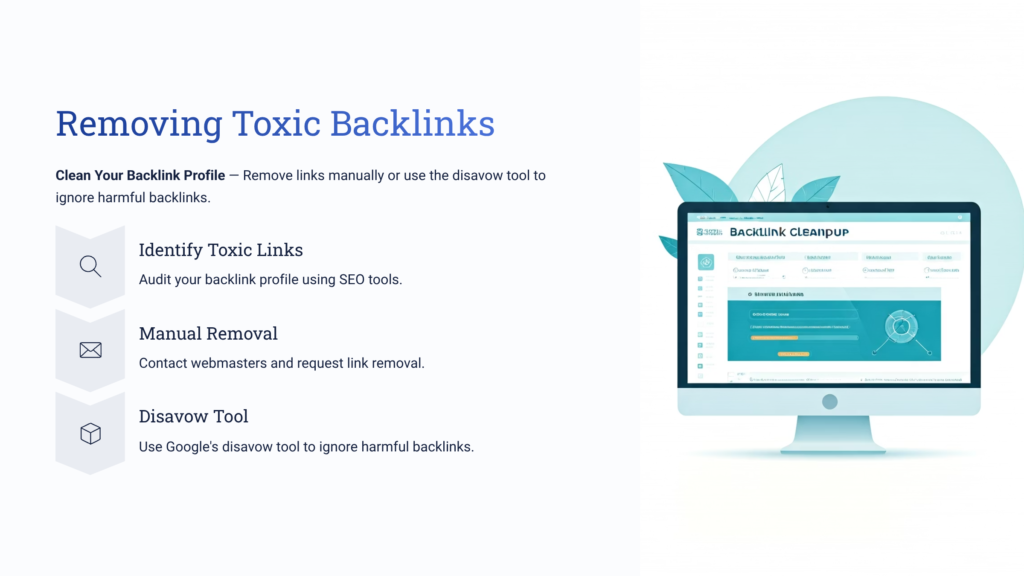
Removing Toxic Backlinks
Manual Removal
If toxic backlinks can be removed manually, website owners should contact the website administrators and request removal.
Manual removal is one of the safest methods for cleaning backlink profiles.
Removing harmful links improves SEO health.
Using the Disavow Tool
If manual removal is not possible, the Google Disavow Tool can be used to ask search engines to ignore toxic backlinks.
The disavow tool helps reduce the negative impact of harmful links.
Using the disavow tool helps keep the backlink profile clean.
Monitoring Backlinks Regularly
Setting up email alerts in SEO tools helps website owners stay informed about new backlinks. Alerts notify users whenever new links appear.
Early notifications help detect suspicious links quickly. Fast action helps prevent SEO damage.
Regular monitoring helps maintain a healthy backlink profile.
Consistent tracking improves SEO safety.
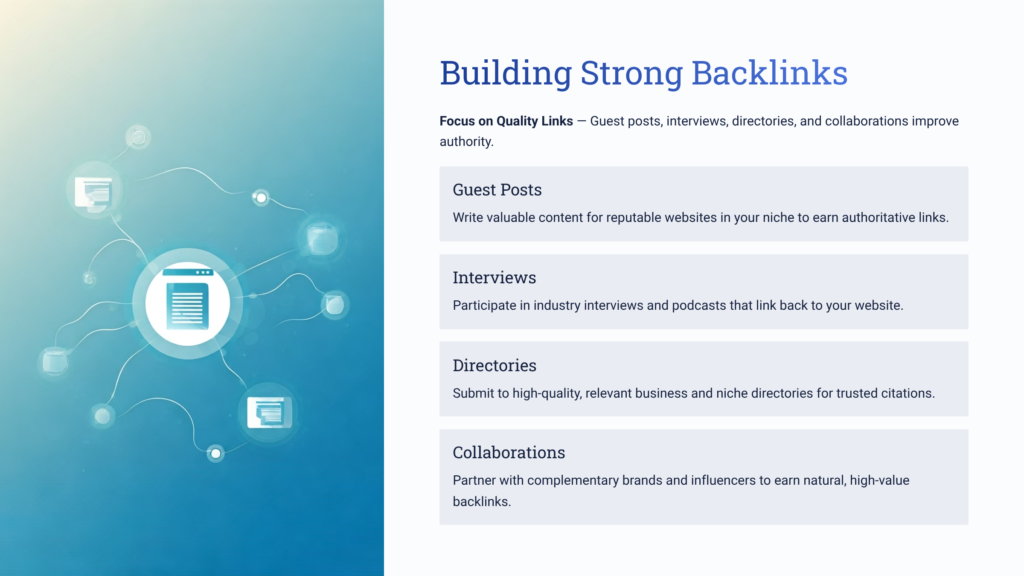
Building Strong Backlinks
Building strong backlinks is the best way to maintain a healthy backlink profile.
High-quality backlinks help balance any harmful links and improve authority.
Guest Posts
Guest posting helps build strong backlinks from relevant websites. These links improve credibility and visibility.
Guest posts provide valuable SEO benefits.
Interviews
Interviews on websites or blogs help generate quality backlinks. These backlinks often come from trusted sources.
Interviews help improve authority.
Directories
Directory listings can provide useful backlinks when submitted to trusted platforms.
Quality directories help improve visibility.
Blog Comments
Meaningful blog comments can help create useful backlinks. Relevant comments provide value and improve engagement.
Quality blog comments support SEO growth.
High-Quality Collaborations
Collaborations with trusted websites help create strong backlinks. These partnerships improve credibility and exposure.
Collaborations strengthen backlink profiles.
Keeping Your Website Safe from Toxic Backlinks
Toxic backlinks can hurt your SEO performance, but regular checks and ethical strategies help maintain a safe backlink profile.
Monitoring backlinks regularly helps detect problems early. Ethical link-building practices reduce risks.
Using the disavow tool when necessary helps remove harmful links from consideration.
A clean backlink profile improves search engine trust and long-term rankings.
Conclusion
Toxic backlinks are links from spammy, low-quality, or suspicious websites that harm SEO performance. These links reduce credibility, trigger penalties, and affect search engine rankings.
Toxic backlinks often come from adult sites, gambling sites, hacked websites, irrelevant platforms, low-value directories, and spun content websites.
Regular backlink monitoring helps identify toxic links early. Ethical link building helps avoid harmful backlinks.
Manual removal and the disavow tool help manage toxic backlinks when necessary.
With regular checks, ethical strategies, and proper backlink management, websites can remain clean, safe, and optimized for search engines.

Related Posts