Welcome to today’s session. In this article, we are going to understand a fundamental term in SEO: SERPs. If you have ever used Google to search for anything, you have seen a SERP in action. But what exactly is it, and why does it matter for your website? Let us dive in.
SERP stands for Search Engine Results Page. It is the page you see after typing a query into a search engine like Google or Bing. SERPs are where your website competes for attention, and getting onto the first page is every marketer’s goal.
What Is a SERP?
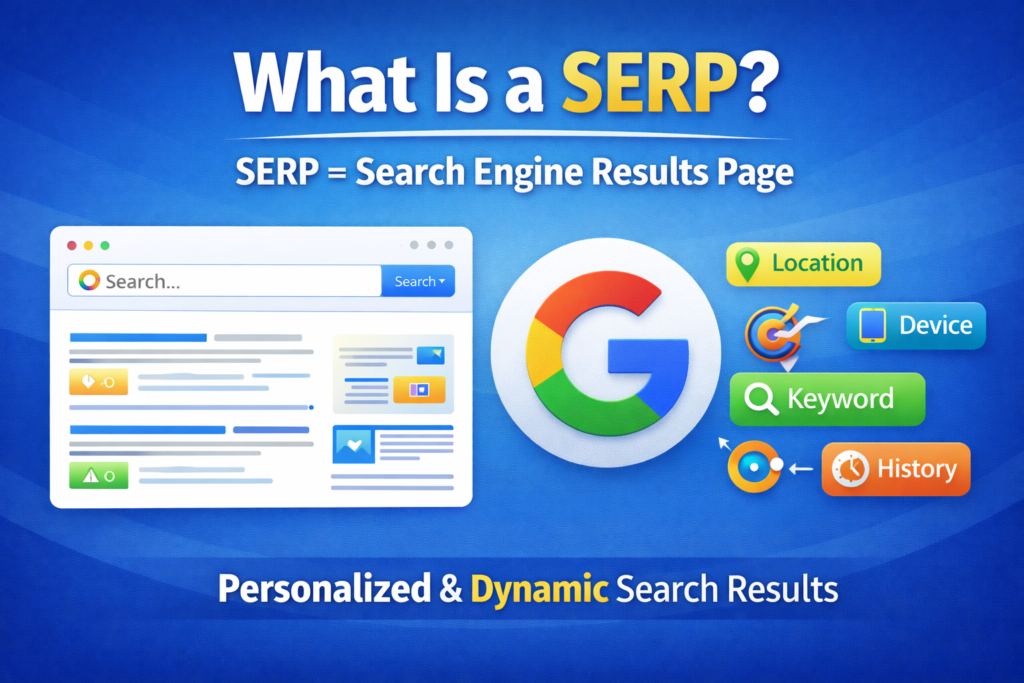
SERP stands for Search Engine Results Page. It is the page displayed by a search engine after a user enters a search query.
Whenever you type something into Google, the results that appear—whether links, ads, images, or videos—are all part of the SERP.
This page is dynamic. It changes depending on:
- The keyword entered
- The user’s location
- The device used
- Search history
SERPs are not static lists. They are personalized and structured to deliver the most relevant results.
Why SERPs Matter for Your Website
SERPs are where your website competes for visibility. The higher your position, the more likely users are to click on your link.
Being on the first page is critical because most users rarely go beyond it. Your ranking in the SERP directly impacts:
- Website traffic
- Brand visibility
- Click-through rate
- Conversions
If your website does not appear on the first page, your chances of attracting organic traffic decrease significantly.
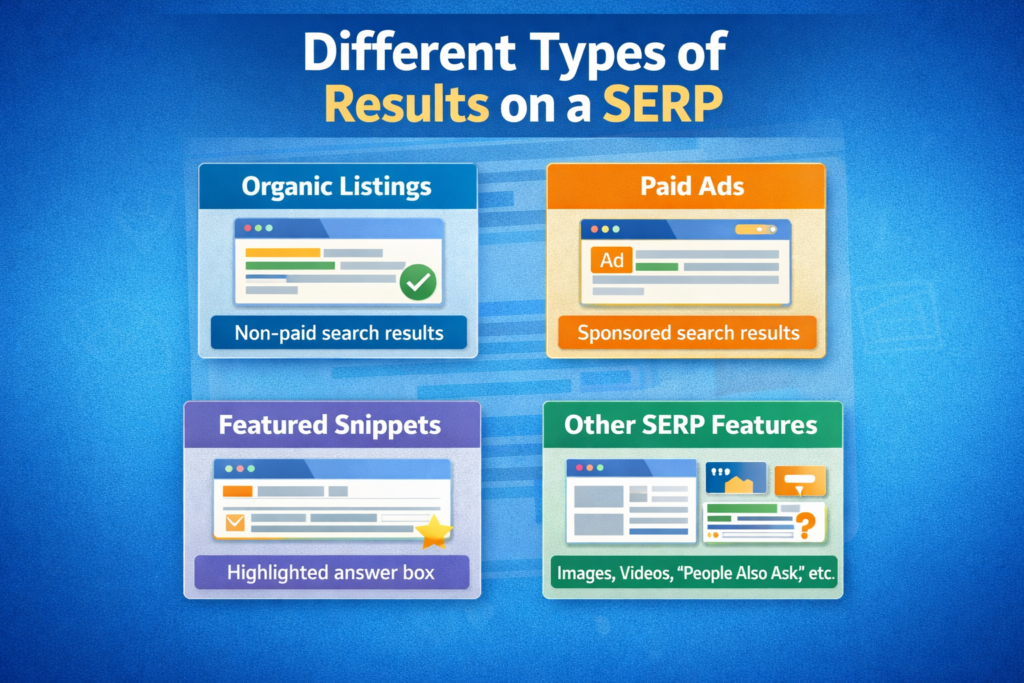
Different Types of Results on a SERP
A SERP is not just plain blue links anymore. It now includes many result types, making it more interactive and informative.
Organic Listings
What Are Organic Listings?
An organic listing is a non-paid result that appears because it is relevant to the search query.
These listings are ranked using SEO techniques such as:
- Keyword targeting
- High-quality content
- Backlinks
- Technical optimization
Organic results are earned through proper optimization and content strategy.
Why Organic Listings Are Important
Organic listings are valuable because they:
- Do not require payment per click
- Build trust with users
- Provide long-term visibility
Strong SEO practices help your website rank higher in organic results.
Paid Ads on SERPs
What Are Paid Ads?
Paid ads are results that appear at the top or bottom of the SERPs and are labeled as “Ad.”
Businesses use Google Ads to bid for these placements.
How Paid Ads Work
Advertisers choose keywords and bid for them. When users search those keywords, ads appear in sponsored positions.
Paid ads provide:
- Immediate visibility
- Controlled targeting
- Quick traffic
However, they require ongoing investment.
Featured Snippets
What Are Featured Snippets?
Featured snippets are special boxes that show a direct answer to your query, usually at the top of the SERP.
They are pulled from top-ranking content and aim to answer questions instantly.
Why Featured Snippets Matter
Featured snippets:
- Increase visibility
- Improve click-through rates
- Establish authority
Winning a featured snippet can position your website above traditional organic listings.
Other SERP Features
Modern SERPs include various elements beyond traditional links.
These may include:
- Images
- Videos
- Shopping results
- People Also Ask boxes
- FAQ sections
Each of these features enhances user experience and provides multiple ways for content to appear.
The SERP as the Playground of SEO
The SERP is where all your SEO efforts come to life. You can optimize your website, create content, and build backlinks, but everything ultimately leads to the SERP.
Your visibility in the SERP determines how many people click on your site. This is why improving your ranking in SERPs is so important.
SEO is not just about optimization behind the scenes. It is about achieving strong positions in search results where users can see and engage with your content.
How to Improve Your Presence on SERPs
Improving your SERP presence requires a structured approach.
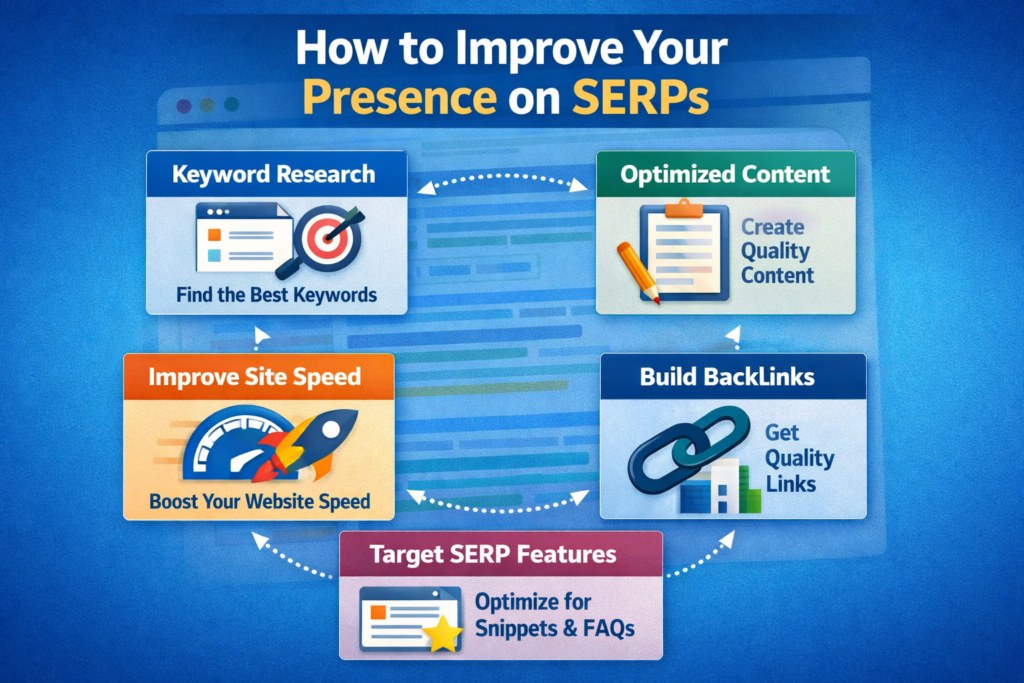
Step 1: Conduct Keyword Research
Identify Relevant Keywords
Start with keyword research. Choose terms that your target audience is searching for.
Focus on:
- Search volume
- Competition level
- Relevance to your content
Proper keyword selection forms the foundation of SERP success.
Step 2: Create Optimized Content
Develop High-Quality Content
Content should be:
- Informative
- Relevant
- Well-structured
- Optimized with keywords
Quality content improves your chances of ranking higher in organic listings.
Step 3: Improve Site Speed
Enhance User Experience
Site speed is an important ranking factor. Faster websites provide better user experience and lower bounce rates.
Optimizing loading speed can positively influence your SERP ranking.
Step 4: Build Backlinks
Increase Authority
Backlinks act as votes of confidence from other websites.
High-quality backlinks improve your domain authority and help you rank better in SERPs.
Step 5: Target Special SERP Features
Optimize for Snippets and FAQs
You can try to win results like featured snippets or FAQ sections by:
- Structuring content clearly
- Answering questions directly
- Using proper formatting
Optimizing for these features increases visibility beyond standard listings.
Real-World Example of a SERP
Let us look at a real-world example.
If a user searches for “how to tie a tie,” the SERP might include:
- A featured snippet
- A video tutorial
- A People Also Ask box
- Image results
All these elements are tailored to match the search query.
This example shows how SERPs are designed to satisfy user intent through multiple content formats.
How SERPs Reflect User Intent
SERPs are structured based on what search engines believe users want.
For example:
- Informational queries show articles and videos.
- Transactional queries show shopping results and product pages.
- Navigational queries show branded websites.
Understanding this pattern helps you align your content with SERP expectations.
The Evolution of SERPs
SERPs have evolved significantly over time.
In the past, they mainly displayed simple blue links. Today, they include interactive features, rich results, and personalized recommendations.
This evolution highlights the importance of adapting your SEO strategy to modern search behavior.
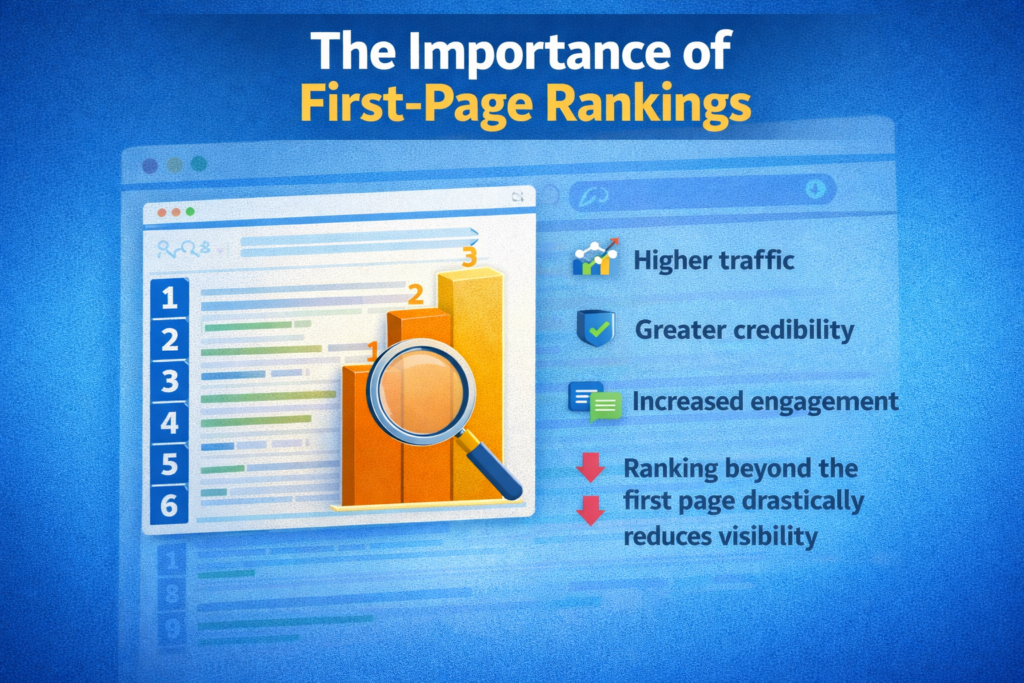
The Importance of First-Page Rankings
Most clicks happen on the first page of the SERP.
Websites ranking in the top positions receive:
- Higher traffic
- Greater credibility
- Increased engagement
Ranking beyond the first page drastically reduces visibility.
Final Summary: Mastering SERPs
To sum it up, SERPs are the playground of SEO. They are where your website appears, competes, and gets discovered.
A SERP is the page displayed after a user types a query into a search engine. It includes:
- Organic listings
- Paid ads
- Featured snippets
- Images and videos
- Shopping results
Understanding SERPs is the first step to mastering SEO. When you optimize your website effectively, conduct proper keyword research, create high-quality content, and improve technical performance, you increase your chances of ranking higher.
Your ultimate goal is visibility. And visibility happens on the SERP.
By understanding how SERPs work and how to improve your presence within them, you build a stronger foundation for long-term SEO success.

Related Posts