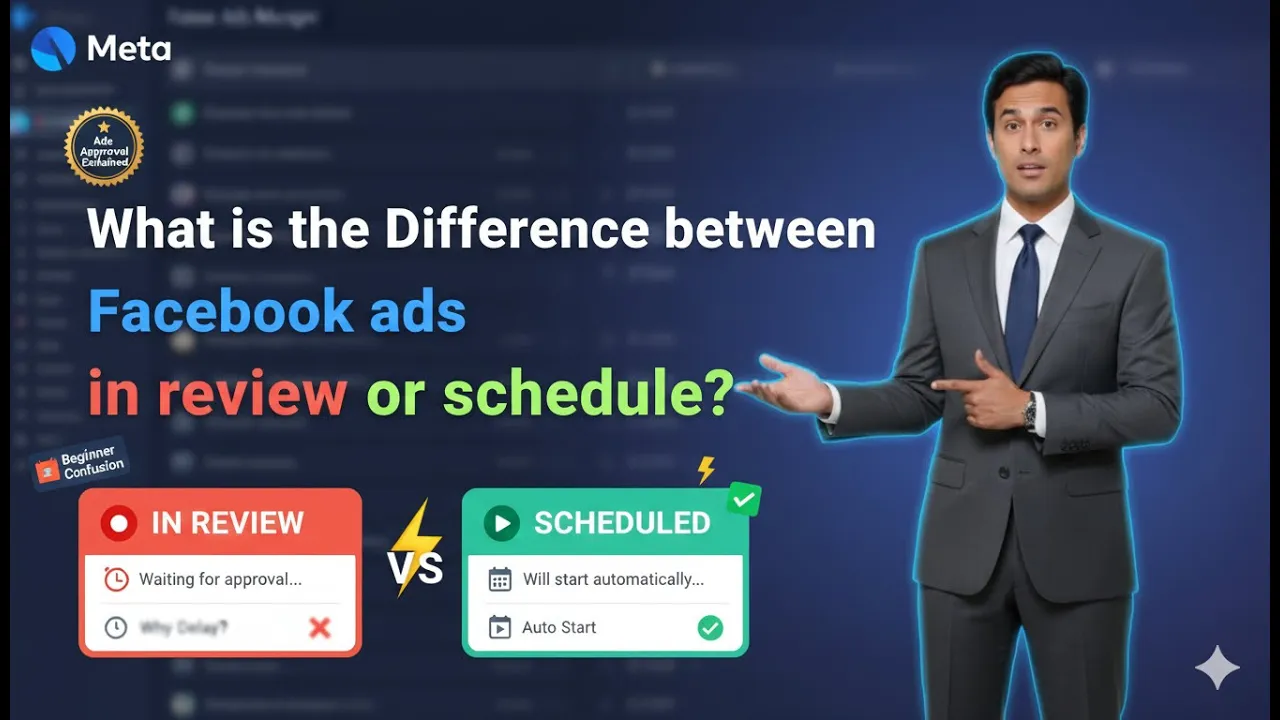
When running Facebook ads, advertisers often notice different campaign statuses such as Under Review, Scheduled for Running, and Active. For beginners especially, these statuses can be confusing and may create unnecessary concern about whether the campaign is working correctly or not.
This article explains, in simple and clear terms, the difference between a Facebook ad campaign that is under review and one that is scheduled for running. By understanding these phases, you will know exactly what is happening to your campaign at each stage and why Facebook shows these statuses.
Understanding Facebook Ad Campaign Statuses
Before diving into the difference, it is important to understand that every Facebook ad campaign passes through multiple phases. These phases exist so that Meta can ensure ad quality, platform safety, and proper ad delivery.
Some of the commonly seen phases include:
- Under Review
- Scheduled for Running
- Active
- Learning Phase
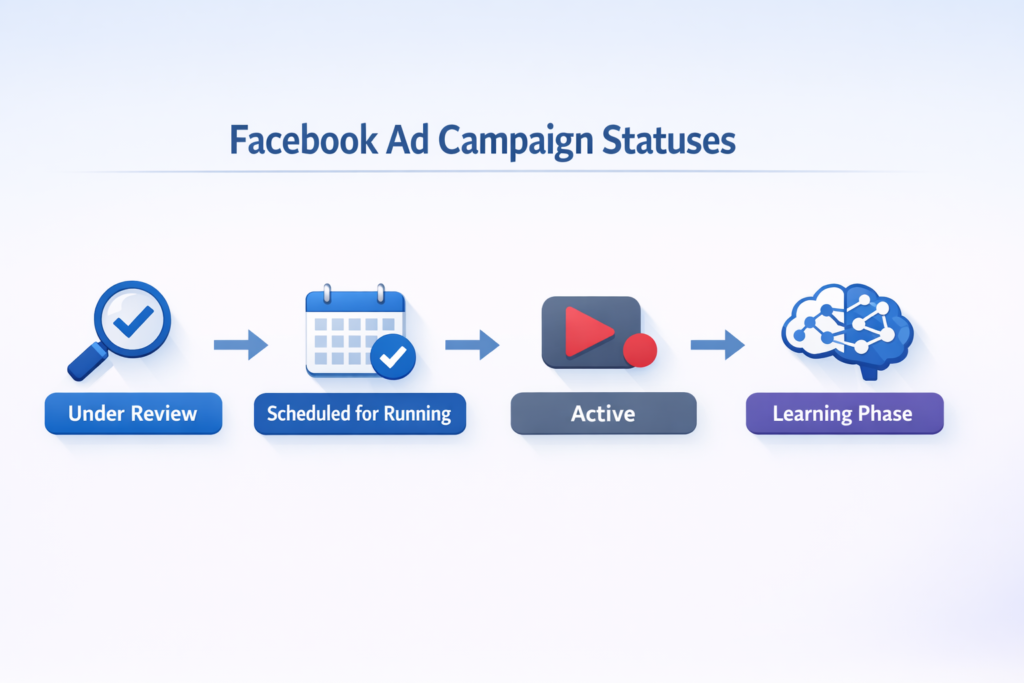
In this article, the focus is specifically on Under Review and Scheduled for Running, and how they differ from each other.
What Does “Under Review” Mean in Facebook Ads?
The Review Process Explained
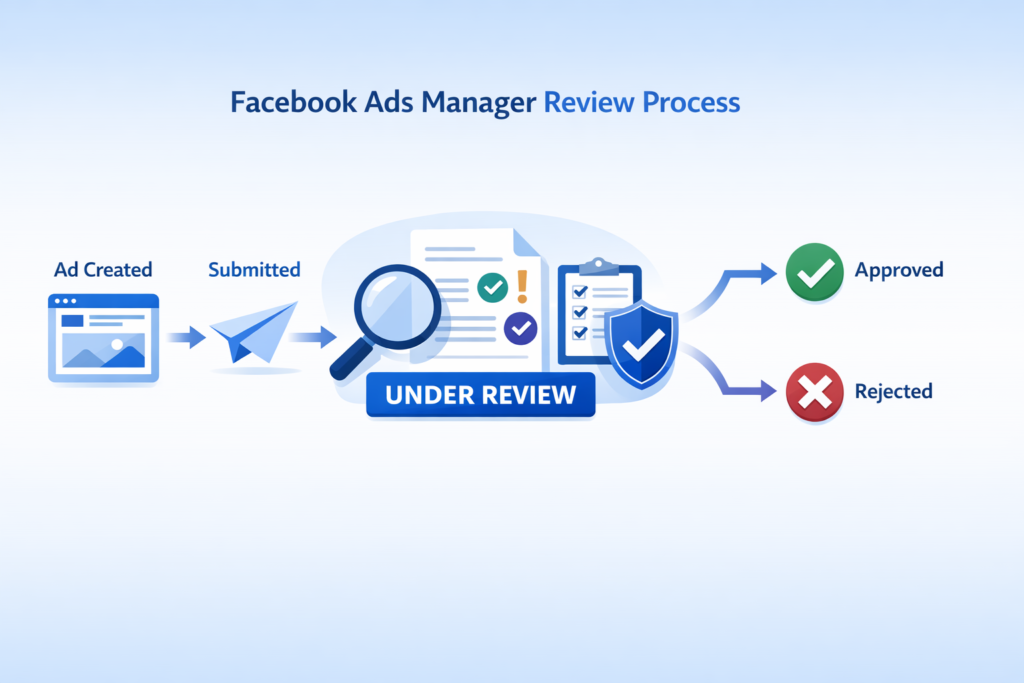
Whenever you design and submit a Facebook ad campaign, Meta automatically reviews the campaign. This review is mandatory and happens every single time an ad is created or edited.
The purpose of this review is to check:
- Whether the ad is ethical
- Whether it follows Meta’s advertising standards
- Whether it meets all safety and policy requirements set by Meta
This is why, immediately after publishing a campaign, you will see the status “Under Review.”
Why Facebook Reviews Every Ad Campaign
Meta has strict rules in place to protect users and maintain platform quality. During the review stage, Meta verifies whether the ad:
- Matches advertising policies
- Follows safety guidelines
- Is suitable for users on Facebook and related platforms
This process ensures that only approved and compliant ads are allowed to run.
Is “Under Review” a Problem?
No, it is completely normal.
Whenever you run an ad campaign:
- It always goes into Under Review
- This does not mean there is an error
- It simply means Meta is checking the campaign
Every advertiser, whether beginner or expert, experiences this phase.
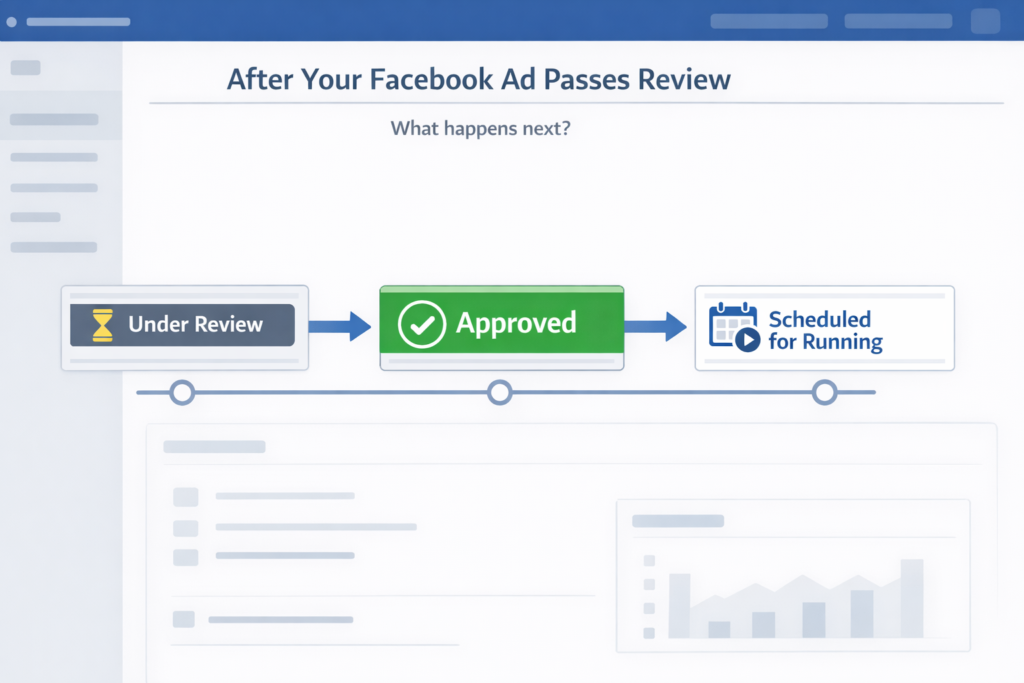
What Happens After the Review Phase?
Passing the Review Stage
Once Meta completes the verification process and confirms that the campaign follows all required standards, the campaign passes the review stage.
After this approval:
- The campaign is no longer under review
- It moves to the next phase called Scheduled for Running
What Does “Scheduled for Running” Mean?
Meaning of Scheduled for Running
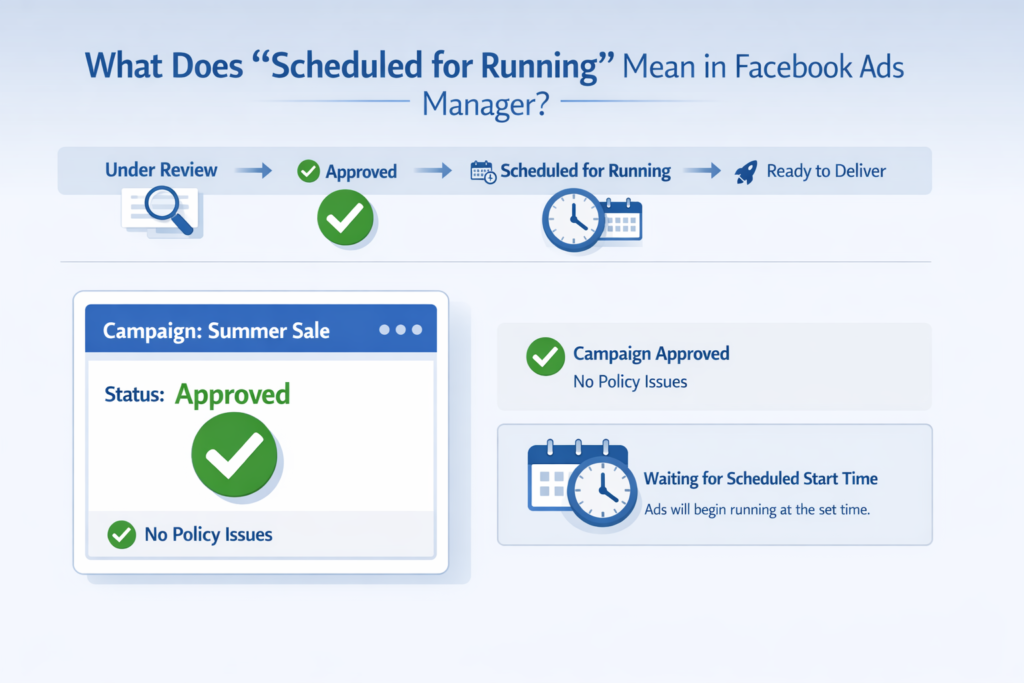
When a Facebook ad campaign shows the status Scheduled for Running, it means:
- The campaign has already passed the review phase
- Meta has approved the campaign
- The campaign is now waiting to be served to users
At this stage, there are no policy issues with the campaign.
Why the Campaign Does Not Start Immediately
Even after approval, the campaign does not always start instantly. This is because Meta needs:
- Available ad inventory
- Suitable placement space
- Alignment with your budget and bidding strategy
Once Meta finds the right opportunity to display your ad within your budget and bidding limits, the campaign starts running.
Typical Time Frame for Scheduled Campaigns
Generally, when a campaign is scheduled for running:
- It may start within 1 to 2 hours
- The exact time depends on inventory availability
- Budget and bidding also play a role
This delay is normal and does not indicate any issue.
Role of Budget and Bidding in Scheduled Phase
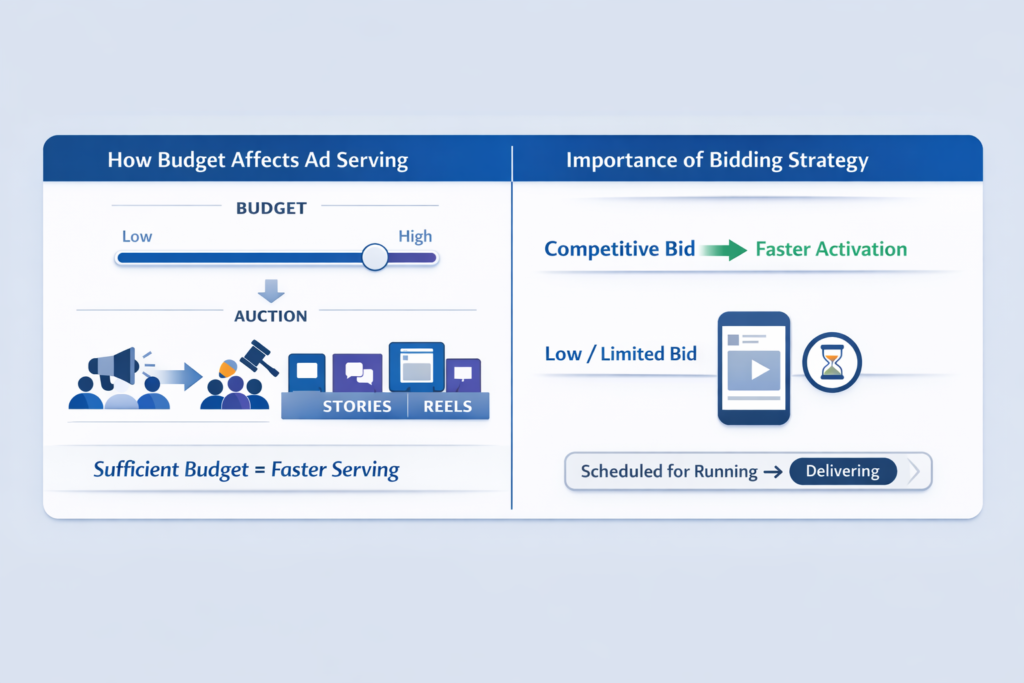
How Budget Affects Ad Serving
Meta serves ads based on:
- Your campaign budget
- Competition from other advertisers
- Placement availability
If Meta finds placement inventory within your budget, your ad will be served faster.
Importance of Bidding Strategy
Your bidding strategy also impacts how quickly your campaign starts:
- Competitive bidding increases chances of faster delivery
- Limited budgets may require more time to find suitable placements
This is why a campaign can stay in Scheduled for Running status for some time before becoming active.
Transition from Scheduled to Active Campaign
What Is an Active Campaign?
An Active campaign means:
- Your ads are now being shown to users
- Meta is delivering impressions
- Users can see and interact with your ads
This is the final stage where the campaign is fully live.
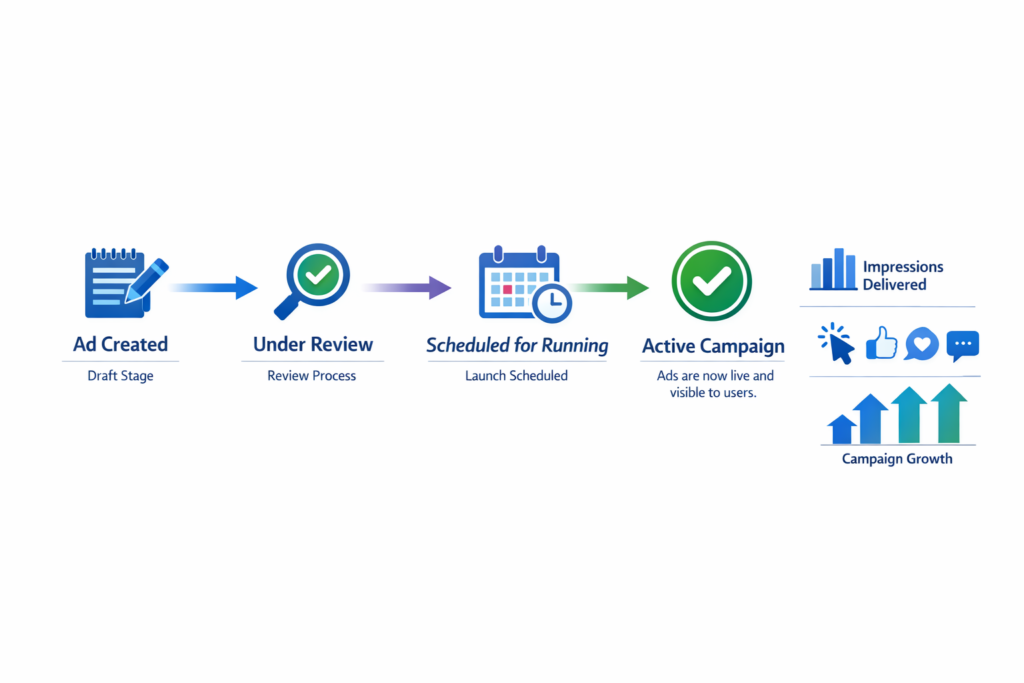
Sequence of Campaign Phases
To understand the flow clearly, the typical sequence is:
- Ad Created
- Under Review
- Scheduled for Running
- Active Campaign
Each phase has a specific purpose and occurs in a logical order.
Difference Between Under Review and Scheduled for Running
Core Difference Explained
The key difference lies in approval vs delivery.
| Status | Meaning |
|---|---|
| Under Review | Meta is checking the ad for policy and safety compliance |
| Scheduled for Running | The ad is approved and waiting for placement inventory |
Under Review Phase Characteristics
- Mandatory for every campaign
- Focused on compliance and ethics
- No ad delivery happens
- Campaign is not approved yet
Scheduled for Running Phase Characteristics
- Campaign is already approved
- No policy issues exist
- Meta is waiting for ad space
- Campaign may start within a few hours
Why Advertisers Get Confused Between These Two
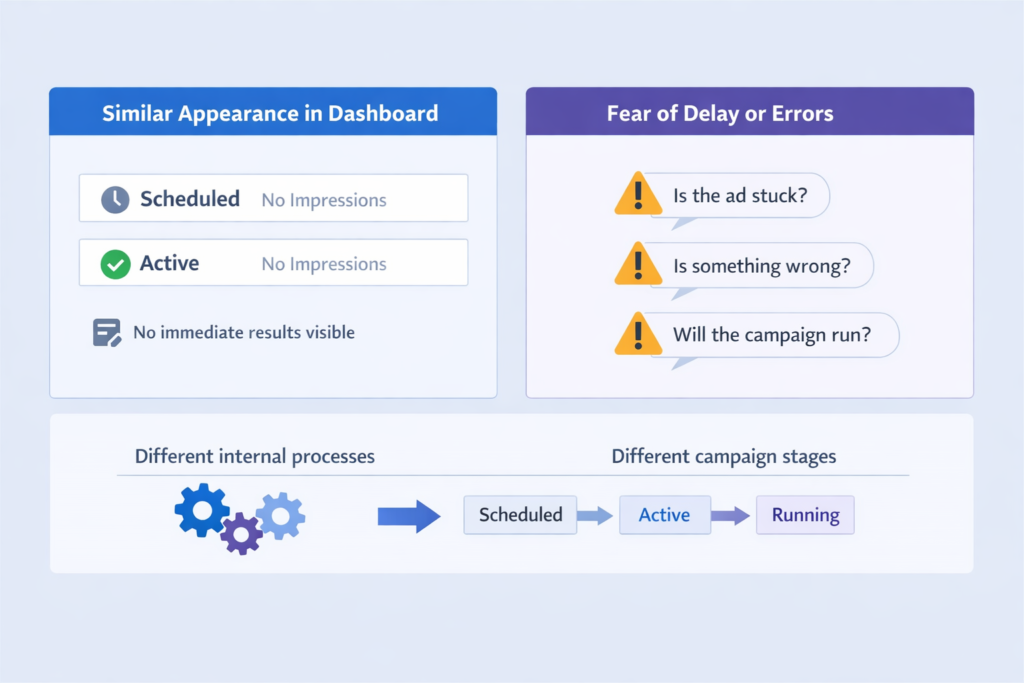
Similar Appearance in Dashboard
Many advertisers feel confused because:
- Both statuses appear before ads start delivering
- No immediate results are visible in either phase
However, the internal processes behind them are completely different.
Fear of Delay or Errors
Advertisers often worry that:
- The ad is stuck
- Something is wrong
- The campaign will not run
In most cases, these concerns are unnecessary because these phases are part of the normal ad lifecycle.
Are These the Only Campaign Phases?
Existence of Other Ad Phases
No, Facebook ads have multiple other phases beyond these two. One common example is the Learning Phase, which occurs after the campaign becomes active.
Each phase serves a unique purpose in optimizing ad delivery and performance.
Why Facebook Uses Multiple Phases
Meta uses different phases to:
- Maintain ad quality
- Protect users
- Optimize ad delivery
- Ensure fair competition among advertisers
These steps help the platform run efficiently at scale.
Importance of Understanding Campaign Statuses
Better Decision Making
When you understand campaign statuses:
- You avoid panic
- You make informed decisions
- You know when to wait and when to act
This knowledge helps in managing campaigns more confidently.
Avoiding Unnecessary Changes
Many advertisers make the mistake of:
- Editing campaigns repeatedly
- Stopping campaigns prematurely
- Changing budgets during normal phases
Understanding these phases helps avoid such actions.
Summary of Key Differences
Let’s quickly summarize the main points:
- Under Review means Meta is checking your ad
- Scheduled for Running means the ad is approved
- Review checks ethics and policy compliance
- Scheduled phase waits for inventory and bidding alignment
- Campaign becomes Active once ads start showing
Final Thoughts
Facebook ad campaign statuses are designed to guide advertisers through the ad delivery process. The Under Review phase ensures compliance, while Scheduled for Running prepares your approved campaign for delivery.
Both phases are normal and necessary. Understanding their difference helps you stay calm, patient, and confident while running Facebook ads.
Once Meta finds suitable placement inventory within your budget and bidding limits, your campaign moves forward and becomes active—ready to generate results.

Related Posts