In this article we are going to understand what automatic placement is in Facebook ads in detail. Whenever advertisers create a Facebook ad campaign, one of the most important decisions they need to make is where their ads will be shown. Facebook provides different placement options, and many beginners get confused between automatic placement and manual placement.
Where Placement Option Appears in Facebook Ads
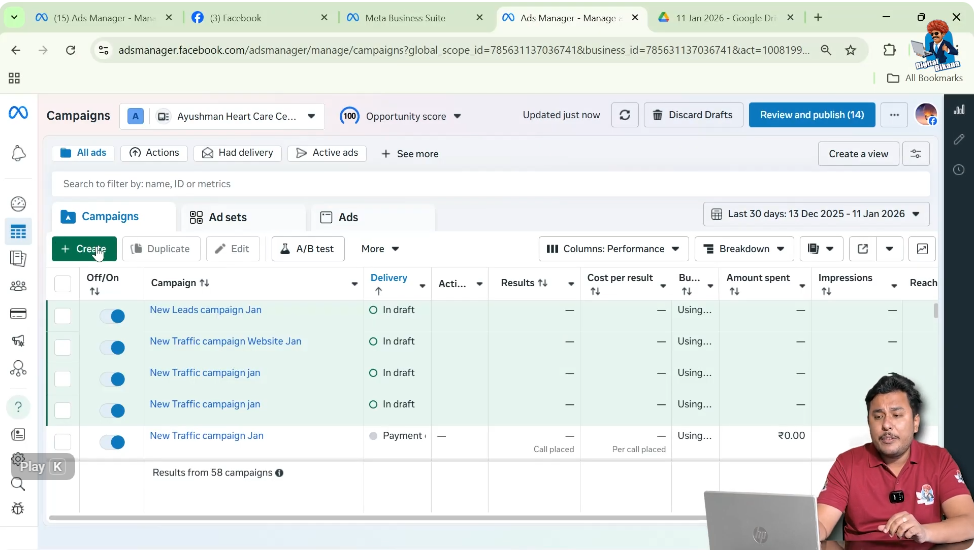
Step 1: Create a New Ad Campaign
Whenever you create a new ad campaign in Facebook ads, you move through different levels of campaign setup.
Step 2: Reach the Ad Set Level
After selecting the campaign objective, you reach the ad set level.
This is where targeting, budget, schedule, and placements are selected.
Step 3: Scroll Down to the Placement Section
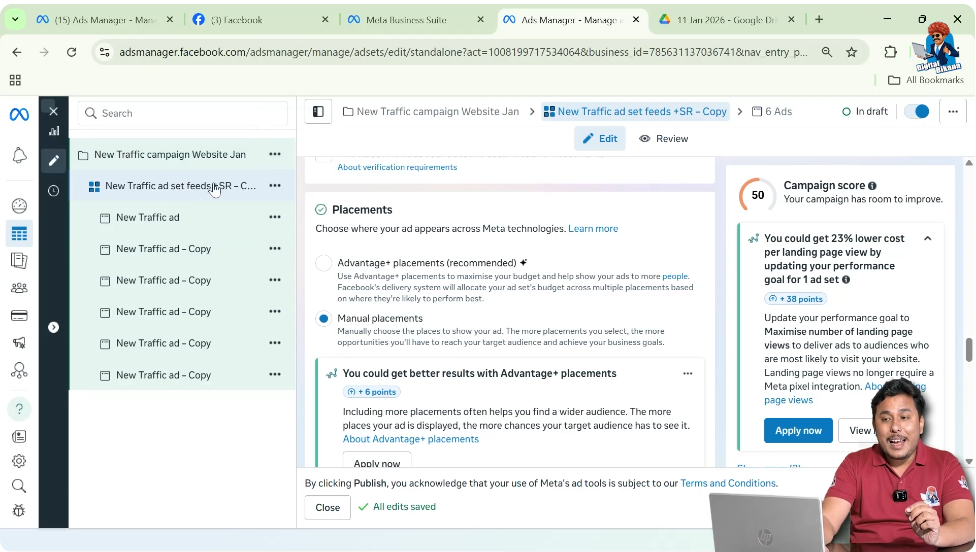
When you scroll down at the ad set level, you will see the Placements section.
This is the section where Facebook asks you how and where you want your ads to be displayed.
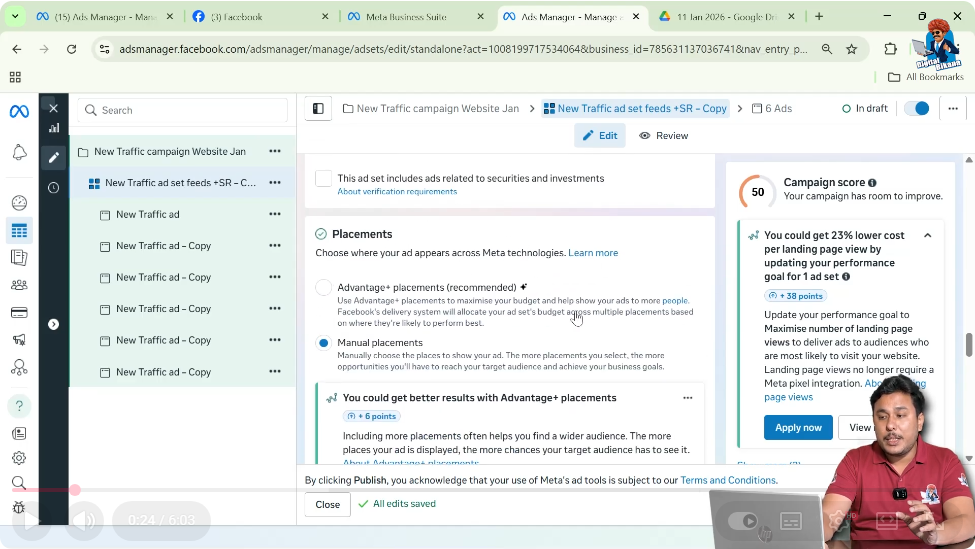
Placement Options Available in Facebook Ads
In the placements section, Facebook gives you two options:
- Advantage Plus Placement (Automatic Placement)
- Manual Placement
This is the point where advertisers decide whether they want Facebook to control placements or whether they want to control placements themselves.
What Is Manual Placement?
Manual placement means you select the placements manually where you want your ads to be shown and where you do not want your ads to be shown.
In this option, Facebook does not decide placements for you. You make the decision based on your experience.
Why Advertisers Choose Manual Placement
Advertisers usually choose manual placement because they already know:
- Where they get good results
- Where they do not get good results
Many advertisers test placements over time and understand which placements work best for their audience.
Placement Performance Based on Advertiser Experience
Many advertisers have experienced that they get better results when their ads are displayed in:
- Status
- Stories
- Reels
At the same time, many advertisers have also experienced that they get good results in feeds because their audience spends more time scrolling feeds.

Placements That Often Do Not Perform Well
Many advertisers have also experienced that they do not get good results when their ads are displayed in:
- Search results
- In-stream placements
- Apps and sites
Because of these experiences, advertisers prefer to manually select placements instead of letting Facebook decide.

Manual Placement and Ad Creative Size
One very important advantage of manual placement is that you can select placements based on your ad creative size.
Different placements support different creative sizes.
Creative Size Support by Placements
For example:
- Instagram feed supports 1:1 and 4:5
- Instagram story supports 9:16
When you choose manual placement, you can match your creative size with the correct placement.
Example of Proper Creative and Placement Matching
If you have an ad creative, banner, image, or video in 9:16 size, it is recommended to show your ads in:
- Stories
- Reels
You should avoid showing a 9:16 creative in feeds.
Problem of Running 9:16 Creative in Feeds
If you run a 9:16 creative in feeds:
- The banner gets cut from the top
- The banner gets cut from the bottom
- Only the middle part of the creative is visible
This results in improper and inappropriate ad display.
Why Manual Placement Gives Better Control
Manual placement allows you to:
- Choose placements where your creative fits properly
- Avoid placements that damage your creative
- Optimize ad appearance and performance
This level of control is not available in automatic placement.
What Is Automatic Placement in Facebook Ads?
Automatic placement is also known as Advantage Plus Placement.
When you select automatic placement, Facebook decides:
- Where your ad creatives should be shown
- Where your ad creatives should not be shown
You do not control placements in this option.

How Automatic Placement Works
When automatic placement is selected:
- Facebook distributes your ads across multiple placements
- Facebook decides delivery without your input
- Facebook controls placement allocation
Your ad creatives can appear on any supported placement.
Automatic Placement and Creative Size Issue
One major issue with automatic placement is that Facebook does not prioritize your creative size in the same way a human would.
For example:
- Even if your creative is 9:16, Facebook may still show it in feeds
- This can cause your ad to appear cut or improper
Facebook focuses on delivery, not visual perfection.
Risk of Giving Control to Facebook Technology
Giving full control to Facebook technology can be risky.
Facebook technology is not smarter than you.
It can show your ad creative:
- On any placement
- Even where the creative does not fit properly
As a result, your ads may look inappropriate.
Improper Ad Display Experience
When automatic placement is used, advertisers often experience:
- Ads being shown improperly
- Creatives being cut
- Poor visual presentation
This affects user experience and campaign performance.
What Happens Behind the Scenes in Automatic Placement
Advertisers do not know what Facebook is doing behind the scenes.
It is possible that Facebook:
- Shows ads on placements where fewer advertisers are bidding
- Uses placements where it has more inventory available
This helps Facebook maximize delivery but does not guarantee performance.
Meta’s Statement on Advantage Plus Placement
Facebook claims that Advantage Plus placement helps:
- Maximize your budget
- Show your ads to more people
Facebook states that its delivery system allocates your ad set budget across multiple placements based on where ads are likely to perform best.
No Performance Guarantee with Automatic Placement
Facebook does not provide any guarantee.
Facebook only says:
- It will try to show ads on placements where performance may be better
It does not promise improved results.
Difference Between “Try” and “Guarantee”
It is important to understand that:
- Facebook says it will try to optimize
- Facebook does not guarantee success
This uncertainty is a major concern for advertisers.
Why Manual Placement Is Recommended
Because automatic placement does not guarantee performance, many advertisers prefer manual placement.
Manual placement allows you to:
- Select placements where you already got good results
- Avoid placements that do not perform
- Match creative size with correct placements
Control Over Ad Appearance
With manual placement, you control:
- Where ads appear
- How ads look
- How creatives are displayed
This control helps avoid improper ad delivery.
Experience-Based Placement Selection
Manual placement works best when:
- You already have experience running ads
- You know which placements work for your audience
- You know which creative sizes perform best
This experience-based approach leads to better optimization.
Automatic Placement vs Manual Placement
Automatic Placement
- Facebook decides placements
- No control over creative placement
- Risk of improper display
- No performance guarantee
Manual Placement
- Advertiser decides placements
- Full control over creative fit
- Based on experience
- Better visual consistency
When Beginners Use Automatic Placement
Beginners often use automatic placement because:
- It looks easy
- It requires fewer decisions
- Facebook recommends it
However, ease does not always mean better performance.
Why Experienced Advertisers Avoid Automatic Placement
Experienced advertisers avoid automatic placement because:
- They value creative control
- They understand placement performance
- They want predictable results
Manual placement aligns better with these goals.
Final Understanding of Automatic Placement
Automatic placement, also called Advantage Plus placement, allows Facebook to control where ads are shown.
Facebook decides placements without considering creative size compatibility or advertiser experience.
Final Conclusion
Automatic placement in Facebook ads gives full control to Facebook to decide where ads are shown. While Facebook claims it will try to optimize placements, it does not guarantee better performance and may display ads improperly due to creative size mismatch.
Manual placement gives advertisers full control to select placements based on experience and creative size, making it a safer and more reliable option.

Related Posts