When running advertisements on Facebook or Meta platforms, understanding ad performance is extremely important. Meta Ads Manager provides several metrics to analyze how well an ad campaign is performing. One of the most important and commonly discussed metrics is Reach. In this article, we will clearly understand what reach means in Facebook ads or Meta ads, how it works, how it is different from impressions, how frequency is calculated, and why reach per rupee cannot be fixed. This explanation is based entirely on real campaign data visible inside Meta Ads Manager.
Understanding Reach in Facebook Ads
What is Reach in Facebook Ads?
Reach refers to the number of unique users who have seen your ad.
This means reach counts how many different people your advertisement was shown to at least once. If the same person sees your ad multiple times, they are still counted as only one user in reach.
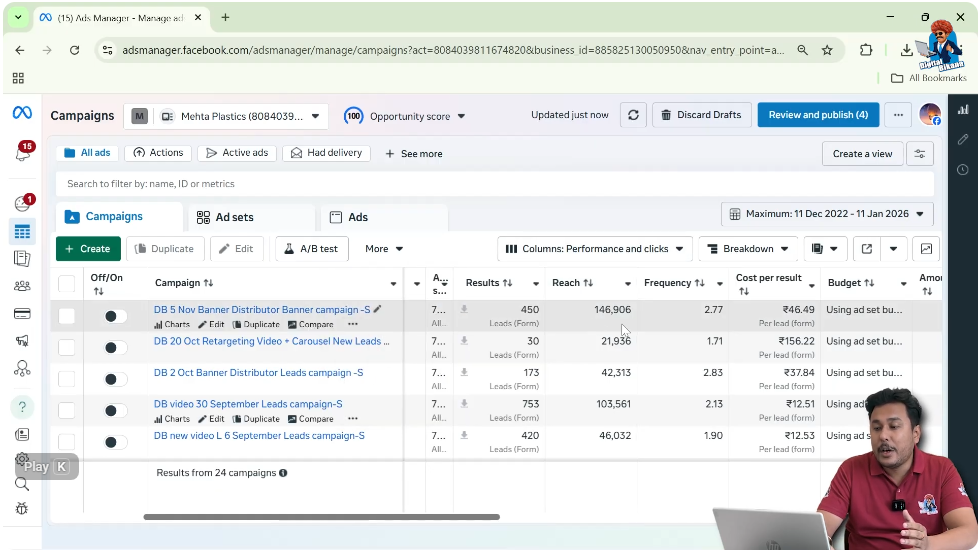
For example, if an ad campaign shows a reach of 1,46,000 users, it means 1,46,000 unique people saw the ad.
Example of Reach in a Real Ad Campaign
In the shown ad campaign data:
- Amount spent: ₹20,919
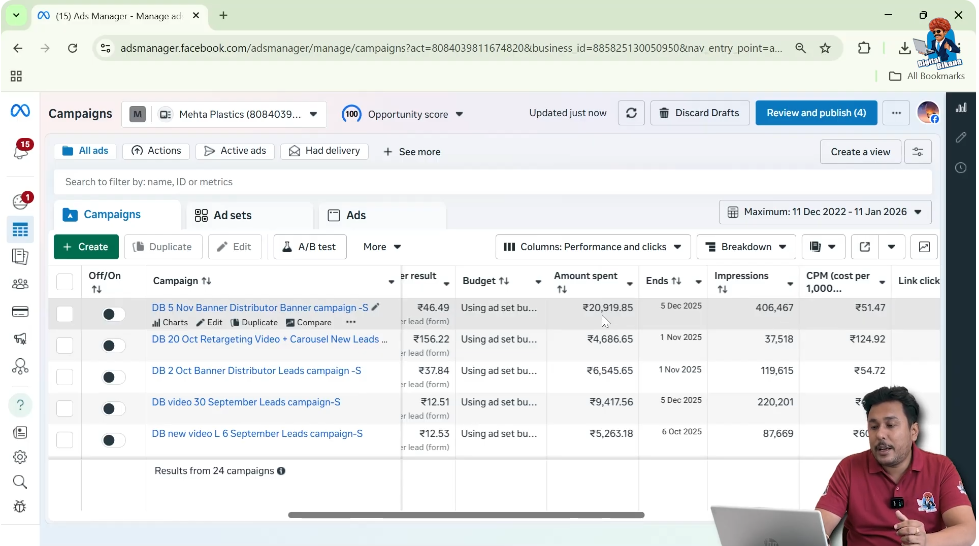
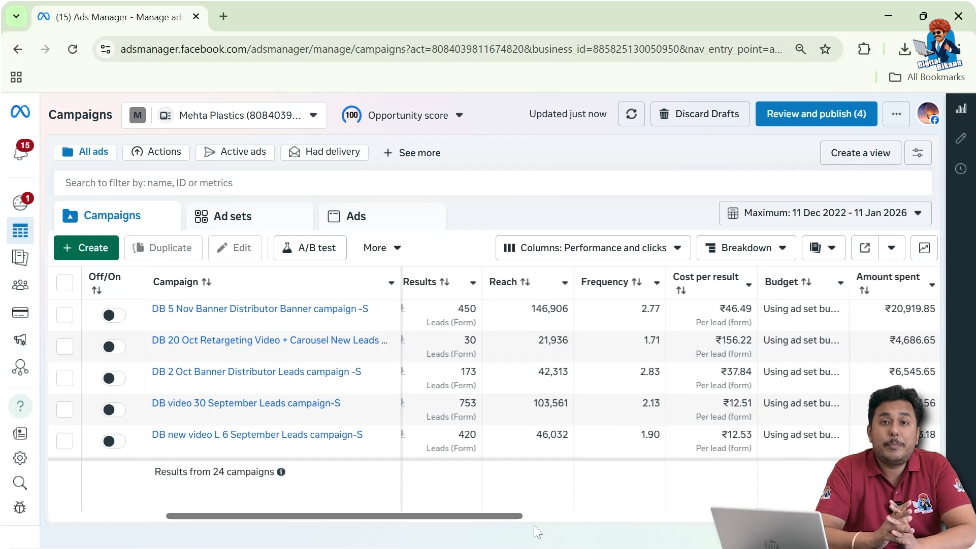
- Reach: Approximately 1,46,000 users
- Impressions: Approximately 4,06,467
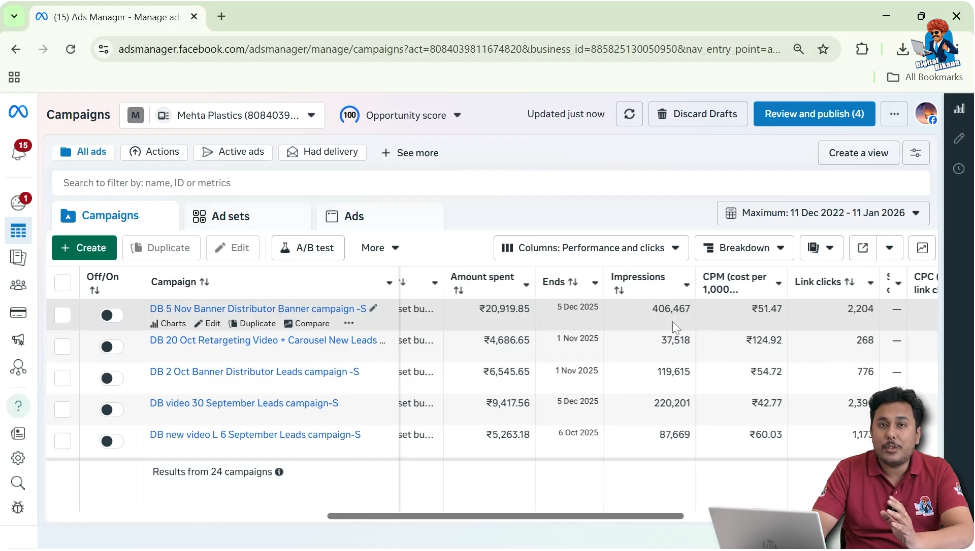
This means that Meta displayed the ad to around 1.46 lakh unique users.
What is Impression in Facebook Ads?
Meaning of Impression
Impression means how many times your ad has been shown to users.
Impressions count every single time an ad appears on a user’s screen. If the same person sees the same ad multiple times, each appearance is counted as a separate impression.
Difference Between Reach and Impression
| Metric | Meaning |
|---|---|
| Reach | Number of unique users |
| Impression | Total number of times the ad was shown |
A single user can generate multiple impressions but only one reach.
Relationship Between Reach and Impression
Why Impressions Are Always Higher Than Reach
Impressions are always equal to or higher than reach. This is because:
- One user can see the same ad multiple times.
- Reach counts unique users.
- Impressions count total views.
It is not possible for impressions to be less than reach.
In the example campaign:
- Reach: ~1,46,000 users
- Impressions: ~4,06,467 times
This clearly shows that many users saw the ad more than once.
What is Ad Frequency?
Definition of Ad Frequency
Ad frequency shows the average number of times a single user saw your ad.
It tells you how often your ad was shown to the same user during a campaign.
Step-by-Step Calculation of Ad Frequency
Step 1: Identify Total Impressions
Impressions = 4,06,467
Step 2: Identify Total Reach
Reach = 1,46,000 users
Step 3: Divide Impressions by Reach
Ad Frequency = Impressions ÷ Reach
Step 4: Final Result
4,06,467 ÷ 1,46,000 ≈ 2.77
What does this Ad Frequency mean?
An ad frequency of 2.77 means that each user saw the ad approximately 2.7 times on average.
Reach, Impression, and Frequency Explained Together
To understand Facebook ads performance properly, these three metrics must always be analyzed together:
- Reach → Who saw your ad
- Impressions → How many times it was shown
- Frequency → How often the same user saw it
Each metric supports the other and gives a complete picture of ad exposure.
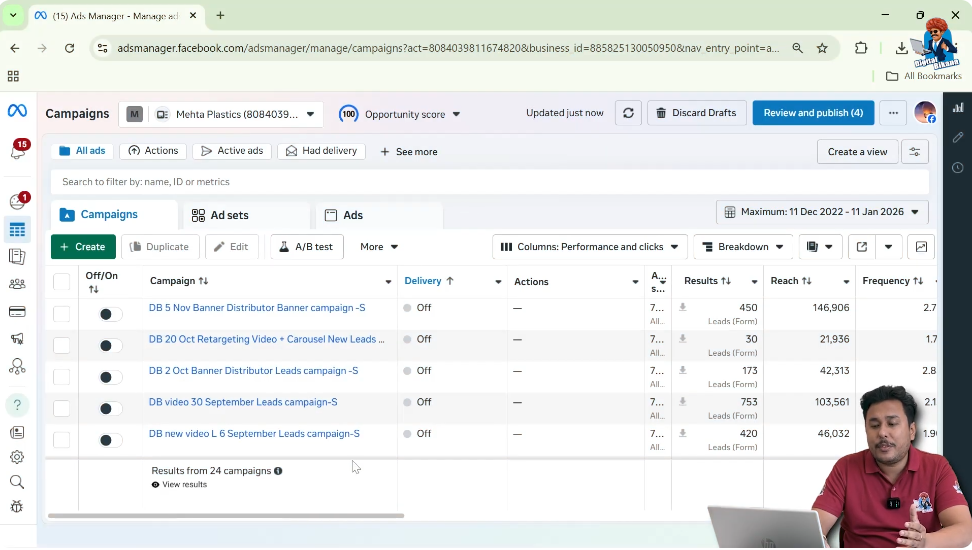
Viewing Reach Across Multiple Ad Campaigns
Inside Meta Ads Manager, you can scroll down to see reach values for different ad campaigns. Every campaign has a different reach depending on multiple factors such as:
- Target audience
- Budget
- Location
- Time of ad delivery
- Competition
Common Question: How Much Reach Can I Get in One Rupee?
Many students ask whether there is a fixed reach that can be achieved for one rupee spent on ads. The simple answer is no.
There is no fixed value for reach per rupee.
Factors That Affect Reach in Facebook Ads
1. Location of the Audience
The location where you run ads plays a major role in determining reach.
High-Cost Locations
If you run ads in metro or alpha cities like:
- New York City
- Las Vegas
Then:
- Competition is high
- Ad inventory is expensive
- Reach per rupee is lower
Lower-Cost Locations
If you run ads in:
- Tier-two cities
- Tier-three cities
Then:
- Competition is lower
- Inventory is cheaper
- Reach per rupee is higher
2. Time of Running the Ad
Timing also affects reach significantly.
High-Competition Periods
During festive seasons:
- Many brands run ads simultaneously
- Meta has limited ad inventory
- Prices increase automatically
- Reach per rupee decreases
Low-Competition Periods
When fewer advertisers are running ads:
- Inventory is available
- Costs are lower
- Reach improves
Why Meta Increases Ad Cost Automatically
Meta operates on an auction-based system. When many advertisers target the same audience at the same time:
- Inventory becomes limited
- Competition increases
- Prices rise automatically
This directly impacts how much reach you get for the same budget.
Why Fixed Reach Per Rupee Is Not Possible
Because reach depends on:
- Audience location
- Market competition
- Time of the campaign
- Inventory availability
It is not possible to say something like:
“You will get 15 users of reach for one rupee.”
Reach always fluctuates.
Practical Understanding of Reach in Facebook Ads
Reach simply tells you how many different people your ad has reached. It does not tell how many times they clicked, interacted, or converted. That information comes from other metrics.
Reach should always be analyzed along with:
- Impressions
- Frequency
- Spend
Final Summary
- Reach = Number of unique users who saw your ad
- Impressions = Total number of times your ad was shown
- Frequency = Average number of times each user saw the ad
Reach per rupee cannot be fixed because it depends on location, timing, competition, and ad inventory. Understanding reach helps advertisers make better decisions while scaling or optimizing ad campaigns.

Related Posts